Thank you for visiting SNEWPapers!
Sign up free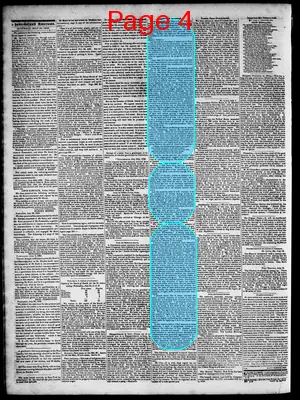
Story
July 31, 1832
Rhode Island American And Gazette
Providence, Providence County, Rhode Island
What is this article about?
An anonymous observer in New York describes unusual atmospheric conditions since June 10, including golden then fading light, persistent eastern mist, ragged clouds, pale skies, and lack of thunderstorms, speculating these contribute to the cholera epidemic's spread and effects on life.
Clipping

OCR Quality
95%
Excellent
Full Text
Appearance of the Sky.—We know not the author of the subjoined article, which we find in the Courier and Enquirer; but he writes both like a philosopher and a poet. Peculiar appearance of the atmosphere, sunshine and clouds have attracted very general observation. Neither the light nor the temperature resemble at all what we are accustomed to in July.
Messrs. Editors—
Let me call the attention of observers in New York, to some natural phenomena in the constitution of our atmosphere, and its effects upon living beings in general. It strikes me that their appearances are not only concomitant of the cholera in our city, but may give us an insight into the causes of it, and may serve as a data for speculation on its progress and duration.
I hope that if I am alone until now in some of the observations I have made, that these few remarks will refresh the recollection of others on the same points.
In the first place, the nature, properties, and color of the Light have been remarkable and unusual, ever since Whitsun Sabbath, June 10. On that day, the light was rich and golden; it possessed the penetrating and refracting power in so great a degree, that it could not be excluded from the closest recesses. This, we know, is the character of our summer sunshine, and the light which attends it. Perhaps the third or the fourth day after the date mentioned, the light re-assumed, in a slight degree, the warm and elastic tone, but feebly, although the day was clear. Since then, it has constantly and perceptibly lost in color and vividness, and suffered a gradual fading so that all distant objects appear more distant and less distinct. This effect upon the eye does not arrest the attention of every one perhaps, because the understanding being sure of the rate of distances among familiar objects, judges from the sense of habit. But this effect might have been perceived by any observer: and this change in the medium of light still exists, giving a vagueness and dimness to the images reflected upon the vision.
In the same period of time I have observed a very permanent and persisting mist to the east, covering at least one quarter of the sky, and lying under the brightest sunshine like a thin white cliff.
The clouds which are floating over us, rarely and but transiently, assume the rounded and cumulate form. They do not imbibe that principle or element of heat and rarefaction which under our June and July suns used to display them in fantastic and capricious union and expansion, convolving apparently with attraction and repulsion,—an appearance so well described by Bryant, the poet of American seasons—
When even the deep-blue heavens are glad—
The clouds are at play in the azure space,
And their shadows at play o'er the mazy vale,
And here they stretch to the frolic chase,
And there they roll on the easy gale.
Now and for weeks past the air cannot brace them; the edges grow ragged and divergent, they are carried along by the wind and stratify in masses.
There never was a season with fewer thunder-storms: and there have been no summer-evening electric flashes. What rains we have had, have come after a low rumbling of thunder, as if the skies were all one sponge of loosened vapor.
The hue of the sky, which in summer is of deep-blue, sometimes of the lapis-lazuli, sometimes of the slaty tint, has been latterly uniformly pale; and from the east to the zenith, even when the sun is in meridian splendour, there is a silvery opacity, a pearly reflection, which is rather fit to be termed neutral than azure.
Let the cause be what it will, whether it be the prevalence of steady strong winds at a great height in the air, or a prismatic deprivation to us of the yellow and red rays by vapours held sublimed at a great distance above the earth, the change nevertheless, in the appearance of the heavens cannot be denied, and that the properties of the light have been thus deteriorated for the last six weeks.
We may well presume that vegetable and animal life are both affected by so untimely and disastrous an alteration. But we have every reason to hope, from the variableness of our climate in a position exposed to the sea and land wind, that this meteoric influence is nearly spent, and will soon be counteracted.
We have been wont to see the sunsets of New-York rivaling those of the tropics in gorgeousness, and enkindling the whole air with crimson and gold.— Who has seen such a sunset since Whitsunday? A faintly rosy tinge is the utmost that has brightened the Occident. The sun has been "shorn of his beams," and we have been living, as it were, in the first steps of the shadow of an eclipse.
I cannot imagine a spectacle more solemnly sublime than the present aspect of this extensive and half-deserted city, seen in full day, and under the awe and solicitude of impending danger which fills the mind, and impresses the air of the remaining inhabitants. The vast lines of edifices, under the pallor of the crepuscular sunshine appearing at once with all the clearness of day, and the amplitude and blending of moonlight; the skies and the air blanched in lustre, the streets whitened, and comparatively lonely, and the sentiment of vacuity and vastness increased not alone by the desertion of places of resort, but mainly by that dim, feeble and imperfect radiance effused over the earth, and which is, perhaps, the mysterious cause of the epidemic mortality which is walking unseen among us. We of the city are now, I think, like etiolated plants; and deprived of our due stimulus of light, our organs waste and suffer, while those who are least able to resist this decay of their vital powers, become the prey of such deleterious agents, as would, under the regular and accustomed stimulants of light, have proved inert and innocuous.
I should much like to learn, whether the same peculiar absence of yellow in the sun shine has not already been noticed where the cholera has prevailed. I am disposed to believe that it has been observed; and it certainly must be owing to this state of the light that the air has become such a conductor of electricity that this agent cannot be detained around us. What are the late discoveries concerning the purple of light and its affinity for magnetic currents? Is it not said, that the violet ray is so highly conducting that magnets have been made by applying it with the prism upon steel?
In the interim, before I find answers to these questions, I shall, if permitted, continue to observe the influence of this weather upon persons, animals and insects. I have already had occasion to see that chronic disorders and weaknesses seem generally aggravated by it.— Insects have not their usual animation. Animals have lost their usual fire and vivacity.— Closer observers than I, must already have given attention to these considerations, and I shall be happy if I awake their interest sufficiently to lead them to communicate their observations for public satisfaction and advantage.
Messrs. Editors—
Let me call the attention of observers in New York, to some natural phenomena in the constitution of our atmosphere, and its effects upon living beings in general. It strikes me that their appearances are not only concomitant of the cholera in our city, but may give us an insight into the causes of it, and may serve as a data for speculation on its progress and duration.
I hope that if I am alone until now in some of the observations I have made, that these few remarks will refresh the recollection of others on the same points.
In the first place, the nature, properties, and color of the Light have been remarkable and unusual, ever since Whitsun Sabbath, June 10. On that day, the light was rich and golden; it possessed the penetrating and refracting power in so great a degree, that it could not be excluded from the closest recesses. This, we know, is the character of our summer sunshine, and the light which attends it. Perhaps the third or the fourth day after the date mentioned, the light re-assumed, in a slight degree, the warm and elastic tone, but feebly, although the day was clear. Since then, it has constantly and perceptibly lost in color and vividness, and suffered a gradual fading so that all distant objects appear more distant and less distinct. This effect upon the eye does not arrest the attention of every one perhaps, because the understanding being sure of the rate of distances among familiar objects, judges from the sense of habit. But this effect might have been perceived by any observer: and this change in the medium of light still exists, giving a vagueness and dimness to the images reflected upon the vision.
In the same period of time I have observed a very permanent and persisting mist to the east, covering at least one quarter of the sky, and lying under the brightest sunshine like a thin white cliff.
The clouds which are floating over us, rarely and but transiently, assume the rounded and cumulate form. They do not imbibe that principle or element of heat and rarefaction which under our June and July suns used to display them in fantastic and capricious union and expansion, convolving apparently with attraction and repulsion,—an appearance so well described by Bryant, the poet of American seasons—
When even the deep-blue heavens are glad—
The clouds are at play in the azure space,
And their shadows at play o'er the mazy vale,
And here they stretch to the frolic chase,
And there they roll on the easy gale.
Now and for weeks past the air cannot brace them; the edges grow ragged and divergent, they are carried along by the wind and stratify in masses.
There never was a season with fewer thunder-storms: and there have been no summer-evening electric flashes. What rains we have had, have come after a low rumbling of thunder, as if the skies were all one sponge of loosened vapor.
The hue of the sky, which in summer is of deep-blue, sometimes of the lapis-lazuli, sometimes of the slaty tint, has been latterly uniformly pale; and from the east to the zenith, even when the sun is in meridian splendour, there is a silvery opacity, a pearly reflection, which is rather fit to be termed neutral than azure.
Let the cause be what it will, whether it be the prevalence of steady strong winds at a great height in the air, or a prismatic deprivation to us of the yellow and red rays by vapours held sublimed at a great distance above the earth, the change nevertheless, in the appearance of the heavens cannot be denied, and that the properties of the light have been thus deteriorated for the last six weeks.
We may well presume that vegetable and animal life are both affected by so untimely and disastrous an alteration. But we have every reason to hope, from the variableness of our climate in a position exposed to the sea and land wind, that this meteoric influence is nearly spent, and will soon be counteracted.
We have been wont to see the sunsets of New-York rivaling those of the tropics in gorgeousness, and enkindling the whole air with crimson and gold.— Who has seen such a sunset since Whitsunday? A faintly rosy tinge is the utmost that has brightened the Occident. The sun has been "shorn of his beams," and we have been living, as it were, in the first steps of the shadow of an eclipse.
I cannot imagine a spectacle more solemnly sublime than the present aspect of this extensive and half-deserted city, seen in full day, and under the awe and solicitude of impending danger which fills the mind, and impresses the air of the remaining inhabitants. The vast lines of edifices, under the pallor of the crepuscular sunshine appearing at once with all the clearness of day, and the amplitude and blending of moonlight; the skies and the air blanched in lustre, the streets whitened, and comparatively lonely, and the sentiment of vacuity and vastness increased not alone by the desertion of places of resort, but mainly by that dim, feeble and imperfect radiance effused over the earth, and which is, perhaps, the mysterious cause of the epidemic mortality which is walking unseen among us. We of the city are now, I think, like etiolated plants; and deprived of our due stimulus of light, our organs waste and suffer, while those who are least able to resist this decay of their vital powers, become the prey of such deleterious agents, as would, under the regular and accustomed stimulants of light, have proved inert and innocuous.
I should much like to learn, whether the same peculiar absence of yellow in the sun shine has not already been noticed where the cholera has prevailed. I am disposed to believe that it has been observed; and it certainly must be owing to this state of the light that the air has become such a conductor of electricity that this agent cannot be detained around us. What are the late discoveries concerning the purple of light and its affinity for magnetic currents? Is it not said, that the violet ray is so highly conducting that magnets have been made by applying it with the prism upon steel?
In the interim, before I find answers to these questions, I shall, if permitted, continue to observe the influence of this weather upon persons, animals and insects. I have already had occasion to see that chronic disorders and weaknesses seem generally aggravated by it.— Insects have not their usual animation. Animals have lost their usual fire and vivacity.— Closer observers than I, must already have given attention to these considerations, and I shall be happy if I awake their interest sufficiently to lead them to communicate their observations for public satisfaction and advantage.
What sub-type of article is it?
Curiosity
Extraordinary Event
Medical Curiosity
What themes does it cover?
Nature
Misfortune
Catastrophe
What keywords are associated?
Atmospheric Phenomena
Unusual Light
Pale Skies
Cholera Epidemic
New York
Ragged Clouds
Eastern Mist
Where did it happen?
New York
Story Details
Location
New York
Event Date
Ever Since Whitsun Sabbath, June 10
Story Details
Observer notes unusual light fading from golden to dim since June 10, persistent eastern mist, ragged clouds, pale skies, few thunderstorms, and speculates these atmospheric changes affect health, aggravate disorders, and contribute to cholera epidemic in the city.