Thank you for visiting SNEWPapers!
Sign up free
Story
March 6, 1846
Burlington Free Press
Burlington, Chittenden County, Vermont
What is this article about?
Hon. Abbot Lawrence of Boston writes a letter critiquing proposed tariff changes by President and Secretary Walker, arguing that substituting ad valorem duties and reducing rates to 20% would abolish protection, flood markets with foreign goods, cause revenue shortfalls, and trigger a national financial crisis affecting all regions.
Clipping
OCR Quality
72%
Good
Full Text
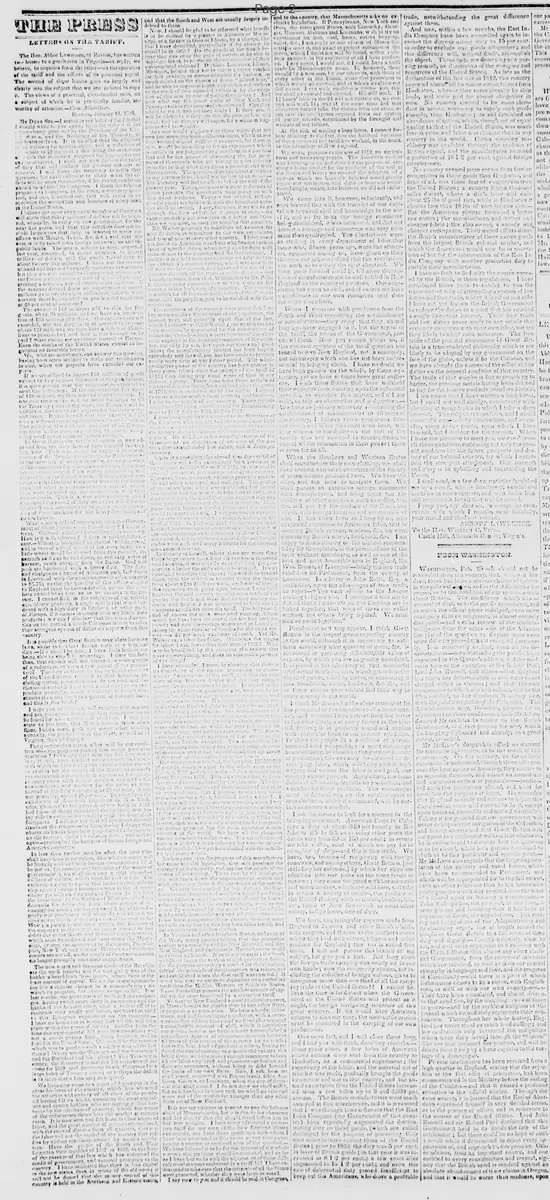
The Hon. Abbot Lawrence, of Boston, has written two letters to a gentleman in Virginia-in reply, we believe, to inquiries from the latter-on the operation of the tariff and the effects of its proposed repeal. The second of these letters goes so largely and clearly into the subject that we are induced to copy it. The views of a practical, clear-headed man, on a subject of which he is practically familiar, are worthy of attention.-Com. Advertiser.
Boston, January 16, 1846.
My Dear Sir-I stated in my letter of the 7th that the change proposed by the President of the United States, and the Secretary of the Treasury, in substituting ad valorem for specific duties, and a reduction of revenue laws. It is no other than the abolition of the protective principle, which can be obtained. I shall not now discuss the rate which the Secretary supposes they are set to revenue the whole to 20 per cent: this being the maximum of duty that will produce the greatest amount of revenue. I would leave the Secretary to settle that question; but shall endeavor to show what the effects will be upon the country, if his recommendation should be adopted by Congress. I deem the scheme proposed to Congress, in the main, a currency question, and one, if carried out, that will reach in its operation the occupation and business of every man in the United States.
I believe the most economical member of Congress will agree that thirty millions of dollars will be required, annually, to carry on this government, for the next five years, and that this estimate does not include large sums that may be wanted to settle our affairs with Mexico, Texas, &c.&c.; and that this sum is to be raised from foreign importations and the public lands. The goods subject to duty, imported last year, amounted in round numbers to ninety millions of dollars, and the goods free of duty to about twenty-five millions. I have not the returns at hand, but they are nearly exactly correct so far as they go.
The former plan yielded a revenue of twenty-eight millions. If the revenue derived from an importation of eighty millions was twenty-eight millions, what amount must be imported to produce the same sum at 20 per cent ad valorem?
[Omitted garbled lines 40-47 as <50% readable]
What other nation in the world, with a population of twenty millions, can export so much? Cotton is about two-thirds of the whole. What would become of the sixty millions of manufactured goods imported, if the cotton interest was prohibited by the selling price here? How is it with tobacco? A duty is laid on foreign, and in case of a total repeal of the corn laws, very little wheat would be shipped from this country, inasmuch as it can be laid down, in ordinary years of harvest, much cheaper from the Baltic. Beef and pork are burdened with a heavy duty. The duty in Liverpool, with the commissions for, amounts to $5.75; so that the quality of this article belted to England must be considerable, unless the price here should be so low, as to be ruinous to the farmer. I cannot find, in the catalogue of our exports, denied with a high duty in England, or other parts of Europe, if it comes in competition with their own products; nor can I discover that there is a disposition on the part of any single European nation to relax their stringent system of duties on imports from this country.
Laws, so far as I am informed, maintain Indian corn at a nominal price. It is possible that Great Britain may abate her corn duty,-If it should be done, I have little faith in our being able to take it to advantage. I state the fact then, that exports will not increase in consequence of a reduction, or even a repeal of the present tariff. The value of the imports into that kingdom from the United States, including cotton, is not half as per cent. exclusive of cotton, strictly so called: this alone constitutes from one-third to two-fifths of the whole, and this is free trade!
I hope Congress will examine this matter, and ask yourself to state to you here, that Massachusetts takes more annually, the products of the West, as well as flour, Indian corn, pork, and many other articles, to Virginia, than all foreign luxuries. The question then arises, what will be our condition after this proposed plan of low duties goes into operation? In Saturday after this bill shall have passed, with which got the inre mah for th su v of the Adriara: tmorchnhis manycs wih otfrt eson-haymnd aa tr fr th cr/ s thss lusteadof thadity aa rcent.I not potliy, exedls woreu. Thahsleent expetenro of A who. rrevins'tothe parese of to tarii nn Ioi? had (ost of th m) abanoa theuaas, not I foreign rs. Iwil nsty tatallioveizaesconin ing.able to caup te syesssfily yida the fey alat frauds on the revenu -jar from it-hut I d eay tha enormus frauis hatben pemtiateliy fochoees on there emu,undratvaor ndaudwits again-prostrainthe busin s ofbonest foreign and Americanionports.
In less than twelve months after the new plan shall have been in operation, this whole country will be flooded with foreign merchandise; if it be not so, the revenue will fall short of the wants of government; we shall then owe a debt ahead of ten millions of dollars, which may be paid in coin. The exchanges go up to ruin that makes or of all to cites:ytbillsoniagandandIranednl; shupspci:-raomay becomeseoare in tho Apn the boansmii,the South and West areestd : dumands fr desa daIa th eataefth country nre tande; exhatseann t bool taned- prolurejs purehtat ud sbpp d;ai vhai nr- iesattoNihi Wes':aparalyis wi hie et the boeaf the country: p.das tbav debts due a' the North oad thet which mausttecoetd and ent dow i thMiess mippl, or over the nlottaas to Bialinote, P'n ia fel. phi, New Y rkandUnto. Ween a)shem credits are cut off, as ths rople of toe seclpns can no longer prompily meet the,r cogags hiea s. The new slates and theoater crola of the Reublie are the wesk points; aod te tist gisi g wayof the banks is heard fron thos p ig's wher there is the trast amount of capital. We s the atorn) approsch. ing lite a dhander shower in a sumner's day; we wateh r's progtess, Int (nonat esape da fall. Ie at last reache- the great mar'a of trade nni theexchan- ges. having swept every shing in jis coerse; and the banksof tAt antio ete, afer a venief rt mointain ther credit and Lo o", are forcel to yie'd place withntsoaof hmonths fmth I haveno heriaion mn stng that tll thi wii te to this Caroponn exporimeat on The cureney - time thisexperinental bil ge into o-tatim; and not a spe i paving ban, doiog hoaines, willte foandin theUaited rate We rewil Ltherevens whch wagto piodoearhaihveununderhw durs? Wh ro aro the Trea try anI the seeretary? empty, the S cretary s mal ing his estimnatesof in- and the Pre-ident ond us abnet? Tho Tr a ury is comefor IBi9 and presring toa-k (ongress fora loege batch of Trau y oot s; or p shaps the deficit is so large that a Ian may bo repar d. great bu-iness of the country, whld hes attgeted We havenow come to a point of d pres jon in the the atteotion andanxity of oft ca s of the people. weats by the purchase df praoorty. whioh the wants iets and money hol lers. who are reaping g dilen har. a't having f It is bli, ht, exeepting the grent capital- of the unfortunate throw int tho murket a' rhinous rates. It is now seen nod falt frm th low wnges of labor, and the grent aogber of pereono un mp yed. fersby violent revulsion-cnaes hy unaieleid the laboraod not the copital of the'country thnt suf with thecriesof distre s from af qiaters, thot t tion. Have the pe plo of tho Sonth and Weat forgotten their troubles of 1817 to 1822. to tho hon of the passage of that law whih has redeorei tho credit of government, and restored prosperiy to tha country. I have intimated that there is less capital country is held in the Northein and Eistern staics, wi'l not be dunied that the m ney cap tal of this in the new siates than in many of the o'd ones: it and that the South and West are usually largely in- debted to them is to be derived by a planter in Alabnma or Mis is- Nuw. I should be glad to be informed what benefit seppi, or a farmer un Ohuo or Ilnoi-. by a change. Ike that I have desgribcd, patticularly if by chance he should be in debt ? Do the peo je of the Sou h be- heve they can raie the pri e of cotton, or be ahle to negotiate losns. to p. sscute thocoustrve iop cftheir contengiated raulrcad? D Ohio Lou sana, Ilinois, Michgan, believe thev are to create n beitet maarket much de tred on the shores of those "in'and sens." for their produce, or soouar compiete the barbors, so and be abie to negotiatelotns and ohtnn gutcrbers to the sto k ofiheit mten ked railroa s. by the ndop. ton of ths aew ey tom of naltealeooomy ? And now what say thn great s'a'es of New York and P'enoeyivanintotheptoyoeedexprtiront? Canthey alord to try it. and sre they ready? If they are, wilt be a lopyed; ithey re not, the prea nt Iaw will siaad, an I hn comairy will repose for a whue in hap pinessantproputity. Any one wcuil sippo ethint thoss stages that aro now just cmerging from enbarias nent, which at one time mecmed alnost cunjont tooverwh In tlem in ratin. wousi be unwiling toty an experient which is crtain m my judament io paee them in a pos tion that wail be the meaos ot des roving tho fir pres. pects of thogaands who are resing in qulet eeeoiity aon the iaih o! what thsydoem a paterhn!eni wire Goveinmont. Theqteatinofanimpostanta'cration in our revenue Iowshoad ny' bolim in eu pogse - The Treasury wilifeelieefiet ofire thoeud fthe presont year. Thecsoectnlione'a gren' r-ducton of datioa prev nts tho taetchants front gring on wih their usant ba-iness. Voyag a mre olnyeI, ond or- d raforgoada ure holdnck, uatii thus fomoo,tant ques- isn sdl bo sstted, Iany, thercfore, if wo are to go thuorah the flery ordeal, fet it como at once,—we cannot probnbly pt oursolyes in o bettr con tion than wo mre now, to meet the troublrs that await vs. Mr Walker preposea to subs'itate ad valorein for spec fidutioa, in oppusition to eur own experience, and thn'of ain stovery other country. I hive never wet fotd nn Anetiran n erchant who hnsnotoen in 'avor of syecfdutre, whereverit curbe done with convemuneo to tho porterhnd tho (isyeantacht.I confs-itisabimoiorotnropn eatotal aiplen techaage Iareseate eys'ep yh waecsin' h- IwienthGivenmt.oathassfanltetatof,x- aetiaen thrurnh al hetrls od nbliteal eitlee and Admniatrations. Lom diea. Waslamaton ta Mir.P.ls. It opnoara moe cstraordiary nt ths tde. as the copitryisina bghsateoIprosperiiv. Taarevemuo meo', aii thepe ple aypenr to be satisfed wth the.r treoiohforolthereisnaldeAasofheCoyin conniaoa. The reeyures of tho coutiy were neyer dayI n- ing more rapilivs tto rensa of our roplation, the presant yeas, wil piobally cqunl that'f the last, wah t estimnte nccoooO son ; onr wealthtoo has Lern wenianne to augnented bv the conatrgotion of rateais;tutehabenagreatinerexesorbrshin. wing enange tin thedomes'g cotamerce of the cn. try. no'(nly ly sea, bit npon our rivers nngret iskes; the manufacturios intercst hns been largely extended; and the soil, too. has been rado t proiuce vasily more than at any former perod. The whole producuve power of tho country has been grenter in threeyears, (thati snee thensge fthe tauft f I-i2) than daring any equal sonce of tune in or nutaialI atorv. Thete have be thee pero's of uversd tahoushotourlandn the pnce o17, onnchenber fowda .Ianed tothwbreneubrthoser s; adtoothets I refortothsanals of or comty. Thogopoids Wel on1. de canrloaieretthn Rovolutonary IwotvrcnmthSetaryr theTe.y,vhoyehvereeelvednewIght the history ot the te rro's ie vldiihaon deaartmeatoft tivernoent nn ahuudans of ey eice of tho de- tres that exie'el under Iw dates, and a deranged inrency. Taere in preyalent iden chroad tat tho canital of vs dexeeingy hyarevuiaan sfofiaa cnotth jahorethcounire. Iy eadsafeivenidvel sud weli nnl Taeptots of ee al ae lew whirn weneg arelow; lnt casital bssauntslodthep w rtotake careoftesfan! castoplacgitsady wheet io Cn yy : (': Jesia t'r t: thn t-ir, Lu: IT,r: ce w: 11' a ra:, tii f.ve uaancs .-:4 ut.tvi i: i"a :1 t.u'yss1 icu",: () otutt" hothyo heu Nwiod watar.s.il. thgv! jutisa iy wieI thesweddaial tr,isgvtres il, anl every resourceforthe laboting Lonasesmn ddisiup. In the city of Lowtll, where there are more than thriy lerge cciton tae.fooin ix tos sle n thounnd plade chch, it waacrav lycoaldtIy thepro- puiet rs yhethur the mil'eshoaiirstood. Ity as congludototalucetewargs;thilswsderogrveral tines, until tie r do a brought down tho wsgea froaabuts2todiOgrrwek.er.leveofbosrd: thimoperaljog touk pinco toon hetwen 7 nnd eoo) femnie;thamillreion; uea'eaweromndaofthe gals; theSouhand West had nener money Lo crelt end fiuallv. I was determioed thalfount ui congress ehulinet umon thetair. The bllress aud of course the mils wrre keot ruaning. whch would not have foen the caae oiftho aet bad Leen r- jncted; snd now thenvernge wages peid at Iowell.- iaking the Sane numier offomlea for tho sn no ser veo-is $2 pr we exclasve oftoard. Yet Mr. Waiger sa.a labor haa f ien. Whereare the wages for labor. Insk, lawerthan they wereatai2? Wh ia tobe benefte l Ly tha aieption of u systom thet evee upeversshing, and gives ho lcasonalle prn.se ofev ihung?
Boston, January 16, 1846.
My Dear Sir-I stated in my letter of the 7th that the change proposed by the President of the United States, and the Secretary of the Treasury, in substituting ad valorem for specific duties, and a reduction of revenue laws. It is no other than the abolition of the protective principle, which can be obtained. I shall not now discuss the rate which the Secretary supposes they are set to revenue the whole to 20 per cent: this being the maximum of duty that will produce the greatest amount of revenue. I would leave the Secretary to settle that question; but shall endeavor to show what the effects will be upon the country, if his recommendation should be adopted by Congress. I deem the scheme proposed to Congress, in the main, a currency question, and one, if carried out, that will reach in its operation the occupation and business of every man in the United States.
I believe the most economical member of Congress will agree that thirty millions of dollars will be required, annually, to carry on this government, for the next five years, and that this estimate does not include large sums that may be wanted to settle our affairs with Mexico, Texas, &c.&c.; and that this sum is to be raised from foreign importations and the public lands. The goods subject to duty, imported last year, amounted in round numbers to ninety millions of dollars, and the goods free of duty to about twenty-five millions. I have not the returns at hand, but they are nearly exactly correct so far as they go.
The former plan yielded a revenue of twenty-eight millions. If the revenue derived from an importation of eighty millions was twenty-eight millions, what amount must be imported to produce the same sum at 20 per cent ad valorem?
[Omitted garbled lines 40-47 as <50% readable]
What other nation in the world, with a population of twenty millions, can export so much? Cotton is about two-thirds of the whole. What would become of the sixty millions of manufactured goods imported, if the cotton interest was prohibited by the selling price here? How is it with tobacco? A duty is laid on foreign, and in case of a total repeal of the corn laws, very little wheat would be shipped from this country, inasmuch as it can be laid down, in ordinary years of harvest, much cheaper from the Baltic. Beef and pork are burdened with a heavy duty. The duty in Liverpool, with the commissions for, amounts to $5.75; so that the quality of this article belted to England must be considerable, unless the price here should be so low, as to be ruinous to the farmer. I cannot find, in the catalogue of our exports, denied with a high duty in England, or other parts of Europe, if it comes in competition with their own products; nor can I discover that there is a disposition on the part of any single European nation to relax their stringent system of duties on imports from this country.
Laws, so far as I am informed, maintain Indian corn at a nominal price. It is possible that Great Britain may abate her corn duty,-If it should be done, I have little faith in our being able to take it to advantage. I state the fact then, that exports will not increase in consequence of a reduction, or even a repeal of the present tariff. The value of the imports into that kingdom from the United States, including cotton, is not half as per cent. exclusive of cotton, strictly so called: this alone constitutes from one-third to two-fifths of the whole, and this is free trade!
I hope Congress will examine this matter, and ask yourself to state to you here, that Massachusetts takes more annually, the products of the West, as well as flour, Indian corn, pork, and many other articles, to Virginia, than all foreign luxuries. The question then arises, what will be our condition after this proposed plan of low duties goes into operation? In Saturday after this bill shall have passed, with which got the inre mah for th su v of the Adriara: tmorchnhis manycs wih otfrt eson-haymnd aa tr fr th cr/ s thss lusteadof thadity aa rcent.I not potliy, exedls woreu. Thahsleent expetenro of A who. rrevins'tothe parese of to tarii nn Ioi? had (ost of th m) abanoa theuaas, not I foreign rs. Iwil nsty tatallioveizaesconin ing.able to caup te syesssfily yida the fey alat frauds on the revenu -jar from it-hut I d eay tha enormus frauis hatben pemtiateliy fochoees on there emu,undratvaor ndaudwits again-prostrainthe busin s ofbonest foreign and Americanionports.
In less than twelve months after the new plan shall have been in operation, this whole country will be flooded with foreign merchandise; if it be not so, the revenue will fall short of the wants of government; we shall then owe a debt ahead of ten millions of dollars, which may be paid in coin. The exchanges go up to ruin that makes or of all to cites:ytbillsoniagandandIranednl; shupspci:-raomay becomeseoare in tho Apn the boansmii,the South and West areestd : dumands fr desa daIa th eataefth country nre tande; exhatseann t bool taned- prolurejs purehtat ud sbpp d;ai vhai nr- iesattoNihi Wes':aparalyis wi hie et the boeaf the country: p.das tbav debts due a' the North oad thet which mausttecoetd and ent dow i thMiess mippl, or over the nlottaas to Bialinote, P'n ia fel. phi, New Y rkandUnto. Ween a)shem credits are cut off, as ths rople of toe seclpns can no longer prompily meet the,r cogags hiea s. The new slates and theoater crola of the Reublie are the wesk points; aod te tist gisi g wayof the banks is heard fron thos p ig's wher there is the trast amount of capital. We s the atorn) approsch. ing lite a dhander shower in a sumner's day; we wateh r's progtess, Int (nonat esape da fall. Ie at last reache- the great mar'a of trade nni theexchan- ges. having swept every shing in jis coerse; and the banksof tAt antio ete, afer a venief rt mointain ther credit and Lo o", are forcel to yie'd place withntsoaof hmonths fmth I haveno heriaion mn stng that tll thi wii te to this Caroponn exporimeat on The cureney - time thisexperinental bil ge into o-tatim; and not a spe i paving ban, doiog hoaines, willte foandin theUaited rate We rewil Ltherevens whch wagto piodoearhaihveununderhw durs? Wh ro aro the Trea try anI the seeretary? empty, the S cretary s mal ing his estimnatesof in- and the Pre-ident ond us abnet? Tho Tr a ury is comefor IBi9 and presring toa-k (ongress fora loege batch of Trau y oot s; or p shaps the deficit is so large that a Ian may bo repar d. great bu-iness of the country, whld hes attgeted We havenow come to a point of d pres jon in the the atteotion andanxity of oft ca s of the people. weats by the purchase df praoorty. whioh the wants iets and money hol lers. who are reaping g dilen har. a't having f It is bli, ht, exeepting the grent capital- of the unfortunate throw int tho murket a' rhinous rates. It is now seen nod falt frm th low wnges of labor, and the grent aogber of pereono un mp yed. fersby violent revulsion-cnaes hy unaieleid the laboraod not the copital of the'country thnt suf with thecriesof distre s from af qiaters, thot t tion. Have the pe plo of tho Sonth and Weat forgotten their troubles of 1817 to 1822. to tho hon of the passage of that law whih has redeorei tho credit of government, and restored prosperiy to tha country. I have intimated that there is less capital country is held in the Northein and Eistern staics, wi'l not be dunied that the m ney cap tal of this in the new siates than in many of the o'd ones: it and that the South and West are usually largely in- debted to them is to be derived by a planter in Alabnma or Mis is- Nuw. I should be glad to be informed what benefit seppi, or a farmer un Ohuo or Ilnoi-. by a change. Ike that I have desgribcd, patticularly if by chance he should be in debt ? Do the peo je of the Sou h be- heve they can raie the pri e of cotton, or be ahle to negotiate losns. to p. sscute thocoustrve iop cftheir contengiated raulrcad? D Ohio Lou sana, Ilinois, Michgan, believe thev are to create n beitet maarket much de tred on the shores of those "in'and sens." for their produce, or soouar compiete the barbors, so and be abie to negotiatelotns and ohtnn gutcrbers to the sto k ofiheit mten ked railroa s. by the ndop. ton of ths aew ey tom of naltealeooomy ? And now what say thn great s'a'es of New York and P'enoeyivanintotheptoyoeedexprtiront? Canthey alord to try it. and sre they ready? If they are, wilt be a lopyed; ithey re not, the prea nt Iaw will siaad, an I hn comairy will repose for a whue in hap pinessantproputity. Any one wcuil sippo ethint thoss stages that aro now just cmerging from enbarias nent, which at one time mecmed alnost cunjont tooverwh In tlem in ratin. wousi be unwiling toty an experient which is crtain m my judament io paee them in a pos tion that wail be the meaos ot des roving tho fir pres. pects of thogaands who are resing in qulet eeeoiity aon the iaih o! what thsydoem a paterhn!eni wire Goveinmont. Theqteatinofanimpostanta'cration in our revenue Iowshoad ny' bolim in eu pogse - The Treasury wilifeelieefiet ofire thoeud fthe presont year. Thecsoectnlione'a gren' r-ducton of datioa prev nts tho taetchants front gring on wih their usant ba-iness. Voyag a mre olnyeI, ond or- d raforgoada ure holdnck, uatii thus fomoo,tant ques- isn sdl bo sstted, Iany, thercfore, if wo are to go thuorah the flery ordeal, fet it como at once,—we cannot probnbly pt oursolyes in o bettr con tion than wo mre now, to meet the troublrs that await vs. Mr Walker preposea to subs'itate ad valorein for spec fidutioa, in oppusition to eur own experience, and thn'of ain stovery other country. I hive never wet fotd nn Anetiran n erchant who hnsnotoen in 'avor of syecfdutre, whereverit curbe done with convemuneo to tho porterhnd tho (isyeantacht.I confs-itisabimoiorotnropn eatotal aiplen techaage Iareseate eys'ep yh waecsin' h- IwienthGivenmt.oathassfanltetatof,x- aetiaen thrurnh al hetrls od nbliteal eitlee and Admniatrations. Lom diea. Waslamaton ta Mir.P.ls. It opnoara moe cstraordiary nt ths tde. as the copitryisina bghsateoIprosperiiv. Taarevemuo meo', aii thepe ple aypenr to be satisfed wth the.r treoiohforolthereisnaldeAasofheCoyin conniaoa. The reeyures of tho coutiy were neyer dayI n- ing more rapilivs tto rensa of our roplation, the presant yeas, wil piobally cqunl that'f the last, wah t estimnte nccoooO son ; onr wealthtoo has Lern wenianne to augnented bv the conatrgotion of rateais;tutehabenagreatinerexesorbrshin. wing enange tin thedomes'g cotamerce of the cn. try. no'(nly ly sea, bit npon our rivers nngret iskes; the manufacturios intercst hns been largely extended; and the soil, too. has been rado t proiuce vasily more than at any former perod. The whole producuve power of tho country has been grenter in threeyears, (thati snee thensge fthe tauft f I-i2) than daring any equal sonce of tune in or nutaialI atorv. Thete have be thee pero's of uversd tahoushotourlandn the pnce o17, onnchenber fowda .Ianed tothwbreneubrthoser s; adtoothets I refortothsanals of or comty. Thogopoids Wel on1. de canrloaieretthn Rovolutonary IwotvrcnmthSetaryr theTe.y,vhoyehvereeelvednewIght the history ot the te rro's ie vldiihaon deaartmeatoft tivernoent nn ahuudans of ey eice of tho de- tres that exie'el under Iw dates, and a deranged inrency. Taere in preyalent iden chroad tat tho canital of vs dexeeingy hyarevuiaan sfofiaa cnotth jahorethcounire. Iy eadsafeivenidvel sud weli nnl Taeptots of ee al ae lew whirn weneg arelow; lnt casital bssauntslodthep w rtotake careoftesfan! castoplacgitsady wheet io Cn yy : (': Jesia t'r t: thn t-ir, Lu: IT,r: ce w: 11' a ra:, tii f.ve uaancs .-:4 ut.tvi i: i"a :1 t.u'yss1 icu",: () otutt" hothyo heu Nwiod watar.s.il. thgv! jutisa iy wieI thesweddaial tr,isgvtres il, anl every resourceforthe laboting Lonasesmn ddisiup. In the city of Lowtll, where there are more than thriy lerge cciton tae.fooin ix tos sle n thounnd plade chch, it waacrav lycoaldtIy thepro- puiet rs yhethur the mil'eshoaiirstood. Ity as congludototalucetewargs;thilswsderogrveral tines, until tie r do a brought down tho wsgea froaabuts2todiOgrrwek.er.leveofbosrd: thimoperaljog touk pinco toon hetwen 7 nnd eoo) femnie;thamillreion; uea'eaweromndaofthe gals; theSouhand West had nener money Lo crelt end fiuallv. I was determioed thalfount ui congress ehulinet umon thetair. The bllress aud of course the mils wrre keot ruaning. whch would not have foen the caae oiftho aet bad Leen r- jncted; snd now thenvernge wages peid at Iowell.- iaking the Sane numier offomlea for tho sn no ser veo-is $2 pr we exclasve oftoard. Yet Mr. Waiger sa.a labor haa f ien. Whereare the wages for labor. Insk, lawerthan they wereatai2? Wh ia tobe benefte l Ly tha aieption of u systom thet evee upeversshing, and gives ho lcasonalle prn.se ofev ihung?
What sub-type of article is it?
Historical Event
What themes does it cover?
Misfortune
Fortune Reversal
What keywords are associated?
Tariff Policy
Protective Duties
Economic Crisis
Revenue Reduction
Foreign Imports
Us Exports
Financial Panic
What entities or persons were involved?
Abbot Lawrence
President Of The United States
Secretary Of The Treasury
Mr. Walker
Where did it happen?
Boston, United States
Story Details
Key Persons
Abbot Lawrence
President Of The United States
Secretary Of The Treasury
Mr. Walker
Location
Boston, United States
Event Date
1846 01 16
Story Details
Abbot Lawrence argues against proposed tariff reductions, predicting economic disaster including flooded markets, revenue deficits, bank failures, and regional hardships, contrasting with current prosperity under protective duties.