Thank you for visiting SNEWPapers!
Sign up free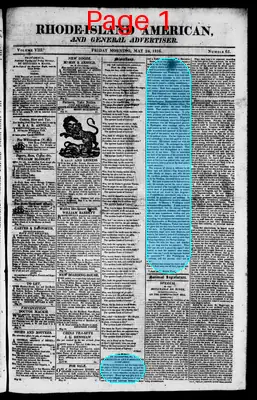
Literary
May 24, 1816
The Rhode Island American, And General Advertiser
Providence, Providence County, Rhode Island
What is this article about?
This essay from 'The Suggester, No. V' compares the ancient Theban leader Epaminondas and American George Washington as statesmen and warriors, highlighting their shared fight for freedom, personal virtues, and differing approaches to valor, while lamenting the loss of American leaders.
Clipping
OCR Quality
95%
Excellent
Full Text
THE SUGGESTER, No. V.
EPAMINONDAS AND WASHINGTON
COMPARED
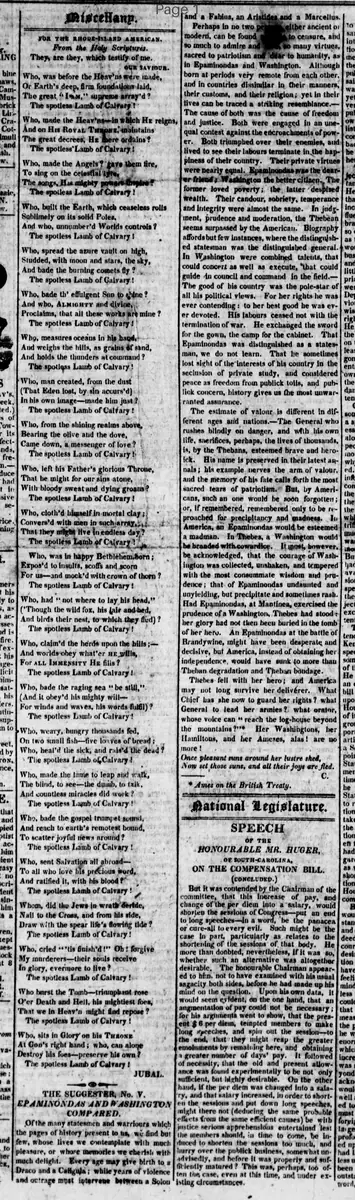
Of the many statesmen and warriors which the pages of history present to us, we find but few, whose lives we contemplate with much pleasure, or whose memories we cherish with much delight. Every age may give birth to a Draco and a Caligula; while years of violence and outrage must intervene between a Solon and a Fabius, an Aristides and a Marcellus. Perhaps in no two persons, either ancient or modern, can be found so much to censure, and so many virtues, sacred to patriotism and dear to humanity, as in Epaminondas and Washington. Although born at periods very remote from each other, and in countries dissimilar in their manners, their customs, and their religion; yet in their lives can be traced a striking resemblance. The cause of both was the cause of freedom and justice. Both were engaged in an unequal contest against the encroachments of power. Both triumphed over their enemies, and lived to see their labours terminate in the happiness of their country. Their private virtues were nearly equal. Epaminondas was the dearer friend; Washington the better citizen. The former loved poverty; the latter despised wealth. Their candour, sobriety, temperance and integrity were almost the same. In judgment, prudence and moderation, the Theban seems surpassed by the American. Biography affords but few instances, where the distinguished statesman was the distinguished general. In Washington were combined talents, that could concert as well as execute, that could guide in council and command in the field. The good of his country was the pole-star of all his political views. For her rights he was ever contending : to her best good he was ever devoted. His labours ceased not with the termination of war. He exchanged the sword for the gown, the camp for the cabinet. That Epaminondas was distinguished as a statesman, we do not learn. That he sometimes lost sight of the interests of his country in the seclusion of private study, and considered peace as freedom from publick toils, and publick concern, history gives us the most unwarranted assurance.
The estimate of valour is different in different ages and nations.—The General who rushes blindly on danger, and with his own life, sacrifices, perhaps, the lives of thousands, is, by the Thebans, esteemed brave and heroick. His name is preserved in their latest annals; his example nerves the arm of valour, and the memory of his fate calls forth the most sacred tears of patriotism. But, by Americans, such an one would be soon forgotten; or, if remembered, remembered only to be reproached for precipitancy and madness. In America, an Epaminondas would be esteemed a madman. In Thebes, a Washington would be branded with cowardice. It must, however, be acknowledged, that the courage of Washington was collected, unshaken, and tempered with the most consummate wisdom and prudence; that of Epaminondas undaunted and unyielding, but precipitate and sometimes rash. Had Epaminondas, at Mantinea, exercised the prudence of a Washington, Thebes had stood : her glory had not then been buried in the tomb of her hero. An Epaminondas at the battle of Brandywine, might have been desperate and decisive, but America, instead of obtaining her independence, would have sunk to more than Theban degradation and Theban bondage. Thebes fell with her hero; and America may not long survive her deliverer. What Chief has she now to guard her rights ? what General to lead her armies? what orator whose voice can " reach the log-house beyond the mountains?"* Her Washingtons, her Hamiltons, and her Ameses, alas! are no more!
Once pleasant suns around her lustre shed,
Now set those suns, and all their joys are fled.
c.
* Ames on the British Treaty.
EPAMINONDAS AND WASHINGTON
COMPARED
Of the many statesmen and warriors which the pages of history present to us, we find but few, whose lives we contemplate with much pleasure, or whose memories we cherish with much delight. Every age may give birth to a Draco and a Caligula; while years of violence and outrage must intervene between a Solon and a Fabius, an Aristides and a Marcellus. Perhaps in no two persons, either ancient or modern, can be found so much to censure, and so many virtues, sacred to patriotism and dear to humanity, as in Epaminondas and Washington. Although born at periods very remote from each other, and in countries dissimilar in their manners, their customs, and their religion; yet in their lives can be traced a striking resemblance. The cause of both was the cause of freedom and justice. Both were engaged in an unequal contest against the encroachments of power. Both triumphed over their enemies, and lived to see their labours terminate in the happiness of their country. Their private virtues were nearly equal. Epaminondas was the dearer friend; Washington the better citizen. The former loved poverty; the latter despised wealth. Their candour, sobriety, temperance and integrity were almost the same. In judgment, prudence and moderation, the Theban seems surpassed by the American. Biography affords but few instances, where the distinguished statesman was the distinguished general. In Washington were combined talents, that could concert as well as execute, that could guide in council and command in the field. The good of his country was the pole-star of all his political views. For her rights he was ever contending : to her best good he was ever devoted. His labours ceased not with the termination of war. He exchanged the sword for the gown, the camp for the cabinet. That Epaminondas was distinguished as a statesman, we do not learn. That he sometimes lost sight of the interests of his country in the seclusion of private study, and considered peace as freedom from publick toils, and publick concern, history gives us the most unwarranted assurance.
The estimate of valour is different in different ages and nations.—The General who rushes blindly on danger, and with his own life, sacrifices, perhaps, the lives of thousands, is, by the Thebans, esteemed brave and heroick. His name is preserved in their latest annals; his example nerves the arm of valour, and the memory of his fate calls forth the most sacred tears of patriotism. But, by Americans, such an one would be soon forgotten; or, if remembered, remembered only to be reproached for precipitancy and madness. In America, an Epaminondas would be esteemed a madman. In Thebes, a Washington would be branded with cowardice. It must, however, be acknowledged, that the courage of Washington was collected, unshaken, and tempered with the most consummate wisdom and prudence; that of Epaminondas undaunted and unyielding, but precipitate and sometimes rash. Had Epaminondas, at Mantinea, exercised the prudence of a Washington, Thebes had stood : her glory had not then been buried in the tomb of her hero. An Epaminondas at the battle of Brandywine, might have been desperate and decisive, but America, instead of obtaining her independence, would have sunk to more than Theban degradation and Theban bondage. Thebes fell with her hero; and America may not long survive her deliverer. What Chief has she now to guard her rights ? what General to lead her armies? what orator whose voice can " reach the log-house beyond the mountains?"* Her Washingtons, her Hamiltons, and her Ameses, alas! are no more!
Once pleasant suns around her lustre shed,
Now set those suns, and all their joys are fled.
c.
* Ames on the British Treaty.
What sub-type of article is it?
Essay
What themes does it cover?
Liberty Freedom
Patriotism
Political
What keywords are associated?
Epaminondas
Washington
Comparison
Patriotism
Freedom
Statesmen
Warriors
Virtues
Literary Details
Title
Epaminondas And Washington Compared
Subject
Comparison Of Epaminondas And Washington As Statesmen And Warriors
Key Lines
Perhaps In No Two Persons, Either Ancient Or Modern, Can Be Found So Much To Censure, And So Many Virtues, Sacred To Patriotism And Dear To Humanity, As In Epaminondas And Washington.
The Good Of His Country Was The Pole Star Of All His Political Views.
In America, An Epaminondas Would Be Esteemed A Madman. In Thebes, A Washington Would Be Branded With Cowardice.
Once Pleasant Suns Around Her Lustre Shed,
Now Set Those Suns, And All Their Joys Are Fled.