Thank you for visiting SNEWPapers!
Sign up free
Story
August 13, 1814
Daily National Intelligencer
Washington, District Of Columbia
What is this article about?
Article from the Aurora denounces the Boston Centinel's editor for pro-British zeal after visiting the frigate Nymphe, proposing US officials resign as peace offering to Britain, slandering Congress, and denying substantiated Hampton atrocities while praising British troops at Eastport.
Clipping
OCR Quality
95%
Excellent
Full Text
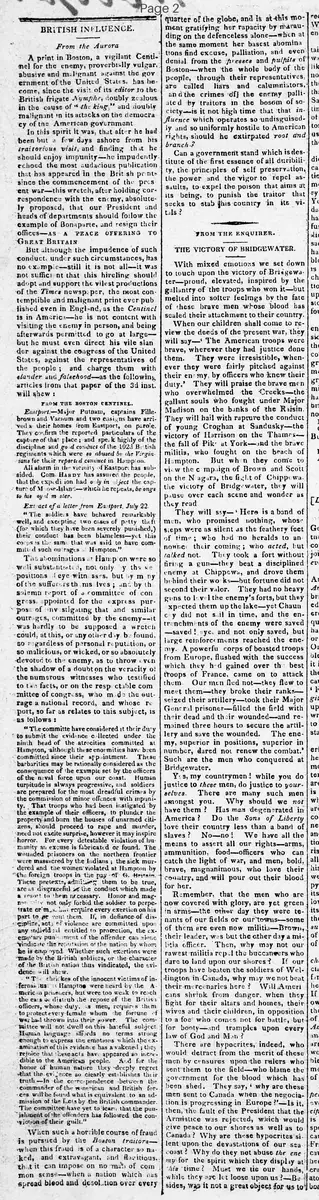
BRITISH INFLUENCE.
From the Aurora
A print in Boston, a vigilant Centinel for the enemy, proverbially vulgar abusive and malignant against the government of the United States, has become, since the visit of its editor to the British frigate Nymphe, doubly zealous in the cause of "the king," and doubly malignant in its attacks on the democracy of the American government.
In this spirit it was, that after he had been but few days ashore from his traitorous visit, and finding that he should enjoy impunity—he impudently echoed the most audacious publication that has appeared in the British prints since the commencement of the present war—this wretch, after holding correspondence with the enemy, absolutely proposed, that our President and heads of departments should follow the example of Bonaparte, and resign their OFFICES—AS A PEACE OFFERING TO GREAT BRITAIN.
But although the impudence of such conduct, under such circumstances, has no example—still it is not all—it was not sufficient that this hireling should adopt and support the vilest productions of the Times newspaper, the most contemptible and malignant print ever published even in England, as the Centinel is in America—he is not content with visiting the enemy in person, and being afterwards permitted to go at large—but he must even direct his vile slander against the congress of the United States, against the representatives of the people: and charge them with slander and falsehood—as the following articles from that paper of the 3d inst. will shew:
FROM THE BOSTON CENTINEL.
Eastport.—Major Putnam, captains Fillbrown and Varnum and two ensigns have arrived at their homes from Eastport, on parole. They confirm the reported particulars of the capture of that place; and speak highly of the discipline and good conduct of the lord British regiments which were so abused by the Virginians for their reported conduct in Hampton.
All alarm in the vicinity of Eastport has subsided. Com. Hardy has assured the people, that the expedition had only in view the capture of Moose Island—which he repeats, belongs so his admiral master.
Extract of a letter from Eastport, July 22.
"The soldiers have behaved remarkably well, and excepting two cases of petty theft (for which they have been severely punished,) their conduct has been blameless—yet this corps is the same that was said to have committed such outrages Hampton."
The abominations at Hampton were so well substantiated, not only by the depositions of eye witnesses, but by many of the sufferers themselves; and by the solemn report of a committee of congress, appointed for the express purpose of investigating that and similar outrages, committed by the enemy—it was hardly to be supposed a wretch could, at this, or any other day be found, so regardless of personal reputation, or so malicious, or wicked, or so absolutely devoted to the enemy, as to throw even the shadow of a doubt on the veracity of the numerous witnesses who testified to the facts, or on the respectable committee of congress, who made the outrage a national record, and whose report, so far as relates to this subject, is as follows:
"The committee have considered it their duty to submit the evidence collected under the ninth head of the—atrocities committed at Hampton, although these enormities have been committed since their appointment. These barbarities may be rationally considered as the consequence of the example set by the officers of the naval force upon our coast. Human turpitude is always progressive, and soldiers are prepared for the most dreadful crimes by the commission of minor offences with impunity. That troops who had been instigated by the example of their officers, to plunder the property and burn the houses of unarmed citizens, should proceed to rape and murder, need not excite surprise, however it may inspire horror. For every detestable violation of humanity an excuse is fabricated or found. The wounded prisoners on the northern frontier were massacred by the Indians; the sick murdered and the women violated at Hampton by "the foreign troops in the pay of G. Britain."
These pretexts, admitting them to be true, are as disgraceful the conduct which made a resort to them necessary. Honor and magnanimity not only forbid the soldier to perpetrate crimes, but require every exertion on his part to prevent them. If, in defiance of discipline, acts of violence are committed upon any individual entitled to protection, the exemplary punishment of the offender can alone vindicate the reputation of the nation by whom he is employed. Whether such exertions were made by the British soldiers, or the character of the British nation thus vindicated, the evidence will shew.
"To shrieks of the innocent victims of infernal lust at Hampton were heard by the American prisoners, but were too weak to reach the ears or disturb the repose of the British officers, whose duty, as men, requires them to protect every female whom the fortune of war has thrown into their power. The committee will not dwell on this hateful subject. Human language affords no terms strong enough to express the emotions which the examination of this evidence has awakened; they rejoice that these acts have appeared so incredible to the American people. And for the honor of human nature they deeply regret that the evidence so clearly establishes their truth.—In the correspondence between the commander of the American and British forces will be found what is equivalent to an admission of the facts by the British commander. The committee have yet to learn that the punishment of the offenders has followed the conviction of their guilt."
When such a horrible course of fraud is pursued by the Boston traitors—when this fraud is of a character so naked, and extravagant, and audacious, that it can impose on no man of common sense—when a nation which has spread blood and desolation over every
From the Aurora
A print in Boston, a vigilant Centinel for the enemy, proverbially vulgar abusive and malignant against the government of the United States, has become, since the visit of its editor to the British frigate Nymphe, doubly zealous in the cause of "the king," and doubly malignant in its attacks on the democracy of the American government.
In this spirit it was, that after he had been but few days ashore from his traitorous visit, and finding that he should enjoy impunity—he impudently echoed the most audacious publication that has appeared in the British prints since the commencement of the present war—this wretch, after holding correspondence with the enemy, absolutely proposed, that our President and heads of departments should follow the example of Bonaparte, and resign their OFFICES—AS A PEACE OFFERING TO GREAT BRITAIN.
But although the impudence of such conduct, under such circumstances, has no example—still it is not all—it was not sufficient that this hireling should adopt and support the vilest productions of the Times newspaper, the most contemptible and malignant print ever published even in England, as the Centinel is in America—he is not content with visiting the enemy in person, and being afterwards permitted to go at large—but he must even direct his vile slander against the congress of the United States, against the representatives of the people: and charge them with slander and falsehood—as the following articles from that paper of the 3d inst. will shew:
FROM THE BOSTON CENTINEL.
Eastport.—Major Putnam, captains Fillbrown and Varnum and two ensigns have arrived at their homes from Eastport, on parole. They confirm the reported particulars of the capture of that place; and speak highly of the discipline and good conduct of the lord British regiments which were so abused by the Virginians for their reported conduct in Hampton.
All alarm in the vicinity of Eastport has subsided. Com. Hardy has assured the people, that the expedition had only in view the capture of Moose Island—which he repeats, belongs so his admiral master.
Extract of a letter from Eastport, July 22.
"The soldiers have behaved remarkably well, and excepting two cases of petty theft (for which they have been severely punished,) their conduct has been blameless—yet this corps is the same that was said to have committed such outrages Hampton."
The abominations at Hampton were so well substantiated, not only by the depositions of eye witnesses, but by many of the sufferers themselves; and by the solemn report of a committee of congress, appointed for the express purpose of investigating that and similar outrages, committed by the enemy—it was hardly to be supposed a wretch could, at this, or any other day be found, so regardless of personal reputation, or so malicious, or wicked, or so absolutely devoted to the enemy, as to throw even the shadow of a doubt on the veracity of the numerous witnesses who testified to the facts, or on the respectable committee of congress, who made the outrage a national record, and whose report, so far as relates to this subject, is as follows:
"The committee have considered it their duty to submit the evidence collected under the ninth head of the—atrocities committed at Hampton, although these enormities have been committed since their appointment. These barbarities may be rationally considered as the consequence of the example set by the officers of the naval force upon our coast. Human turpitude is always progressive, and soldiers are prepared for the most dreadful crimes by the commission of minor offences with impunity. That troops who had been instigated by the example of their officers, to plunder the property and burn the houses of unarmed citizens, should proceed to rape and murder, need not excite surprise, however it may inspire horror. For every detestable violation of humanity an excuse is fabricated or found. The wounded prisoners on the northern frontier were massacred by the Indians; the sick murdered and the women violated at Hampton by "the foreign troops in the pay of G. Britain."
These pretexts, admitting them to be true, are as disgraceful the conduct which made a resort to them necessary. Honor and magnanimity not only forbid the soldier to perpetrate crimes, but require every exertion on his part to prevent them. If, in defiance of discipline, acts of violence are committed upon any individual entitled to protection, the exemplary punishment of the offender can alone vindicate the reputation of the nation by whom he is employed. Whether such exertions were made by the British soldiers, or the character of the British nation thus vindicated, the evidence will shew.
"To shrieks of the innocent victims of infernal lust at Hampton were heard by the American prisoners, but were too weak to reach the ears or disturb the repose of the British officers, whose duty, as men, requires them to protect every female whom the fortune of war has thrown into their power. The committee will not dwell on this hateful subject. Human language affords no terms strong enough to express the emotions which the examination of this evidence has awakened; they rejoice that these acts have appeared so incredible to the American people. And for the honor of human nature they deeply regret that the evidence so clearly establishes their truth.—In the correspondence between the commander of the American and British forces will be found what is equivalent to an admission of the facts by the British commander. The committee have yet to learn that the punishment of the offenders has followed the conviction of their guilt."
When such a horrible course of fraud is pursued by the Boston traitors—when this fraud is of a character so naked, and extravagant, and audacious, that it can impose on no man of common sense—when a nation which has spread blood and desolation over every
What sub-type of article is it?
Historical Event
Deception Fraud
Crime Story
What themes does it cover?
Deception
Betrayal
Crime Punishment
What keywords are associated?
British Influence
Boston Centinel
Hampton Atrocities
Eastport Capture
War Propaganda
Treasonous Press
What entities or persons were involved?
Editor Of The Centinel
Major Putnam
Captain Fillbrown
Captain Varnum
Com. Hardy
Bonaparte
Where did it happen?
Boston, Eastport, Hampton
Story Details
Key Persons
Editor Of The Centinel
Major Putnam
Captain Fillbrown
Captain Varnum
Com. Hardy
Bonaparte
Location
Boston, Eastport, Hampton
Event Date
July 22
Story Details
The Aurora criticizes the Boston Centinel's editor for pro-British propaganda after visiting the frigate Nymphe, proposing US resignation to Britain, denying Hampton atrocities via congressional report, and praising British capture of Eastport.