Thank you for visiting SNEWPapers!
Sign up free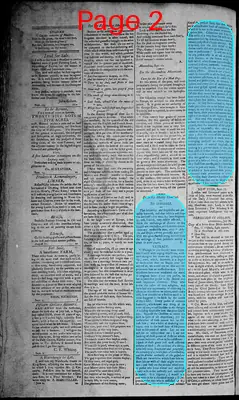
Editorial
September 16, 1803
Alexandria Advertiser And Commercial Intelligencer
Alexandria, Virginia
What is this article about?
An editorial in the Albany Centinel submits an extract from James Beattie's writings arguing that infidelity and skepticism are harmful, as they undermine essential religious beliefs like God's existence, future retribution, and the gospel's authority, distressing believers and promoting vice, while defending the gospel's promotion of mercy and benevolence.
Clipping
OCR Quality
75%
Good
Full Text
From the Albany Centinel.
TO INFIDELS.
That infidelity and scepticism are perfectly harmless, and that infidels and sceptics are inoffensive men, has been frequently, and, I think, very rashly asserted. I think the reasonings of Beattie on this subject are conclusive, and sufficient to convince any reasonable man, that "Atheism and Deism are not perfectly neutral."
Will you give the following extract from the writings of that judicious author a place in your paper.
B.
EXTRACT.
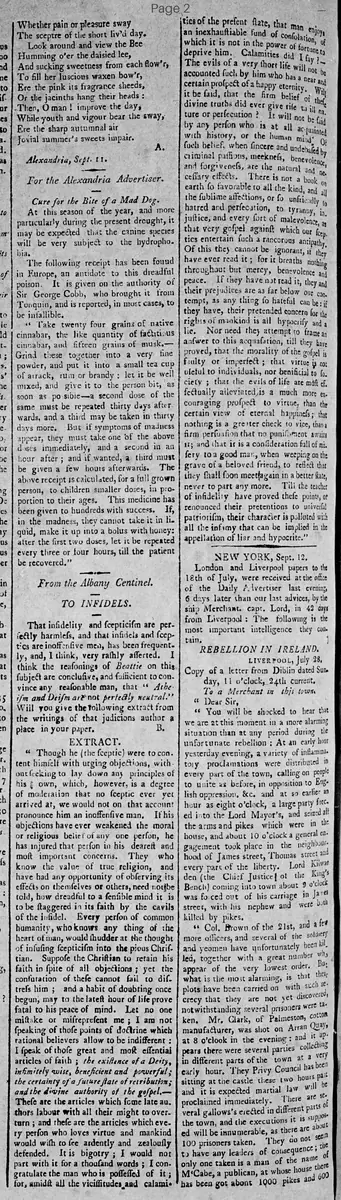
"Though he (the sceptic) were to content himself with urging objections, without seeking to lay down any principles of his own, which, however, is a degree of moderation that no sceptic ever yet arrived at, we would not on that account pronounce him an inoffensive man. If his objections have ever weakened the moral or religious belief of any one person, he has injured that person in his dearest and most important concerns. They who know the value of true religion, and have had any opportunity of observing its effects on themselves or others, need not be told, how dreadful to a sensible mind it is to be staggered in its faith by the cavils of the infidel. Every person of common humanity, who knows any thing of the heart of man, would shudder at the thought of infusing scepticism into the pious Christian. Suppose the Christian to retain his faith in spite of all objections: yet the contestation of these cannot fail to distress him; and a habit of doubting once begun, may to the latest hour of life prove fatal to his peace of mind. Let no one mistake or misrepresent me; I am not speaking of those points of doctrine which rational believers allow to be indifferent: I speak of those great and most essential articles of faith; the existence of a Deity, infinitely wise, beneficent and powerful; the certainty of a future state of retribution; and the divine authority of the gospel.
These are the articles which late authors labour with all their might to overturn; and these are the articles which every person who loves virtue and mankind would wish to see ardently and zealously defended. It is bigotry: I would not part with it for a thousand worlds; I congratulate the man who is possessed of it; for, amidst all the vicissitudes and calamities of the present age, that man enjoys an inexhaustible fund of which it is not in the power of fortune to deprive him of such a prospect of such a happy eternity. Life has its ills, but will a man near his end say not, will and be it be said, that the firm belief of the divine truths did ever give rise to ill nature or persecution? It will not be said by any person who is at all acquainted with history, or the human mind: Ok acquainted such belief, when sincere and undebased by criminal passions, meekness, benevolence, and forgiveness, are the natural and necessary effects.
There is not a book on earth so favorable to all the kind, and all the sublime affections, or so unfriendly to hatred and persecution, to tyranny, injustice, and every sort of malevolence, as that very gospel against which our sceptics entertain such a rancorous antipathy. Of this they cannot be ignorant, if they have ever read it; for it breathes nothing throughout but mercy, benevolence and peace. If they have not read it, they and their prejudices are as far below our contempt, as any thing so hateful can be: if they have, their pretended concern for the rights of mankind is all hypocrisy and a lie. Nor need they attempt to frame an answer to this accusation, till they have proved, that the morality of the gospel is faulty or imperfect; that virtue is not delightful to individuals, nor beneficial to society; that the evils of life are most effectually alleviated in a much more encouraging prospect to virtue, than the certain view of eternal happiness; that nothing is a greater check to vice, than a firm persuasion that no punishment awaits it; and that it is a consideration full of misery to a good man, when weeping on the grave of a beloved friend, to reflect that they shall soon meet again in a better state, never to part any more. Till the teachers of infidelity have proved these points, or renounced their pretensions to universal patriotism, their character is polluted with all the infamy that can be implied in the appellation of liar and hypocrite."
TO INFIDELS.
That infidelity and scepticism are perfectly harmless, and that infidels and sceptics are inoffensive men, has been frequently, and, I think, very rashly asserted. I think the reasonings of Beattie on this subject are conclusive, and sufficient to convince any reasonable man, that "Atheism and Deism are not perfectly neutral."
Will you give the following extract from the writings of that judicious author a place in your paper.
B.
EXTRACT.
"Though he (the sceptic) were to content himself with urging objections, without seeking to lay down any principles of his own, which, however, is a degree of moderation that no sceptic ever yet arrived at, we would not on that account pronounce him an inoffensive man. If his objections have ever weakened the moral or religious belief of any one person, he has injured that person in his dearest and most important concerns. They who know the value of true religion, and have had any opportunity of observing its effects on themselves or others, need not be told, how dreadful to a sensible mind it is to be staggered in its faith by the cavils of the infidel. Every person of common humanity, who knows any thing of the heart of man, would shudder at the thought of infusing scepticism into the pious Christian. Suppose the Christian to retain his faith in spite of all objections: yet the contestation of these cannot fail to distress him; and a habit of doubting once begun, may to the latest hour of life prove fatal to his peace of mind. Let no one mistake or misrepresent me; I am not speaking of those points of doctrine which rational believers allow to be indifferent: I speak of those great and most essential articles of faith; the existence of a Deity, infinitely wise, beneficent and powerful; the certainty of a future state of retribution; and the divine authority of the gospel.
These are the articles which late authors labour with all their might to overturn; and these are the articles which every person who loves virtue and mankind would wish to see ardently and zealously defended. It is bigotry: I would not part with it for a thousand worlds; I congratulate the man who is possessed of it; for, amidst all the vicissitudes and calamities of the present age, that man enjoys an inexhaustible fund of which it is not in the power of fortune to deprive him of such a prospect of such a happy eternity. Life has its ills, but will a man near his end say not, will and be it be said, that the firm belief of the divine truths did ever give rise to ill nature or persecution? It will not be said by any person who is at all acquainted with history, or the human mind: Ok acquainted such belief, when sincere and undebased by criminal passions, meekness, benevolence, and forgiveness, are the natural and necessary effects.
There is not a book on earth so favorable to all the kind, and all the sublime affections, or so unfriendly to hatred and persecution, to tyranny, injustice, and every sort of malevolence, as that very gospel against which our sceptics entertain such a rancorous antipathy. Of this they cannot be ignorant, if they have ever read it; for it breathes nothing throughout but mercy, benevolence and peace. If they have not read it, they and their prejudices are as far below our contempt, as any thing so hateful can be: if they have, their pretended concern for the rights of mankind is all hypocrisy and a lie. Nor need they attempt to frame an answer to this accusation, till they have proved, that the morality of the gospel is faulty or imperfect; that virtue is not delightful to individuals, nor beneficial to society; that the evils of life are most effectually alleviated in a much more encouraging prospect to virtue, than the certain view of eternal happiness; that nothing is a greater check to vice, than a firm persuasion that no punishment awaits it; and that it is a consideration full of misery to a good man, when weeping on the grave of a beloved friend, to reflect that they shall soon meet again in a better state, never to part any more. Till the teachers of infidelity have proved these points, or renounced their pretensions to universal patriotism, their character is polluted with all the infamy that can be implied in the appellation of liar and hypocrite."
What sub-type of article is it?
Moral Or Religious
What keywords are associated?
Infidelity
Skepticism
Religion
Gospel
Morality
Deity
Future Retribution
Bigotry
What entities or persons were involved?
Beattie
Infidels
Sceptics
Christians
Editorial Details
Primary Topic
Defense Of Religion Against Infidelity And Skepticism
Stance / Tone
Strongly Pro Religion And Anti Skepticism
Key Figures
Beattie
Infidels
Sceptics
Christians
Key Arguments
Skepticism Weakens Moral And Religious Beliefs, Injuring Individuals In Their Most Important Concerns
Doubting Essential Faiths Like God's Existence, Future Retribution, And Gospel Authority Distresses Believers And Harms Peace Of Mind
True Religion Promotes Meekness, Benevolence, And Forgiveness
The Gospel Fosters Mercy, Benevolence, And Peace, Opposing Hatred And Tyranny
Skeptics' Concern For Mankind Is Hypocritical If They Attack The Gospel Without Proving Its Morality Faulty
Firm Belief In Divine Truths Does Not Lead To Ill Nature Or Persecution