Thank you for visiting SNEWPapers!
Sign up free
Wood County Reporter
Wisconsin Rapids, Wood County, Wisconsin
What is this article about?
A massive fire swept through Mobile, Alabama's riverfront on October 26, destroying warehouses, cotton, vessels, and other property with losses exceeding $650,000, the worst since the Civil War.
Clipping
OCR Quality
Full Text
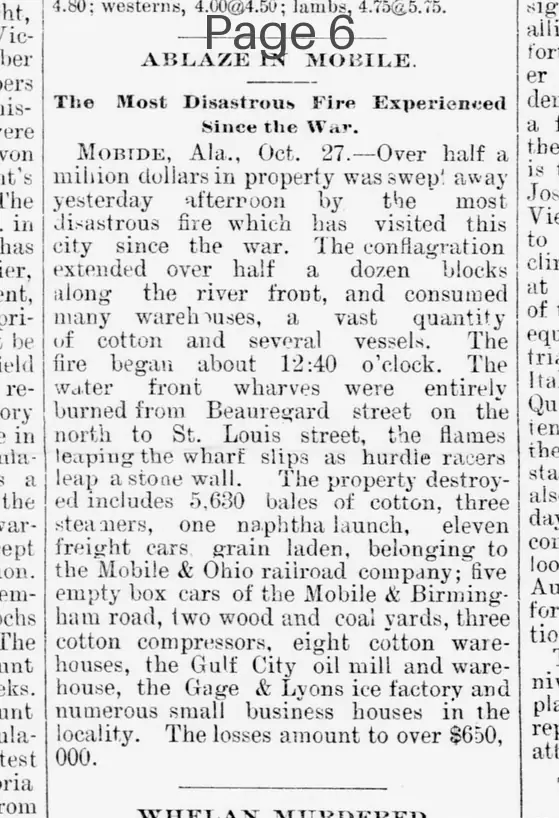
The Most Disastrous Fire Experienced
Since the War.
MOBILE, Ala., Oct. 27.-Over half a million dollars in property was swept away yesterday afternoon by the most disastrous fire which has visited this city since the war. The conflagration extended over half a dozen blocks along the river front, and consumed many warehouses, a vast quantity of cotton and several vessels. The fire began about 12:40 o'clock. The water front wharves were entirely burned from Beauregard street on the north to St. Louis street, the flames leaping the wharf slips as hurdle racers leap a stone wall. The property destroyed includes 5,630 bales of cotton, three steamers, one naphtha launch, eleven freight cars grain laden, belonging to the Mobile & Ohio railroad company; five empty box cars of the Mobile & Birmingham road, two wood and coal yards, three cotton compressors, eight cotton warehouses, the Gulf City oil mill and warehouse, the Gage & Lyons ice factory and numerous small business houses in the locality. The losses amount to over $650,000.
What sub-type of article is it?
What keywords are associated?
Where did it happen?
Domestic News Details
Primary Location
Mobile, Ala.
Event Date
Yesterday Afternoon, Reported Oct. 27
Outcome
losses over $650,000; property destroyed includes 5,630 bales of cotton, three steamers, one naphtha launch, eleven grain-laden freight cars, five empty box cars, two wood and coal yards, three cotton compressors, eight cotton warehouses, gulf city oil mill and warehouse, gage & lyons ice factory, and numerous small business houses.
Event Details
The fire began about 12:40 o'clock yesterday afternoon, extending over half a dozen blocks along the river front, consuming many warehouses, a vast quantity of cotton, and several vessels. The water front wharves were entirely burned from Beauregard street on the north to St. Louis street.