Thank you for visiting SNEWPapers!
Sign up free
Literary
December 29, 1842
Herald Of The Times
Newport, Newport County, Rhode Island
What is this article about?
This essay from the Philadelphia Inquirer extols the joys of home and family life during winter, highlighting the role of temper, kindness, and moral virtues in creating domestic harmony and refuge from external stresses.
Clipping
OCR Quality
98%
Excellent
Full Text
From the Philadelphia Inquirer.
The Family Fireside—Home and its Enjoyments.
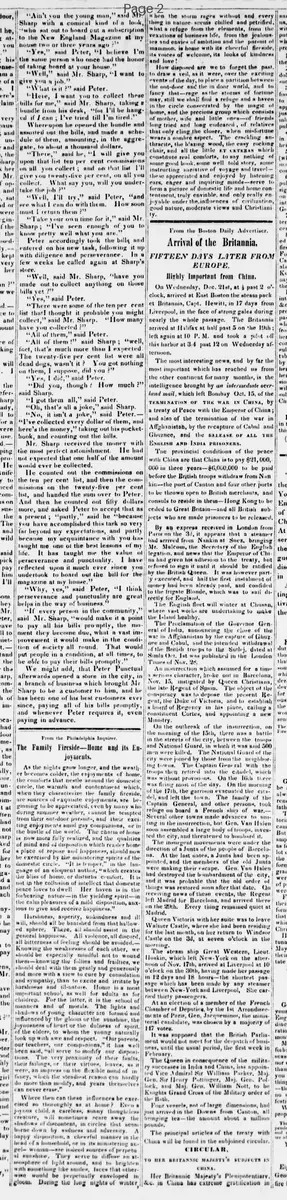
As the nights grow longer, and the weather becomes colder, the enjoyments of home, the comforts that nestle around the domestic circle, the warmth and contentment which when they characterize the family fireside, are sources of exquisite enjoyments, are beginning to be appreciated, even by many who during summer weather, cannot be tempted from their out-door pursuits, and their exciting enjoyments amid gay companions, or in the bustle of the world. The charm of home is now more fully realized, and the qualities of mind and of disposition which render home a place of repose and happiness, should now be exercised by the ministering spirits of the domestic circle. "It is temper," in the language of an eloquent author, "which creates the bliss of home, or disturbs comfort. It is not in the collision of intellect that domestic peace loves to dwell. Her haven is in the forbearing nature—in the yielding spirit—in the calm pleasures of a mild disposition, anxious to give and receive happiness."
Harshness, asperity, unkindness and ill will, should all be banished from that hallowed sphere. There, all should assist in the general happiness. All violence, all discord, all bitterness of feeling should be avoided. Knowing the weaknesses of each other, we should be especially mindful not to wound them—knowing the follies and frailties, we should deal with them gently and generously and more with a view to cure by consolation and sympathy, than to excite and irritate by harshness and ill-nature. Home is a most important school, as well for adults as for children. For the latter, it is the school of manners and of morals. The lights and shadows of young character are formed and influenced by the gloom or the sunshine, the joyousness of heart or the dulness of spirit, of the elders, to whom the young naturally look up with awe and respect. "Our parents, our teachers, our companions," it has well been said, "all serve to modify our dispositions. The very proximity of their faults, their failings, or their virtues, leaves, as it were, an impress on the flexible mind of infancy, which the steadiest reason can hardly do more than modify, and years themselves can never erase."
Where then can these influences be exercised so thoroughly as at home? Even a joyous child, a careless, sunny thoughtless creature, will sometimes scare away the shadows of discontent, in circles that seem borne down by sadness and adversity. A happy disposition, a cheerful manner in the head of a household, or in its ministering angel—what are indeed sources of perpetual sunshine. They serve to diffuse an atmosphere of light around, and to brighten with something like smiles, faces that otherwise would be perpetually enveloped in gloom. During the long nights of winter when the storm rages without and everything in nature seems chilled and petrified what a refuge from the elements, from the vexations of business life, from the jealousies and envies of ambition and the pursuit of mammon, is home with its cheerful fireside, its voices of welcome, its looks of kindness and love.
How disposed are we to forget the past, to draw a veil, as it were, over the exciting events of the day, to place a partition between the out-door and the in-door world, and to fancy that—rage as the storms of fortune may, still we shall find refuge and a haven in the circle consecrated by the magic of home, and the precious group which consists of mother, wife and little ones—of friends long tried and long endeared, of relatives that only cling the closer, when misfortune wears a sombre aspect. The crackling anthracite, the blazing wood, the easy rocking chair, and all the little etceteras which constitute real comforts, to say nothing of some good book, some well told story, some instructing narrative of voyage and travel—these appreciated and enjoyed by listening ears, eager and inquiring minds—serve to form a picture of domestic life and home contentment, truly enviable, and only really enjoyable under the influences of civilization, good nature, moderate views and Christianity.
The Family Fireside—Home and its Enjoyments.
As the nights grow longer, and the weather becomes colder, the enjoyments of home, the comforts that nestle around the domestic circle, the warmth and contentment which when they characterize the family fireside, are sources of exquisite enjoyments, are beginning to be appreciated, even by many who during summer weather, cannot be tempted from their out-door pursuits, and their exciting enjoyments amid gay companions, or in the bustle of the world. The charm of home is now more fully realized, and the qualities of mind and of disposition which render home a place of repose and happiness, should now be exercised by the ministering spirits of the domestic circle. "It is temper," in the language of an eloquent author, "which creates the bliss of home, or disturbs comfort. It is not in the collision of intellect that domestic peace loves to dwell. Her haven is in the forbearing nature—in the yielding spirit—in the calm pleasures of a mild disposition, anxious to give and receive happiness."
Harshness, asperity, unkindness and ill will, should all be banished from that hallowed sphere. There, all should assist in the general happiness. All violence, all discord, all bitterness of feeling should be avoided. Knowing the weaknesses of each other, we should be especially mindful not to wound them—knowing the follies and frailties, we should deal with them gently and generously and more with a view to cure by consolation and sympathy, than to excite and irritate by harshness and ill-nature. Home is a most important school, as well for adults as for children. For the latter, it is the school of manners and of morals. The lights and shadows of young character are formed and influenced by the gloom or the sunshine, the joyousness of heart or the dulness of spirit, of the elders, to whom the young naturally look up with awe and respect. "Our parents, our teachers, our companions," it has well been said, "all serve to modify our dispositions. The very proximity of their faults, their failings, or their virtues, leaves, as it were, an impress on the flexible mind of infancy, which the steadiest reason can hardly do more than modify, and years themselves can never erase."
Where then can these influences be exercised so thoroughly as at home? Even a joyous child, a careless, sunny thoughtless creature, will sometimes scare away the shadows of discontent, in circles that seem borne down by sadness and adversity. A happy disposition, a cheerful manner in the head of a household, or in its ministering angel—what are indeed sources of perpetual sunshine. They serve to diffuse an atmosphere of light around, and to brighten with something like smiles, faces that otherwise would be perpetually enveloped in gloom. During the long nights of winter when the storm rages without and everything in nature seems chilled and petrified what a refuge from the elements, from the vexations of business life, from the jealousies and envies of ambition and the pursuit of mammon, is home with its cheerful fireside, its voices of welcome, its looks of kindness and love.
How disposed are we to forget the past, to draw a veil, as it were, over the exciting events of the day, to place a partition between the out-door and the in-door world, and to fancy that—rage as the storms of fortune may, still we shall find refuge and a haven in the circle consecrated by the magic of home, and the precious group which consists of mother, wife and little ones—of friends long tried and long endeared, of relatives that only cling the closer, when misfortune wears a sombre aspect. The crackling anthracite, the blazing wood, the easy rocking chair, and all the little etceteras which constitute real comforts, to say nothing of some good book, some well told story, some instructing narrative of voyage and travel—these appreciated and enjoyed by listening ears, eager and inquiring minds—serve to form a picture of domestic life and home contentment, truly enviable, and only really enjoyable under the influences of civilization, good nature, moderate views and Christianity.
What sub-type of article is it?
Essay
What themes does it cover?
Moral Virtue
Temperance
Social Manners
What keywords are associated?
Domestic Happiness
Family Fireside
Winter Comforts
Moral Virtue
Temperance
Home Refuge
Literary Details
Title
The Family Fireside—Home And Its Enjoyments.
Key Lines
"It Is Temper," In The Language Of An Eloquent Author, "Which Creates The Bliss Of Home, Or Disturbs Comfort. It Is Not In The Collision Of Intellect That Domestic Peace Loves To Dwell. Her Haven Is In The Forbearing Nature—In The Yielding Spirit—In The Calm Pleasures Of A Mild Disposition, Anxious To Give And Receive Happiness."
Home Is A Most Important School, As Well For Adults As For Children. For The Latter, It Is The School Of Manners And Of Morals.
"Our Parents, Our Teachers, Our Companions," It Has Well Been Said, "All Serve To Modify Our Dispositions. The Very Proximity Of Their Faults, Their Failings, Or Their Virtues, Leaves, As It Were, An Impress On The Flexible Mind Of Infancy, Which The Steadiest Reason Can Hardly Do More Than Modify, And Years Themselves Can Never Erase."
During The Long Nights Of Winter When The Storm Rages Without And Everything In Nature Seems Chilled And Petrified What A Refuge From The Elements, From The Vexations Of Business Life, From The Jealousies And Envies Of Ambition And The Pursuit Of Mammon, Is Home With Its Cheerful Fireside, Its Voices Of Welcome, Its Looks Of Kindness And Love.