Thank you for visiting SNEWPapers!
Sign up free
Literary
March 23, 1759
The New Hampshire Gazette
Portsmouth, Rockingham County, New Hampshire
What is this article about?
An essay from The Idler explores how human desires grow with possessions, leading to artificial wants and employments in civilized societies. It discusses luxury, idleness, the role of artists in relieving burdens of wealth and time, and how news-writers sensationalize war with tales of cruelty.
Clipping
OCR Quality
95%
Excellent
Full Text
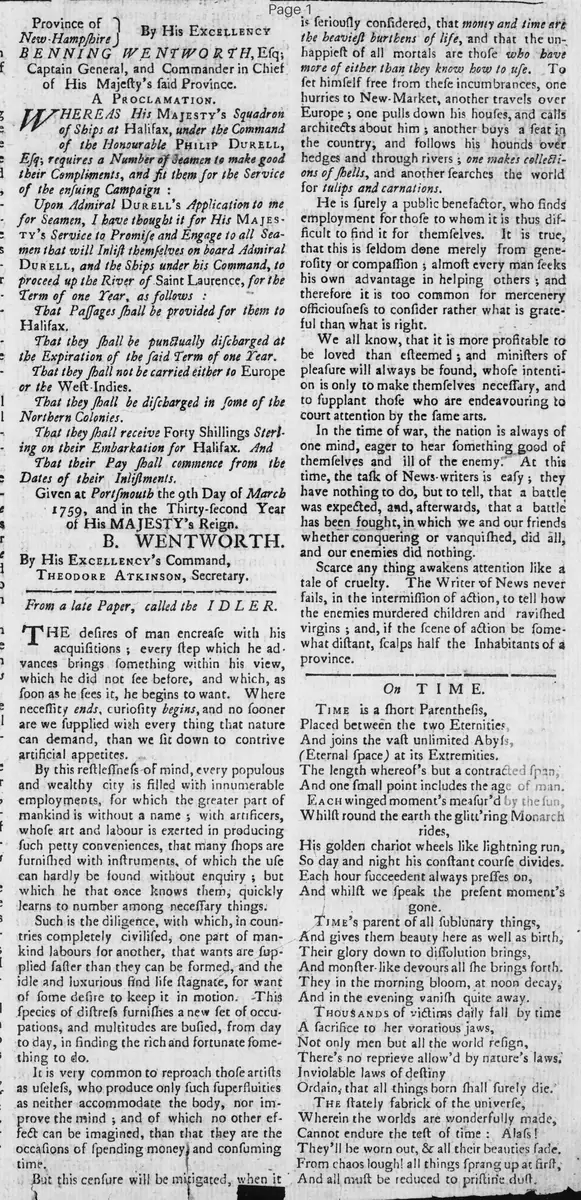
From a late Paper, called the IDLER.
THE desires of man increase with his acquisitions: every step which he advances brings something within his view, which he did not see before, and which, as soon as he sees it, he begins to want. Where necessity ends, curiosity begins, and no sooner are we supplied with every thing that nature can demand, than we sit down to contrive artificial appetites.
By this restlessness of mind, every populous and wealthy city is filled with innumerable employments, for which the greater part of mankind is without a name; with artificers, whose art and labour is exerted in producing such petty conveniences, that many shops are furnished with instruments, of which the use can hardly be found without enquiry; but which he that once knows them, quickly learns to number among necessary things.
Such is the diligence, with which, in countries completely civilised, one part of mankind labours for another, that wants are supplied faster than they can be formed, and the idle and luxurious find life stagnate, for want of some desire to keep it in motion. This species of distress furnishes a new set of occupations, and multitudes are busied, from day to day, in finding the rich and fortunate something to do.
It is very common to reproach those artists as useless, who produce only such superfluities as neither accommodate the body, nor improve the mind; and of which no other effect can be imagined, than that they are the occasions of spending money, and consuming time.
But this censure will be mitigated, when it is seriously considered, that money and time are the heaviest burthens of life, and that the unhappiest of all mortals are those who have more of either than they know how to use. To set himself free from these incumbrances, one hurries to New-Market, another travels over Europe; one pulls down his houses, and calls architects about him; another buys a seat in the country, and follows his hounds over hedges and through rivers; one makes collections of shells, and another searches the world for tulips and carnations.
He is surely a public benefactor, who finds employment for those to whom it is thus difficult to find it for themselves. It is true, that this is seldom done merely from generosity or compassion; almost every man seeks his own advantage in helping others; and therefore it is too common for mercenary officiousness to consider rather what is grateful than what is right.
We all know, that it is more profitable to be loved than esteemed; and ministers of pleasure will always be found, whose intention is only to make themselves necessary, and to supplant those who are endeavouring to court attention by the same arts.
In the time of war, the nation is always of one mind, eager to hear something good of themselves and ill of the enemy. At this time, the task of News-writers is easy; they have nothing to do, but to tell, that a battle was expected, and, afterwards, that a battle has been fought, in which we and our friends, whether conquering or vanquished, did all, and our enemies did nothing.
Scarce any thing awakens attention like a tale of cruelty. The Writer of News never fails, in the intermission of action, to tell how the enemies murdered children and ravished virgins; and, if the scene of action be somewhat distant, scalps half the Inhabitants of a province.
THE desires of man increase with his acquisitions: every step which he advances brings something within his view, which he did not see before, and which, as soon as he sees it, he begins to want. Where necessity ends, curiosity begins, and no sooner are we supplied with every thing that nature can demand, than we sit down to contrive artificial appetites.
By this restlessness of mind, every populous and wealthy city is filled with innumerable employments, for which the greater part of mankind is without a name; with artificers, whose art and labour is exerted in producing such petty conveniences, that many shops are furnished with instruments, of which the use can hardly be found without enquiry; but which he that once knows them, quickly learns to number among necessary things.
Such is the diligence, with which, in countries completely civilised, one part of mankind labours for another, that wants are supplied faster than they can be formed, and the idle and luxurious find life stagnate, for want of some desire to keep it in motion. This species of distress furnishes a new set of occupations, and multitudes are busied, from day to day, in finding the rich and fortunate something to do.
It is very common to reproach those artists as useless, who produce only such superfluities as neither accommodate the body, nor improve the mind; and of which no other effect can be imagined, than that they are the occasions of spending money, and consuming time.
But this censure will be mitigated, when it is seriously considered, that money and time are the heaviest burthens of life, and that the unhappiest of all mortals are those who have more of either than they know how to use. To set himself free from these incumbrances, one hurries to New-Market, another travels over Europe; one pulls down his houses, and calls architects about him; another buys a seat in the country, and follows his hounds over hedges and through rivers; one makes collections of shells, and another searches the world for tulips and carnations.
He is surely a public benefactor, who finds employment for those to whom it is thus difficult to find it for themselves. It is true, that this is seldom done merely from generosity or compassion; almost every man seeks his own advantage in helping others; and therefore it is too common for mercenary officiousness to consider rather what is grateful than what is right.
We all know, that it is more profitable to be loved than esteemed; and ministers of pleasure will always be found, whose intention is only to make themselves necessary, and to supplant those who are endeavouring to court attention by the same arts.
In the time of war, the nation is always of one mind, eager to hear something good of themselves and ill of the enemy. At this time, the task of News-writers is easy; they have nothing to do, but to tell, that a battle was expected, and, afterwards, that a battle has been fought, in which we and our friends, whether conquering or vanquished, did all, and our enemies did nothing.
Scarce any thing awakens attention like a tale of cruelty. The Writer of News never fails, in the intermission of action, to tell how the enemies murdered children and ravished virgins; and, if the scene of action be somewhat distant, scalps half the Inhabitants of a province.
What sub-type of article is it?
Essay
Satire
What themes does it cover?
Commerce Trade
Moral Virtue
Social Manners
What keywords are associated?
Human Desires
Artificial Appetites
Luxury
Employments
News Writers
War Propaganda
Cruelty Tales
Literary Details
Key Lines
The Desires Of Man Increase With His Acquisitions: Every Step Which He Advances Brings Something Within His View, Which He Did Not See Before, And Which, As Soon As He Sees It, He Begins To Want.
Where Necessity Ends, Curiosity Begins, And No Sooner Are We Supplied With Every Thing That Nature Can Demand, Than We Sit Down To Contrive Artificial Appetites.
Money And Time Are The Heaviest Burthens Of Life, And That The Unhappiest Of All Mortals Are Those Who Have More Of Either Than They Know How To Use.
In The Time Of War, The Nation Is Always Of One Mind, Eager To Hear Something Good Of Themselves And Ill Of The Enemy.
Scarce Any Thing Awakens Attention Like A Tale Of Cruelty.