Thank you for visiting SNEWPapers!
Sign up free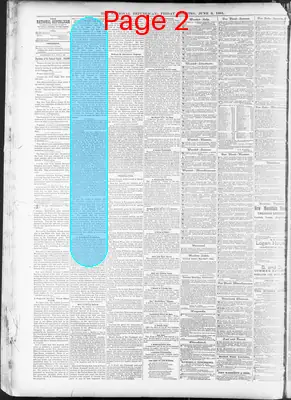
Story
June 3, 1881
National Republican (Washington City
Washington, District Of Columbia
What is this article about?
A political article exposes hypocrisy in the New York Tribune's support for Senators Woodin and Sessions, quoting its 1879 criticism of their corruption and ties to Tweed, amid efforts to elect reform senators replacing Conkling and Platt.
Clipping

OCR Quality
98%
Excellent
Full Text
The "Tribune's" Testimony to the Rottenness of Woodin and Sessions.
The reading public is aware that the present Administration enjoys the luxury of an organ in New York called the Tribune, and that it also enjoys the support of a large number of the members of the New York Legislature, who are endeavoring to secure the election of two Reform Senators to succeed Messrs. Conkling and Platt.
The Administration forces in that Legislature are led by a triumvirate of State senators, to wit: Robertson, Woodin, and Sessions. Robertson is the great national issue upon which the President has seen fit to divide the people of the country into the righteous and the wicked. Woodin and Sessions are among the former. They are the pride of the Tribune and the mainstay of the country against the torrent of wickedness with which the Stalwarts would fain overwhelm it.
As Robertson must soon retire into the custom-house and distribute the places he has promised in the interest of Reform, all good men will look to Woodin and Sessions to continue at the old stand the business of keeping the Legislature honest, and this will make people more anxious to know what manner of men Woodin and Sessions are.
Let us put the New York Tribune on the stand as our witness against them. We shall find upon the testimony of the unco-righteous and rigidly truthful Tribune that Senators Woodin and Sessions are sorry masqueraders. Instead of being men of stern virtue, battling for principle, they are rotten birds of prey. The picture of them so drawn less than two years ago is one at which the gorge rises.
We quote the following from the New York Tribune of September 22, 1879, when Cornell was the Republican candidate for Governor and Roscoe Conkling was, as usual, the leader in the contest:
TWO MISTAKES
The progress of the campaign in this State has been so auspicious for the Republican party that it is a painful task to call attention to the missteps, few as they are. But the very fact that the blunders are not many makes the few more glaring and seems to increase the necessity for some plain words of warning.
It is a misfortune-and not a slight one-to see the Republican roll of pure nominations broken by the renomination of Senator Sessions and the renomination of William B. Woodin. Readers of the Tribune have already learned what manner of men these are, though we must do Mr. Woodin the justice to say that we consider him much the manlier man of the two.
The legislative record and political methods of Mr. Sessions are so well known that the very ease with which his renomination was obtained is a reproach to him and not a credit. After all that has been known of him and all that he has admitted concerning his past life, it could not have been properly obtained.
Mr. Woodin's triumph was more difficult With a new district and at a time when an unexceptionable candidate was needed, he seems to have selfishly insisted that the party must "vindicate" him. Nearly one hundred ballots were taken before the opposition gave way.
What took place in the Auburn district as it was constituted when Mr. Woodin represented it in the Senate we all know. A large Republican majority dwindled down to a narrow margin of a few hundred votes, and finally, in 1877, he did not even live, as a candidate, through the campaign. Tweed's testimony confirming the strong popular conviction that he had been Tweed's Senator and had taken Tweed's money drove him from the field, and the district was only saved by the choice of another name.
The subject is not a pleasant one. Let us dismiss it with an expression of the hope that there will be no more such offenses against the good name of Republicanism. The Republican party is not made up of men like Mr. Sessions and Mr. Woodin, and does not deserve the reproach of being represented by them. When such men attempt to use the party for their own selfish purposes their efforts should be resisted by all honorable means.
We ask our readers to compare this with the daily eulogies of these same Messrs. Sessions and Woodin in this same Tribune, while all three are engaged in slandering and belittling the great statesman of the Empire State. It must be a vile cause which requires or can command such instrumentalities.
We submit that the Tribune's present copartnership with the men it knows to be corrupt is the best evidence of its own corruption. It is as base and false as it is arrogant and pretentious.
Let us hear from its most brazen Bohemian on the subject of Senators Woodin and Sessions. And let the President see it practice its best efforts at swallowing its own words.
A Half-Breed Confession.
The majority of the Republicans, as shown in two votes taken in the Legislature, say that Mr. Conkling shall not again be a Senator from this State. If this is suggested, the reply immediately is: "Oh, yes; we'll admit that; but it is also a cardinal doctrine that the wishes of the party must be expressed first in the caucus."
They are still tenacious of the caucus, hoping, if a caucus could be secured, that a sufficient number of men could be induced to vote a written secret ballot for Conkling who dare not now stand up in their places and name him in joint assembly.
The Administration men, adopting the saying that "The honest man is the man who is best watched," prefer to maintain the safe position of refusing to enter a caucus rather than accept any chances that might accompany a secret ballot.-New York Times Albany Correspondent.
The reading public is aware that the present Administration enjoys the luxury of an organ in New York called the Tribune, and that it also enjoys the support of a large number of the members of the New York Legislature, who are endeavoring to secure the election of two Reform Senators to succeed Messrs. Conkling and Platt.
The Administration forces in that Legislature are led by a triumvirate of State senators, to wit: Robertson, Woodin, and Sessions. Robertson is the great national issue upon which the President has seen fit to divide the people of the country into the righteous and the wicked. Woodin and Sessions are among the former. They are the pride of the Tribune and the mainstay of the country against the torrent of wickedness with which the Stalwarts would fain overwhelm it.
As Robertson must soon retire into the custom-house and distribute the places he has promised in the interest of Reform, all good men will look to Woodin and Sessions to continue at the old stand the business of keeping the Legislature honest, and this will make people more anxious to know what manner of men Woodin and Sessions are.
Let us put the New York Tribune on the stand as our witness against them. We shall find upon the testimony of the unco-righteous and rigidly truthful Tribune that Senators Woodin and Sessions are sorry masqueraders. Instead of being men of stern virtue, battling for principle, they are rotten birds of prey. The picture of them so drawn less than two years ago is one at which the gorge rises.
We quote the following from the New York Tribune of September 22, 1879, when Cornell was the Republican candidate for Governor and Roscoe Conkling was, as usual, the leader in the contest:
TWO MISTAKES
The progress of the campaign in this State has been so auspicious for the Republican party that it is a painful task to call attention to the missteps, few as they are. But the very fact that the blunders are not many makes the few more glaring and seems to increase the necessity for some plain words of warning.
It is a misfortune-and not a slight one-to see the Republican roll of pure nominations broken by the renomination of Senator Sessions and the renomination of William B. Woodin. Readers of the Tribune have already learned what manner of men these are, though we must do Mr. Woodin the justice to say that we consider him much the manlier man of the two.
The legislative record and political methods of Mr. Sessions are so well known that the very ease with which his renomination was obtained is a reproach to him and not a credit. After all that has been known of him and all that he has admitted concerning his past life, it could not have been properly obtained.
Mr. Woodin's triumph was more difficult With a new district and at a time when an unexceptionable candidate was needed, he seems to have selfishly insisted that the party must "vindicate" him. Nearly one hundred ballots were taken before the opposition gave way.
What took place in the Auburn district as it was constituted when Mr. Woodin represented it in the Senate we all know. A large Republican majority dwindled down to a narrow margin of a few hundred votes, and finally, in 1877, he did not even live, as a candidate, through the campaign. Tweed's testimony confirming the strong popular conviction that he had been Tweed's Senator and had taken Tweed's money drove him from the field, and the district was only saved by the choice of another name.
The subject is not a pleasant one. Let us dismiss it with an expression of the hope that there will be no more such offenses against the good name of Republicanism. The Republican party is not made up of men like Mr. Sessions and Mr. Woodin, and does not deserve the reproach of being represented by them. When such men attempt to use the party for their own selfish purposes their efforts should be resisted by all honorable means.
We ask our readers to compare this with the daily eulogies of these same Messrs. Sessions and Woodin in this same Tribune, while all three are engaged in slandering and belittling the great statesman of the Empire State. It must be a vile cause which requires or can command such instrumentalities.
We submit that the Tribune's present copartnership with the men it knows to be corrupt is the best evidence of its own corruption. It is as base and false as it is arrogant and pretentious.
Let us hear from its most brazen Bohemian on the subject of Senators Woodin and Sessions. And let the President see it practice its best efforts at swallowing its own words.
A Half-Breed Confession.
The majority of the Republicans, as shown in two votes taken in the Legislature, say that Mr. Conkling shall not again be a Senator from this State. If this is suggested, the reply immediately is: "Oh, yes; we'll admit that; but it is also a cardinal doctrine that the wishes of the party must be expressed first in the caucus."
They are still tenacious of the caucus, hoping, if a caucus could be secured, that a sufficient number of men could be induced to vote a written secret ballot for Conkling who dare not now stand up in their places and name him in joint assembly.
The Administration men, adopting the saying that "The honest man is the man who is best watched," prefer to maintain the safe position of refusing to enter a caucus rather than accept any chances that might accompany a secret ballot.-New York Times Albany Correspondent.
What sub-type of article is it?
Deception Fraud
Crime Story
Historical Event
What themes does it cover?
Deception
Crime Punishment
Justice
What keywords are associated?
Political Corruption
Senatorial Election
New York Tribune
Woodin Sessions
Tweed Connection
What entities or persons were involved?
Woodin
Sessions
Robertson
Conkling
Platt
Cornell
Tweed
Where did it happen?
New York, Albany
Story Details
Key Persons
Woodin
Sessions
Robertson
Conkling
Platt
Cornell
Tweed
Location
New York, Albany
Event Date
September 22, 1879
Story Details
The article criticizes Senators Woodin and Sessions as corrupt politicians masquerading as reformers, quoting a 1879 New York Tribune article that condemned their nominations due to ties to Tweed and selfish political maneuvers, contrasting with the Tribune's current support for them in efforts to replace Conkling and Platt.