Thank you for visiting SNEWPapers!
Sign up free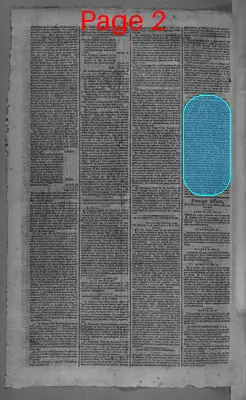
Literary
March 20, 1793
Gazette Of The United States
New York, New York County, New York
What is this article about?
Excerpt from Dr. Henry's History of England describing the slave trade in medieval Britain, where estates included slaves, children were sold due to poverty, and transported to Ireland. Church councils in 1102 and 1171 condemned and sought to end the practice, emancipating English slaves in Ireland.
Clipping
OCR Quality
95%
Excellent
Full Text
EXTRACT from Dr. HENRY's HISTORY.
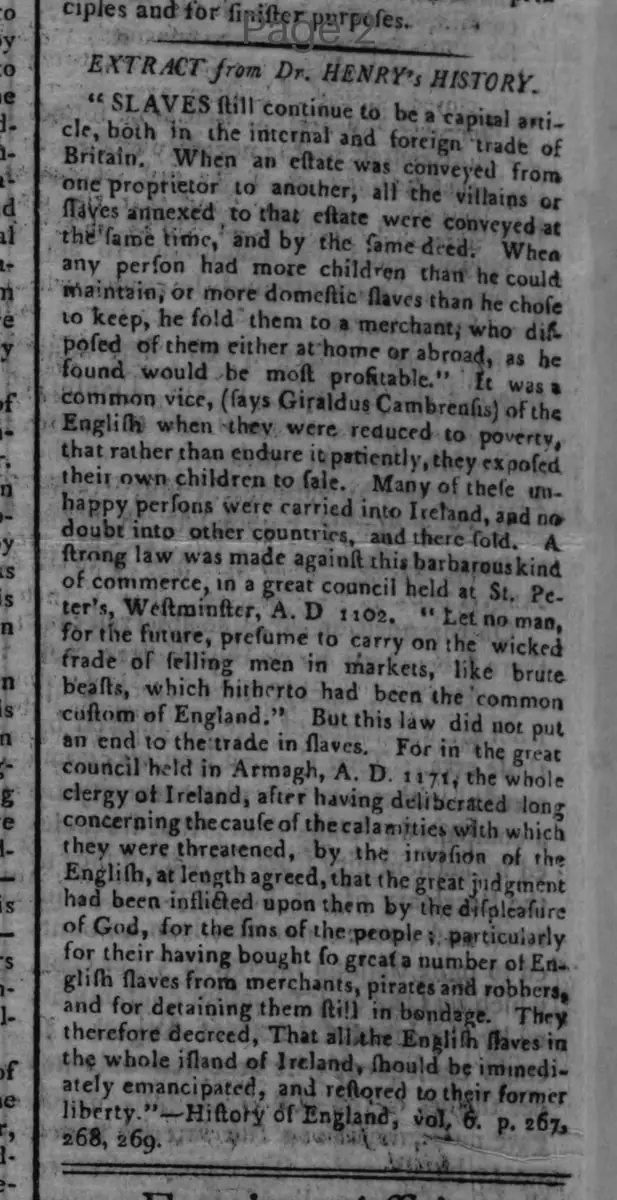
"SLAVES still continue to be a capital article, both in the internal and foreign trade of Britain. When an estate was conveyed from one proprietor to another, all the villains or slaves annexed to that estate were conveyed at the same time, and by the same deed. When any person had more children than he could maintain, or more domestic slaves than he chose to keep, he sold them to a merchant; who disposed of them either at home or abroad, as he found would be most profitable." It was a common vice, (says Giraldus Cambrensis) of the English when they were reduced to poverty, that rather than endure it patiently, they exposed their own children to sale. Many of these unhappy persons were carried into Ireland, and no doubt into other countries, and there sold. A strong law was made against this barbarous kind of commerce, in a great council held at St. Peter's, Westminster, A. D 1102. "Let no man, for the future, presume to carry on the wicked trade of selling men in markets, like brute beasts, which hitherto had been the common custom of England." But this law did not put an end to the trade in slaves. For in the great council held in Armagh, A. D. 1171, the whole clergy of Ireland, after having deliberated long concerning the cause of the calamities with which they were threatened, by the invasion of the English, at length agreed, that the great judgement had been inflicted upon them by the displeasure of God, for the sins of the people; particularly for their having bought so great a number of English slaves from merchants, pirates and robbers, and for detaining them still in bondage. They therefore decreed, That all the English slaves in the whole island of Ireland, should be immediately emancipated, and restored to their former liberty." History of England, vol, 6. p. 267, 268, 269.
"SLAVES still continue to be a capital article, both in the internal and foreign trade of Britain. When an estate was conveyed from one proprietor to another, all the villains or slaves annexed to that estate were conveyed at the same time, and by the same deed. When any person had more children than he could maintain, or more domestic slaves than he chose to keep, he sold them to a merchant; who disposed of them either at home or abroad, as he found would be most profitable." It was a common vice, (says Giraldus Cambrensis) of the English when they were reduced to poverty, that rather than endure it patiently, they exposed their own children to sale. Many of these unhappy persons were carried into Ireland, and no doubt into other countries, and there sold. A strong law was made against this barbarous kind of commerce, in a great council held at St. Peter's, Westminster, A. D 1102. "Let no man, for the future, presume to carry on the wicked trade of selling men in markets, like brute beasts, which hitherto had been the common custom of England." But this law did not put an end to the trade in slaves. For in the great council held in Armagh, A. D. 1171, the whole clergy of Ireland, after having deliberated long concerning the cause of the calamities with which they were threatened, by the invasion of the English, at length agreed, that the great judgement had been inflicted upon them by the displeasure of God, for the sins of the people; particularly for their having bought so great a number of English slaves from merchants, pirates and robbers, and for detaining them still in bondage. They therefore decreed, That all the English slaves in the whole island of Ireland, should be immediately emancipated, and restored to their former liberty." History of England, vol, 6. p. 267, 268, 269.
What sub-type of article is it?
Essay
What themes does it cover?
Slavery Abolition
Political
Religious
What keywords are associated?
Slavery
Slave Trade
England
Ireland
Emancipation
Church Council
Medieval History
What entities or persons were involved?
Dr. Henry
Literary Details
Title
Extract From Dr. Henry's History.
Author
Dr. Henry
Subject
History Of Slave Trade In Medieval Britain And Ireland
Form / Style
Historical Prose Excerpt
Key Lines
"Slaves Still Continue To Be A Capital Article, Both In The Internal And Foreign Trade Of Britain."
"Let No Man, For The Future, Presume To Carry On The Wicked Trade Of Selling Men In Markets, Like Brute Beasts, Which Hitherto Had Been The Common Custom Of England."
They Therefore Decreed, That All The English Slaves In The Whole Island Of Ireland, Should Be Immediately Emancipated, And Restored To Their Former Liberty."