Thank you for visiting SNEWPapers!
Sign up free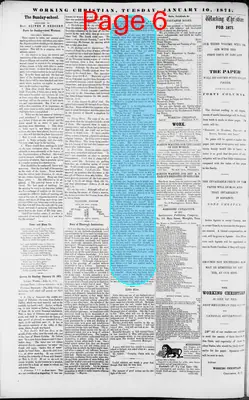
Story
January 10, 1871
The Working Christian
York, Charleston, Columbia, York County, Charleston County, Richland County, South Carolina
What is this article about?
In a Civil War regiment, young soldier 'Little Piety' Ned earns respect through piety, bravery, and moral influence. He leads a camp Sunday school and fights heroically but dies from a bullet wound during a cavalry charge, deeply mourned by comrades.
Clipping

OCR Quality
95%
Excellent
Full Text
"Little Piety."
The boys all said that "Little Ned'' was the queerest fellow in the regiment. He never said much, but he would look unutterable things out of his eyes. They were a deep blue; a sort of pure blue, that looked perfectly clean and good.
One day, one of our men was swearing furiously, when Ned came and put his hand on the man's arm, and said, "Please don't speak so;" he was looking right into the savage man's eyes. I looked to see him knock Ned down, for he was the worst tempered man I ever knew. But he looked at little Ned, and said, "Beg yer pardin, Little Piety; didn't mean t' swar!"
So I asked an orderly why they called Ned "Little Piety," and he said, "It's 'cause he's so pious, sir; He prays and sings, kindo low like, in his tent; and says grace at mess all to himself; and didn't never do nothin wrong. We used to kind o' run on him at first, and that's the way the 'Little Piety' got hitched on to him; but the boys mean it all well enough now. There ain't no man that'll dare to bother him, 'thout they're ready to fight Piety's whole company, capt'n and all."
I called Ned up, and asked him where he learned to live such a life as he did. He told me of the Sunday-school in Indiana, and of his teacher's prayers. I looked earnestly at the boy, to see what kind of stuff he was made of. He was a wiry little fellow, of some seventeen years old, and with just the eye of a soldier.
One day some of the boys asked if they might have a hospital that wasn't in use, for a Sunday-school.
"Why," said I, "is the chaplain going to open a Sunday-school in camp?
No, "said they; it's Little Piety."
"Will the boys go?" I asked.
"Yes, indeed, sir," they said, "Little Piety is up to't, you see. He's got the real pious that shows out good every day."
So I gave him the use of the tent, and it would have done any man's heart good to see how he carried on his school. Some twenty of the boys went in, and others were around outside: but nobody made fun.
The boy had a wonderful influence in the regiment." When any duty was to be done, he was always on hand; brave. cool, a fearless rider, and with a good wrist for a bridle-rein, or for a sabre. His sabre and carbine were always bright, and his horse seemed in good condition when the others were looking the worst for hard usage and poor forage. Inspecting officers often asked about him.
One day, as-I galloped down the line, before we went into a fight, I saw Ned sitting on his horse-his horse was small-in the front rank. I said. you'd better go back; you are too small for to-day. You may get rode down. It will be all right for you; go back to the rear.
But he begged to stay. "Please don't send me back. I can handle my sabre as well as any of them;" and, drawing it, he made a neat moulinet, to show how strong and supple his wrist was.
The men, too, begged that he might stay, and promised to see that he wasn't run down.
So I let him stay. But I felt badly about it. for he was so valuable a soldier in his influence on his men. Still I couldn't order him back to the rear, when he wanted to do his duty and distinguish himself.
Then came the sweeping charge of the cavalry across the road and into the field beyond. The bullets whistled and "zipped" by our ears. The air was filled with dust and smoke; and now and then would wake up again the wild yell of our troops.
The enemy broke for the woods, and we chased them some ways, shutting the captured ones behind us, to be hustled back to the rear While the howitzers were shelling the woods, and the men were resting for a time, I rode slowly back over the field to see about the noble fellows who had fallen. Some were wounded, and some dear faces that I had learnt to love as comrades were turned up, sharp and still, towards the heavens, in the dying light of the early evening.
Just where we had crossed the road, and where quite a number were lying; was one poor boy, flat on his face. He was smaller than the rest, and it seemed as though my heart had stopped beating, when I got off my horse to turn him over.
It was little Ned, with a hole in his forehead, where the cruel bullet had gone crushing through his brain.
The whole command turned out to follow the dead body of that blue-eyed comrade to the grave; and strong men cried that day, men whose eyes had not quailed under a heavy battery fire.
Little Ned was courageous-a hero-on the field; but he was more of a hero in the every day camp life. Every man was brave before the enemy's guns; it was harder to be brave under a comrade's sneer. Why the boys respected and loved him so much was because he was the bravest of all, under fire and sneer.
[The Little Corporal.
The boys all said that "Little Ned'' was the queerest fellow in the regiment. He never said much, but he would look unutterable things out of his eyes. They were a deep blue; a sort of pure blue, that looked perfectly clean and good.
One day, one of our men was swearing furiously, when Ned came and put his hand on the man's arm, and said, "Please don't speak so;" he was looking right into the savage man's eyes. I looked to see him knock Ned down, for he was the worst tempered man I ever knew. But he looked at little Ned, and said, "Beg yer pardin, Little Piety; didn't mean t' swar!"
So I asked an orderly why they called Ned "Little Piety," and he said, "It's 'cause he's so pious, sir; He prays and sings, kindo low like, in his tent; and says grace at mess all to himself; and didn't never do nothin wrong. We used to kind o' run on him at first, and that's the way the 'Little Piety' got hitched on to him; but the boys mean it all well enough now. There ain't no man that'll dare to bother him, 'thout they're ready to fight Piety's whole company, capt'n and all."
I called Ned up, and asked him where he learned to live such a life as he did. He told me of the Sunday-school in Indiana, and of his teacher's prayers. I looked earnestly at the boy, to see what kind of stuff he was made of. He was a wiry little fellow, of some seventeen years old, and with just the eye of a soldier.
One day some of the boys asked if they might have a hospital that wasn't in use, for a Sunday-school.
"Why," said I, "is the chaplain going to open a Sunday-school in camp?
No, "said they; it's Little Piety."
"Will the boys go?" I asked.
"Yes, indeed, sir," they said, "Little Piety is up to't, you see. He's got the real pious that shows out good every day."
So I gave him the use of the tent, and it would have done any man's heart good to see how he carried on his school. Some twenty of the boys went in, and others were around outside: but nobody made fun.
The boy had a wonderful influence in the regiment." When any duty was to be done, he was always on hand; brave. cool, a fearless rider, and with a good wrist for a bridle-rein, or for a sabre. His sabre and carbine were always bright, and his horse seemed in good condition when the others were looking the worst for hard usage and poor forage. Inspecting officers often asked about him.
One day, as-I galloped down the line, before we went into a fight, I saw Ned sitting on his horse-his horse was small-in the front rank. I said. you'd better go back; you are too small for to-day. You may get rode down. It will be all right for you; go back to the rear.
But he begged to stay. "Please don't send me back. I can handle my sabre as well as any of them;" and, drawing it, he made a neat moulinet, to show how strong and supple his wrist was.
The men, too, begged that he might stay, and promised to see that he wasn't run down.
So I let him stay. But I felt badly about it. for he was so valuable a soldier in his influence on his men. Still I couldn't order him back to the rear, when he wanted to do his duty and distinguish himself.
Then came the sweeping charge of the cavalry across the road and into the field beyond. The bullets whistled and "zipped" by our ears. The air was filled with dust and smoke; and now and then would wake up again the wild yell of our troops.
The enemy broke for the woods, and we chased them some ways, shutting the captured ones behind us, to be hustled back to the rear While the howitzers were shelling the woods, and the men were resting for a time, I rode slowly back over the field to see about the noble fellows who had fallen. Some were wounded, and some dear faces that I had learnt to love as comrades were turned up, sharp and still, towards the heavens, in the dying light of the early evening.
Just where we had crossed the road, and where quite a number were lying; was one poor boy, flat on his face. He was smaller than the rest, and it seemed as though my heart had stopped beating, when I got off my horse to turn him over.
It was little Ned, with a hole in his forehead, where the cruel bullet had gone crushing through his brain.
The whole command turned out to follow the dead body of that blue-eyed comrade to the grave; and strong men cried that day, men whose eyes had not quailed under a heavy battery fire.
Little Ned was courageous-a hero-on the field; but he was more of a hero in the every day camp life. Every man was brave before the enemy's guns; it was harder to be brave under a comrade's sneer. Why the boys respected and loved him so much was because he was the bravest of all, under fire and sneer.
[The Little Corporal.
What sub-type of article is it?
Biography
Heroic Act
Tragedy
What themes does it cover?
Bravery Heroism
Moral Virtue
Tragedy
What keywords are associated?
Pious Soldier
Regiment Influence
Cavalry Charge
Heroic Death
Sunday School
Moral Bravery
What entities or persons were involved?
Little Ned
Ned
Where did it happen?
Regiment Camp And Battlefield
Story Details
Key Persons
Little Ned
Ned
Location
Regiment Camp And Battlefield
Story Details
Young pious soldier Little Ned influences his regiment through faith and bravery, organizes a Sunday school, fights in a cavalry charge despite his small size, and dies from a bullet wound, earning deep respect and mourning from comrades.