Thank you for visiting SNEWPapers!
Sign up free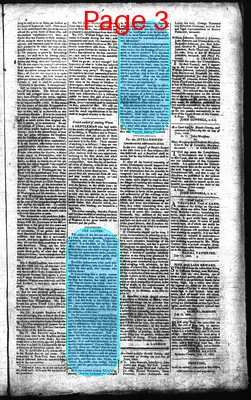
Literary
July 15, 1803
Berkeley And Jefferson Intelligencer
Martinsburg, Berkeley County, Virginia
What is this article about?
An essay defending women against critics who call them vain, frivolous, ignorant, coquetish, and capricious, arguing that men are to blame through excessive flattery and societal pressures that encourage such behaviors.
Clipping
OCR Quality
98%
Excellent
Full Text
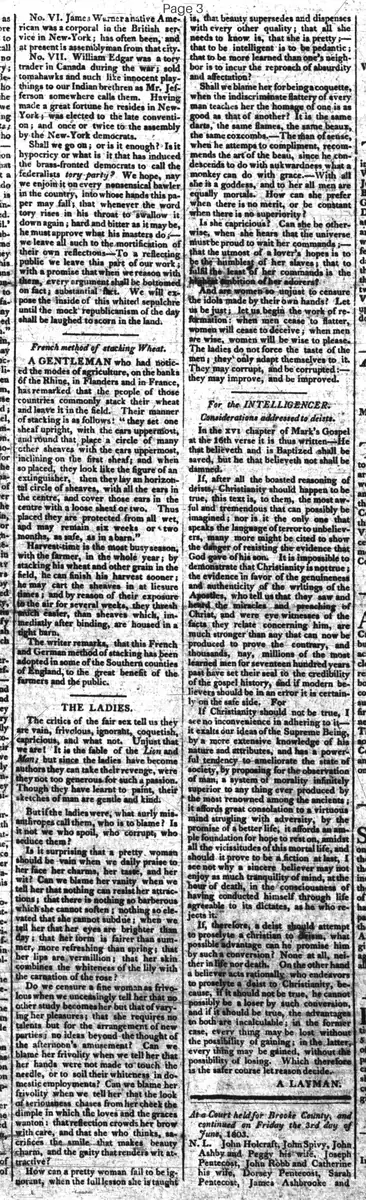
THE LADIES.
The critics of the fair sex tell us they are vain, frivolous, ignorant, coquetish, capricious, and what not. Unjust that we are! It is the fable of the Lion and Man; but since the ladies have become authors they can take their revenge, were they not too generous for such a passion. Though they have learnt to paint, their sketches of man are gentle and kind. But if the ladies were, what surly misanthropes call them, who is to blame? Is it not we who spoil, who corrupt, who seduce them?
Is it surprising that a pretty woman should be vain when we daily praise to her face her charms, her taste, and her wit? Can we blame her vanity when we tell her that nothing can resist her attractions; that there is nothing so barbarous which she cannot soften; nothing so elevated that she cannot subdue; when we tell her that her eyes are brighter than day; that her form is fairer than summer, more refreshing than spring; that her lips are vermillion; that her skin combines the whiteness of the lily with the carnation of the rose?
Do we censure a fine woman as frivolous when we unceasingly tell her that no other study becomes her but that of varying her pleasures; that she requires no talents but for the arrangement of new parties; no ideas beyond the thought of the afternoon's amusement? Can we blame her frivolity when we tell her that her hands were not made to touch the needle, or to soil their whiteness in domestic employments? Can we blame her frivolity when we tell her that the look of seriousness chases from her cheek the dimple in which the loves and the graces wanton: that reflection crowds her brow with care, and that she who thinks, sacrifices the smile that makes beauty charm, and the gaiety that renders wit attractive?
How can a pretty woman fail to be ignorant, when the full lesson she is taught is, that beauty supersedes and dispenses with every other quality; that all she needs to know, is, that she is pretty; that to be intelligent is to be pedantic; that to be more learned than one's neighbor is to incur the reproach of absurdity and affectation?
Shall we blame her for being a coquette, when the indiscriminate flattery of every man teaches her the homage of one is as good as that of another? It is the same darts, the same flames, the same beaux, the same coxcombs.—The man of sense, when he attempts to compliment, recommends the art of the beau, since he condescends to do with awkwardness what a monkey can do with grace.—With all she is a goddess, and to her all men are equally mortals. How can she prefer when there is no merit, or be constant when there is no superiority?
Is she capricious? Can she be otherwise, when she hears that the universe must be proud to wait her commands;—that the utmost of a lover's hopes is to be the humblest of her slaves; that to fulfil the least of her commands is the highest ambition of her adorers?
And are women so unjust to censure the idols made by their own hands? Let us be just; let us begin the work of reformation: when men cease to flatter, women will cease to deceive; when men are wise, women will be wise to please. The ladies do not force the taste of the men; they only adapt themselves to it. They may corrupt, and be corrupted: they may improve, and be improved.
The critics of the fair sex tell us they are vain, frivolous, ignorant, coquetish, capricious, and what not. Unjust that we are! It is the fable of the Lion and Man; but since the ladies have become authors they can take their revenge, were they not too generous for such a passion. Though they have learnt to paint, their sketches of man are gentle and kind. But if the ladies were, what surly misanthropes call them, who is to blame? Is it not we who spoil, who corrupt, who seduce them?
Is it surprising that a pretty woman should be vain when we daily praise to her face her charms, her taste, and her wit? Can we blame her vanity when we tell her that nothing can resist her attractions; that there is nothing so barbarous which she cannot soften; nothing so elevated that she cannot subdue; when we tell her that her eyes are brighter than day; that her form is fairer than summer, more refreshing than spring; that her lips are vermillion; that her skin combines the whiteness of the lily with the carnation of the rose?
Do we censure a fine woman as frivolous when we unceasingly tell her that no other study becomes her but that of varying her pleasures; that she requires no talents but for the arrangement of new parties; no ideas beyond the thought of the afternoon's amusement? Can we blame her frivolity when we tell her that her hands were not made to touch the needle, or to soil their whiteness in domestic employments? Can we blame her frivolity when we tell her that the look of seriousness chases from her cheek the dimple in which the loves and the graces wanton: that reflection crowds her brow with care, and that she who thinks, sacrifices the smile that makes beauty charm, and the gaiety that renders wit attractive?
How can a pretty woman fail to be ignorant, when the full lesson she is taught is, that beauty supersedes and dispenses with every other quality; that all she needs to know, is, that she is pretty; that to be intelligent is to be pedantic; that to be more learned than one's neighbor is to incur the reproach of absurdity and affectation?
Shall we blame her for being a coquette, when the indiscriminate flattery of every man teaches her the homage of one is as good as that of another? It is the same darts, the same flames, the same beaux, the same coxcombs.—The man of sense, when he attempts to compliment, recommends the art of the beau, since he condescends to do with awkwardness what a monkey can do with grace.—With all she is a goddess, and to her all men are equally mortals. How can she prefer when there is no merit, or be constant when there is no superiority?
Is she capricious? Can she be otherwise, when she hears that the universe must be proud to wait her commands;—that the utmost of a lover's hopes is to be the humblest of her slaves; that to fulfil the least of her commands is the highest ambition of her adorers?
And are women so unjust to censure the idols made by their own hands? Let us be just; let us begin the work of reformation: when men cease to flatter, women will cease to deceive; when men are wise, women will be wise to please. The ladies do not force the taste of the men; they only adapt themselves to it. They may corrupt, and be corrupted: they may improve, and be improved.
What sub-type of article is it?
Essay
Satire
What themes does it cover?
Social Manners
Moral Virtue
What keywords are associated?
Women
Flattery
Vanity
Frivolity
Coquetry
Gender Roles
Society
Literary Details
Title
The Ladies.
Key Lines
Unjust That We Are! It Is The Fable Of The Lion And Man; But Since The Ladies Have Become Authors They Can Take Their Revenge, Were They Not Too Generous For Such A Passion.
Is It Not We Who Spoil, Who Corrupt, Who Seduce Them?
Let Us Be Just; Let Us Begin The Work Of Reformation: When Men Cease To Flatter, Women Will Cease To Deceive; When Men Are Wise, Women Will Be Wise To Please.
The Ladies Do Not Force The Taste Of The Men; They Only Adapt Themselves To It.