Thank you for visiting SNEWPapers!
Sign up free
Story
May 26, 1886
Springfield Globe Republic
Springfield, Clark County, Ohio
What is this article about?
On January 26, 1814, obscure actor Edmund Kean debuts as Shylock at Drury Lane, captivating the audience and earning instant fame, praise from Byron and Coleridge, salary raises, and societal adulation, sustaining the theater for six years.
Clipping
OCR Quality
98%
Excellent
Full Text
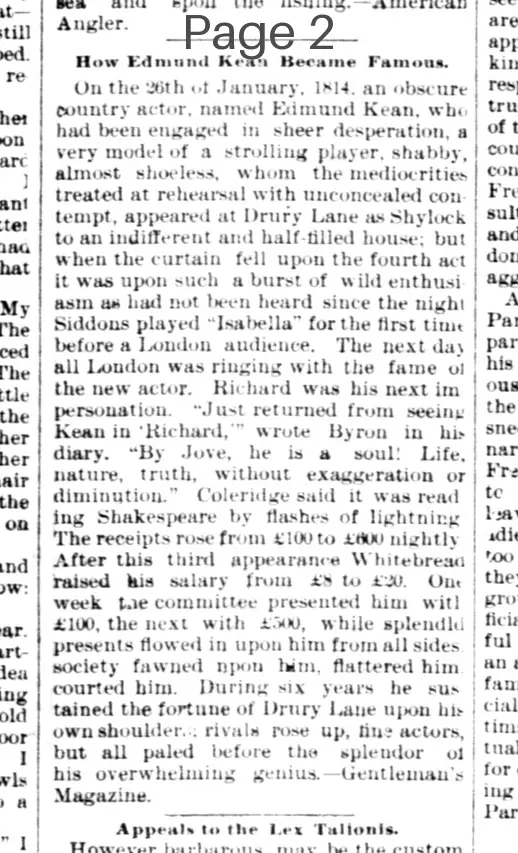
How Edmund Kean Became Famous.
On the 26th of January, 1814, an obscure
country actor, named Edmund Kean, who
had been engaged in sheer desperation, a
very model of a strolling player, shabby,
almost shoeless, whom the mediocrities
treated at rehearsal with unconcealed contempt, appeared at Drury Lane as Shylock to an indifferent and half-filled house, but
when the curtain fell upon the fourth act
it was upon such a burst of wild enthusiasm as had not been heard since the night
Siddons played "Isabella" for the first time before a London audience. The next day
all London was ringing with the fame of
the new actor. Richard was his next impersonation. "Just returned from seeing
Kean in 'Richard,'" wrote Byron in his
diary, "By Jove, he is a soul: Life,
nature, truth, without exaggeration or
diminution." Coleridge said it was reading Shakespeare by flashes of lightning
The receipts rose from £100 to £600 nightly After this third appearance Whitebread raised his salary from £3 to £10. One
week the committee presented him with
£100, the next with £100, while splendid
presents flowed in upon him from all sides
society fawned upon him, flattered him
courted him. During six years he sustained the fortune of Drury Lane upon his
own shoulder. Rivals rose up, fine actors,
but all paled before the splendor of
his overwhelming genius.-Gentleman's
Magazine.
On the 26th of January, 1814, an obscure
country actor, named Edmund Kean, who
had been engaged in sheer desperation, a
very model of a strolling player, shabby,
almost shoeless, whom the mediocrities
treated at rehearsal with unconcealed contempt, appeared at Drury Lane as Shylock to an indifferent and half-filled house, but
when the curtain fell upon the fourth act
it was upon such a burst of wild enthusiasm as had not been heard since the night
Siddons played "Isabella" for the first time before a London audience. The next day
all London was ringing with the fame of
the new actor. Richard was his next impersonation. "Just returned from seeing
Kean in 'Richard,'" wrote Byron in his
diary, "By Jove, he is a soul: Life,
nature, truth, without exaggeration or
diminution." Coleridge said it was reading Shakespeare by flashes of lightning
The receipts rose from £100 to £600 nightly After this third appearance Whitebread raised his salary from £3 to £10. One
week the committee presented him with
£100, the next with £100, while splendid
presents flowed in upon him from all sides
society fawned upon him, flattered him
courted him. During six years he sustained the fortune of Drury Lane upon his
own shoulder. Rivals rose up, fine actors,
but all paled before the splendor of
his overwhelming genius.-Gentleman's
Magazine.
What sub-type of article is it?
Biography
Personal Triumph
What themes does it cover?
Fortune Reversal
Triumph
What keywords are associated?
Edmund Kean
Actor Debut
Shylock
Drury Lane
Overnight Fame
Byron Coleridge
What entities or persons were involved?
Edmund Kean
Where did it happen?
Drury Lane
Story Details
Key Persons
Edmund Kean
Location
Drury Lane
Event Date
26th Of January, 1814
Story Details
Obscure actor Edmund Kean debuts as Shylock at Drury Lane on January 26, 1814, to initial indifference but erupts into wild enthusiasm by the fourth act, leading to overnight fame, praise from Byron and Coleridge, salary increases, gifts, and sustaining the theater's fortune for six years.