Thank you for visiting SNEWPapers!
Sign up free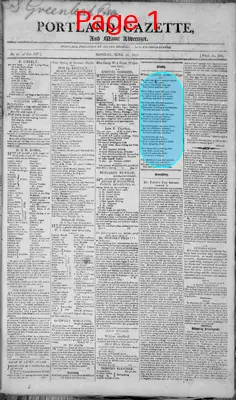
Poem
June 24, 1811
Portland Gazette, And Maine Advertiser
Portland, Cumberland County, Maine
What is this article about?
A philosophical poem questioning if sensibility leads to happiness, advocating balance in emotions: too little feeling makes one a fool, too much drives to madness, critiquing stoics and the overly sentimental.
Clipping
OCR Quality
95%
Excellent
Full Text
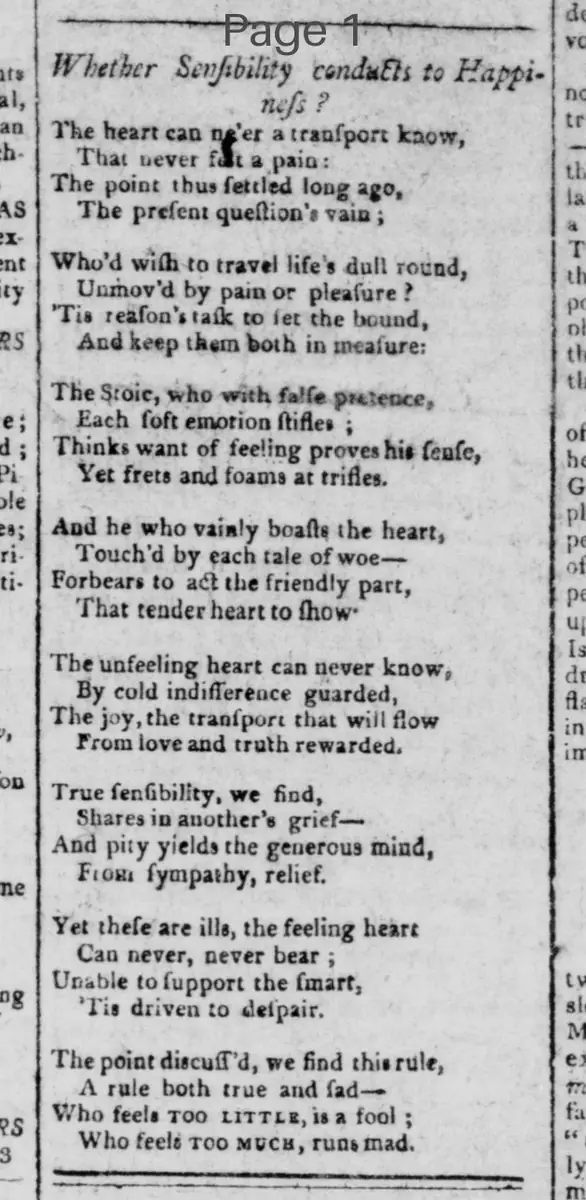
Whether Sensibility conducts to Happiness?
The heart can ne'er a transport know,
That never felt a pain:
The point thus settled long ago,
The present question's vain;
Who'd wish to travel life's dull round,
Unmov'd by pain or pleasure?
Tis reason's task to set the bound,
And keep them both in measure:
The Stoic, who with false pretence
Each soft emotion stifles :
Thinks want of feeling proves his sense,
Yet frets and foams at trifles.
And he who vainly boasts the heart,
Touch'd by each tale of woe—
Forbears to act the friendly part,
That tender heart to show
The unfeeling heart can never know,
By cold indifference guarded,
The joy, the transport that will flow
From love and truth rewarded.
True sensibility, we find,
Shares in another's grief—
And pity yields the generous mind,
From sympathy, relief.
Yet these are ills, the feeling heart
Can never, never bear ;
Unable to support the smart,
Tis driven to despair.
The point discuss'd, we find this rule,
A rule both true and sad—
Who feels TOO LITTLE, is a Fool;
Who feels Too MUCH, runs mad.
The heart can ne'er a transport know,
That never felt a pain:
The point thus settled long ago,
The present question's vain;
Who'd wish to travel life's dull round,
Unmov'd by pain or pleasure?
Tis reason's task to set the bound,
And keep them both in measure:
The Stoic, who with false pretence
Each soft emotion stifles :
Thinks want of feeling proves his sense,
Yet frets and foams at trifles.
And he who vainly boasts the heart,
Touch'd by each tale of woe—
Forbears to act the friendly part,
That tender heart to show
The unfeeling heart can never know,
By cold indifference guarded,
The joy, the transport that will flow
From love and truth rewarded.
True sensibility, we find,
Shares in another's grief—
And pity yields the generous mind,
From sympathy, relief.
Yet these are ills, the feeling heart
Can never, never bear ;
Unable to support the smart,
Tis driven to despair.
The point discuss'd, we find this rule,
A rule both true and sad—
Who feels TOO LITTLE, is a Fool;
Who feels Too MUCH, runs mad.
What sub-type of article is it?
Philosophical Verse
What themes does it cover?
Moral Virtue
Temperance Moderation
What keywords are associated?
Sensibility
Happiness
Pain Pleasure
Stoic
Feeling
Balance Emotions
Poem Details
Title
Whether Sensibility Conducts To Happiness?
Subject
On Sensibility And Happiness
Form / Style
Rhymed Couplets
Key Lines
The Heart Can Ne'er A Transport Know, That Never Felt A Pain:
Who Feels Too Little, Is A Fool; Who Feels Too Much, Runs Mad.