Thank you for visiting SNEWPapers!
Sign up free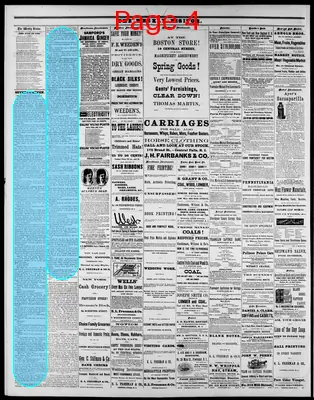
Story
July 12, 1878
The Weekly Visitor
Central Falls, Providence County, Rhode Island
What is this article about?
An old man, once prisoner 'Seventy-seven,' recounts his wrongful conviction for murder, release after 15 years, kind reception by nephews leading to reunion with brother, and posthumous vindication via a deathbed confession. Followed by a moral on respecting the elderly.
Clipping

OCR Quality
88%
Good
Full Text
SEVENTY-SEVEN.
"What is that you say, Robert?"
"Little things don't count."
"Don't they? Now my belief is that never was a little duty done, or a kind word spoken which did not bring a long train of blessings. You may not see them, but somewhere and somehow they are there; just as you plant a seed and go away, and the roots spread and the tree grows, and goes on growing, and the birds come and sing in the branches long after you are dead. I'll tell you a story about that," said the old man, seating himself on the heap of warm hay, while the boys gathered around him.
Two boys went out to fish one day. "If you clear out the barn," their father told them in the morning, "you can have the afternoon for play."
"Let's make a quick job of it," said Charley.
"So they worked steadily and actively and earned their holiday. As they started, they halted by the gate, their rods over their shoulders."
"The pond or the creek?" asked Bill.
"Charley was a good-hearted fellow. The creek; and then we can take a basket of apples to old Aunty Stannix," he said.
"So they brought the apples, gave them to the old negress, and down to the creek. Under a big walnut was a dark pool, the very place for perch." They hardly spoke for an hour. Just as Bill had a nibble a step was heard on the grass above, and a man appeared and looked down at them. His clothes were shabby, his face strangely bloodless and pinched."
"It's too bad," muttered Bill. "He's driven that fellow away and he's a two pounder. The sneaking old tramp. I'll shy a stone at him if he comes any closer."
"You'll do nothing of the sort, Bill Pardee," said Charley. "The man looks hungry, poor fellow."
"I believe he's escaped from the lockup," persisted Bill. "If he comes down I'll tell him to go back to jail where he belongs, see if I don't."
"The man was slowly and unsteadily making his way towards them. He watched the boys with a strangely eager, imploring glance. A few feet from them he stopped, twirling his hat in his hand."
"Been a fishing, boys?" he said. "Can I come down?"
Before I tell you what they said, I must go back a little."
Fifteen years before, a dead man was found in the woods, a mile from this creek. He was a son of one of the neighboring farmers. There was a bullet hole through his heart, but his watch and money were untouched. The object of the murderer had been revenge, not plunder.
Suspicion fell on a companion of the victim, with whom he had had a quarrel. They had been seen on the road together a week before, and the murdered man was never seen alive again. This friend was arrested and tried. The circumstantial evidence was strong against him. He was found guilty and sentenced to imprisonment for life. Fifteen years of his confinement had passed, when he received a pardon and was released."
"On the morning and just at the hour when our boys went to clear the barn, he came out of the prison gates, and stood looking up and down the busy streets as though he were half blinded. The gate keeper followed him kindly.
"Where are you going, Seventy-seven?" he asked, calling the man by his prison number, for he never had heard his name."
"I don't know."
"Got no kin?"
The man did not answer. He sat down on a curbstone, his eyes blinking, his mouth twitching nervously. He looked wistfully at the gate, as if he would ask to be taken in again. In that fifteen years his cell had grown to be a home to him: he had no other home: the keeper turned to go in.
"Don't leave me Jackson," he said, feebly putting out his hand."
Jackson stood before him. "Take a cigar," he said, in token of their new equality.
"I have never smoked." Where are you going, anyhow?"
"Seventy-seven stared vacantly up and down the street. When he had gone in that gate he was a young and handsome man. He had been a lawyer in fair practice, with a mother who made an idol of him, and had a host of friends."
"Now he was bent and white-haired. There was not a man whom he could call friend, or a house where he had a right to shelter, in all the world."
"I'd like to go back," he said, with a miserable smile.
"Can't do that, my boy, you were in-"
"Murder!"
"Yes."
"I was innocent," muttered Seventy-seven. And then suddenly, as if the free air and sun accused him anew of his crime, he rose and stretched out his arms.
"Before God I was innocent!" he cried.
"Yes, of course, of course," said Jackson. "You all say so. But I believe you, Seventy-seven. Got no kin?"
"My mother died eight years ago. My brother lives in the old homestead. I don't know whether to go to him, or—what would you do?" turning in his bitter solitude to Jackson as a friend.
"Got the money to go?"
"Yes, the prison society gave me these clothes, and money to pay my way home. But"
"How's your brother treated you? Has he given you the cold shoulder?"
"No." After he married ten years ago. I never would see him when he came to the prison: I wanted him to feel clear of me; I was a cursed black spot in his life; he does not know I'm out; I thought I'd keep clear of him, but-oh, I can't, I can't."
He covered his face with his hands. He was so utterly alone. Only to see him once more—to go through the old house—to lay his head on his mother's grave."
"I don't know what to advise," said Jackson: "kinsfolks don't generally kill the fatted calf for returned jail birds; but you might try it; I don't see what else you can do, in fact."
"About noon the prisoner got off the train at the station next his old home. He walked down the road; old Aunty Stannix was smoking in the door of her cabin."
"John Pardee lives in the old place?" he said inquiringly, stopping in front of her.
"Yeh. Dem's his boys a fishin' in de branch yonder."
"The man shook his head and walked on. A stranger. Why, there was not a stone nor a tree which he did not remember and love.
He came to his brother's gate and opened it, and then, ghastly as death turned away. He could not risk it."
"If John should speak harshly to me it would kill me," he said, "Where are the boys? I'll go to them. Whatever they say to me, I'll take for a sign."
"He climbed down the bank. If the boys spoke harshly to him, he would turn his back on his old home—forever." He stood irresolute on the bank above them. Bill saw him and made up his mind to fling a stone at him. The man caught the boy's scowling glare, and stopped. What was the use? His life was a wretched wreck; why should he intrude into his brother's happy home?
There seemed no place for him in all the world, but the prison cell that he had just left. He looked at the dark, deep water rushing by and made a step toward it. Then he looked again at the boys; his heart was very sore; they were John's sons—dear, dear brother John. One of them had a look of his mother in his eyes. He would try once more, and he went towards them with a prayer to God in his heart.
"Been fishing, boys?" trying to speak in so off-hand way. "Can I come down?"
"Jail bird," muttered Bill.
Charley gripped his arm like a vice, and whispered, "Hold your tongue."
"Yes, sir," he said aloud, touching his hat, "we're after perch." Will you take a seat?" motioning his basket aside.
Seventy-seven sat down, he could not speak; the boys dropped their lines in the water. Presently he laid his hand on Charley's arm; it seemed as if he must caress the boy, if but a touch.
"What is your name?"
"Charley, sir, Charley Pardee."
It was his own name. The blood rushed violently to his heart.
"Who—who were you named for, Charley?"
"My uncle, sir. You've heard of him, maybe?" coloring hotly. "I never saw him, but my father says he was the best man he ever knew, and the most ill-used. O, here comes papa."
The man staggered to his feet and stood trembling, and looking up.
"Well, boys, what luck?" came in Jack's old hearty voice; then there was a terrible silence.
"Charley!"
"Jack had his arms about him. Oh. Charley is it you? Thank God, thank God?" and he sobbed like a child.
The winter passed quietly. Charles Pardee found his brother's house a happy home, but he feared to go outside of it: public opinion held him as a murderer. A few old friends came to him, but he shrank from every new face.
Now little Charley had a habit of taking some trifling gift to old Aunty Stannix on his way to school. The old woman was crabbed and sour beyond her wont, being ill all winter, but the boy persevered.
One night he was roused out of bed by his father.
"Stannix is dying, and has sent for you, my boy."
"It's snowing," muttered Bill. "She'll live till morning; it's one of her impish tricks, anyhow. I wouldn't go a step, Charley."
"Charley thrust one foot out into the nipping air and hesitated.
"I'd better go," he said.
When he reached the cabin with his father, the old woman was very low.
"I want Charley Pardee," she muttered, fumbling with her hands.
"Here I am, Aunty."
"You've been good to me, sonny—better than anybody in dis world. I've got somefin for you. Whar's a squire? I must say it fore a squire."
"I am a magistrate, Aunty," said the doctor.
"I want to say fore the squire, dat dis boy's uncle, Charles Pardee, was as innocent as a baby of George Tygart's murder. It was my son, Oaf as done it—Oaf, de barber in Dover.
"I kep' it quiet 'cos I didn't want Oaf hung. But when he was shot in dat fight las' summer, and I knowed he'd got to die, I made him write a paper 'bout it. an' swear it before witnesses.
"Here's de paper. I gib it to you. Charley, kase you've been good to me. I don't want folks casting up to you dat you's got a uncle what's grazed de gallows. You've been good to me, Charley."
Before morning she was dead."
"Grandfather," said the boys, after a pause, "is that a true story?"
The old man's eyes grew dim.
"Yes," he said, "I was Seventy-seven."
Respect your Old Age—Don't Laugh at that old gentleman, boys. It is true, he is an old object. He is queer and crooked, and his voice is thin and reedy, but don't let him see you laugh at him. He looks as though he could have nothing more of any importance to do in the world. And, indeed, the grave for him is very near, and I think he will not be sorry to lie down in it. But think of this, boys; once he was young—young as you are. He went to school—doubtless in a blue jacket with brass buttons. and a neat ruffled collar, such as boys wore in his day. He hoped to be a doctor or a lawyer. He was blithe and light upon his feet.
He whistled he came up the street. Perhaps he could jump farther and throw his ball better than you. Yes, he was young once, and if you live you will be as old as he—as old and feeble some day. Your limbs will totter, you will lean upon a cane, Your voice will be shrill and weak, and your hopes and ambitions dead, and the grate near. So don't laugh at the old man, boys, but treat him with kindness and respect.
"What is that you say, Robert?"
"Little things don't count."
"Don't they? Now my belief is that never was a little duty done, or a kind word spoken which did not bring a long train of blessings. You may not see them, but somewhere and somehow they are there; just as you plant a seed and go away, and the roots spread and the tree grows, and goes on growing, and the birds come and sing in the branches long after you are dead. I'll tell you a story about that," said the old man, seating himself on the heap of warm hay, while the boys gathered around him.
Two boys went out to fish one day. "If you clear out the barn," their father told them in the morning, "you can have the afternoon for play."
"Let's make a quick job of it," said Charley.
"So they worked steadily and actively and earned their holiday. As they started, they halted by the gate, their rods over their shoulders."
"The pond or the creek?" asked Bill.
"Charley was a good-hearted fellow. The creek; and then we can take a basket of apples to old Aunty Stannix," he said.
"So they brought the apples, gave them to the old negress, and down to the creek. Under a big walnut was a dark pool, the very place for perch." They hardly spoke for an hour. Just as Bill had a nibble a step was heard on the grass above, and a man appeared and looked down at them. His clothes were shabby, his face strangely bloodless and pinched."
"It's too bad," muttered Bill. "He's driven that fellow away and he's a two pounder. The sneaking old tramp. I'll shy a stone at him if he comes any closer."
"You'll do nothing of the sort, Bill Pardee," said Charley. "The man looks hungry, poor fellow."
"I believe he's escaped from the lockup," persisted Bill. "If he comes down I'll tell him to go back to jail where he belongs, see if I don't."
"The man was slowly and unsteadily making his way towards them. He watched the boys with a strangely eager, imploring glance. A few feet from them he stopped, twirling his hat in his hand."
"Been a fishing, boys?" he said. "Can I come down?"
Before I tell you what they said, I must go back a little."
Fifteen years before, a dead man was found in the woods, a mile from this creek. He was a son of one of the neighboring farmers. There was a bullet hole through his heart, but his watch and money were untouched. The object of the murderer had been revenge, not plunder.
Suspicion fell on a companion of the victim, with whom he had had a quarrel. They had been seen on the road together a week before, and the murdered man was never seen alive again. This friend was arrested and tried. The circumstantial evidence was strong against him. He was found guilty and sentenced to imprisonment for life. Fifteen years of his confinement had passed, when he received a pardon and was released."
"On the morning and just at the hour when our boys went to clear the barn, he came out of the prison gates, and stood looking up and down the busy streets as though he were half blinded. The gate keeper followed him kindly.
"Where are you going, Seventy-seven?" he asked, calling the man by his prison number, for he never had heard his name."
"I don't know."
"Got no kin?"
The man did not answer. He sat down on a curbstone, his eyes blinking, his mouth twitching nervously. He looked wistfully at the gate, as if he would ask to be taken in again. In that fifteen years his cell had grown to be a home to him: he had no other home: the keeper turned to go in.
"Don't leave me Jackson," he said, feebly putting out his hand."
Jackson stood before him. "Take a cigar," he said, in token of their new equality.
"I have never smoked." Where are you going, anyhow?"
"Seventy-seven stared vacantly up and down the street. When he had gone in that gate he was a young and handsome man. He had been a lawyer in fair practice, with a mother who made an idol of him, and had a host of friends."
"Now he was bent and white-haired. There was not a man whom he could call friend, or a house where he had a right to shelter, in all the world."
"I'd like to go back," he said, with a miserable smile.
"Can't do that, my boy, you were in-"
"Murder!"
"Yes."
"I was innocent," muttered Seventy-seven. And then suddenly, as if the free air and sun accused him anew of his crime, he rose and stretched out his arms.
"Before God I was innocent!" he cried.
"Yes, of course, of course," said Jackson. "You all say so. But I believe you, Seventy-seven. Got no kin?"
"My mother died eight years ago. My brother lives in the old homestead. I don't know whether to go to him, or—what would you do?" turning in his bitter solitude to Jackson as a friend.
"Got the money to go?"
"Yes, the prison society gave me these clothes, and money to pay my way home. But"
"How's your brother treated you? Has he given you the cold shoulder?"
"No." After he married ten years ago. I never would see him when he came to the prison: I wanted him to feel clear of me; I was a cursed black spot in his life; he does not know I'm out; I thought I'd keep clear of him, but-oh, I can't, I can't."
He covered his face with his hands. He was so utterly alone. Only to see him once more—to go through the old house—to lay his head on his mother's grave."
"I don't know what to advise," said Jackson: "kinsfolks don't generally kill the fatted calf for returned jail birds; but you might try it; I don't see what else you can do, in fact."
"About noon the prisoner got off the train at the station next his old home. He walked down the road; old Aunty Stannix was smoking in the door of her cabin."
"John Pardee lives in the old place?" he said inquiringly, stopping in front of her.
"Yeh. Dem's his boys a fishin' in de branch yonder."
"The man shook his head and walked on. A stranger. Why, there was not a stone nor a tree which he did not remember and love.
He came to his brother's gate and opened it, and then, ghastly as death turned away. He could not risk it."
"If John should speak harshly to me it would kill me," he said, "Where are the boys? I'll go to them. Whatever they say to me, I'll take for a sign."
"He climbed down the bank. If the boys spoke harshly to him, he would turn his back on his old home—forever." He stood irresolute on the bank above them. Bill saw him and made up his mind to fling a stone at him. The man caught the boy's scowling glare, and stopped. What was the use? His life was a wretched wreck; why should he intrude into his brother's happy home?
There seemed no place for him in all the world, but the prison cell that he had just left. He looked at the dark, deep water rushing by and made a step toward it. Then he looked again at the boys; his heart was very sore; they were John's sons—dear, dear brother John. One of them had a look of his mother in his eyes. He would try once more, and he went towards them with a prayer to God in his heart.
"Been fishing, boys?" trying to speak in so off-hand way. "Can I come down?"
"Jail bird," muttered Bill.
Charley gripped his arm like a vice, and whispered, "Hold your tongue."
"Yes, sir," he said aloud, touching his hat, "we're after perch." Will you take a seat?" motioning his basket aside.
Seventy-seven sat down, he could not speak; the boys dropped their lines in the water. Presently he laid his hand on Charley's arm; it seemed as if he must caress the boy, if but a touch.
"What is your name?"
"Charley, sir, Charley Pardee."
It was his own name. The blood rushed violently to his heart.
"Who—who were you named for, Charley?"
"My uncle, sir. You've heard of him, maybe?" coloring hotly. "I never saw him, but my father says he was the best man he ever knew, and the most ill-used. O, here comes papa."
The man staggered to his feet and stood trembling, and looking up.
"Well, boys, what luck?" came in Jack's old hearty voice; then there was a terrible silence.
"Charley!"
"Jack had his arms about him. Oh. Charley is it you? Thank God, thank God?" and he sobbed like a child.
The winter passed quietly. Charles Pardee found his brother's house a happy home, but he feared to go outside of it: public opinion held him as a murderer. A few old friends came to him, but he shrank from every new face.
Now little Charley had a habit of taking some trifling gift to old Aunty Stannix on his way to school. The old woman was crabbed and sour beyond her wont, being ill all winter, but the boy persevered.
One night he was roused out of bed by his father.
"Stannix is dying, and has sent for you, my boy."
"It's snowing," muttered Bill. "She'll live till morning; it's one of her impish tricks, anyhow. I wouldn't go a step, Charley."
"Charley thrust one foot out into the nipping air and hesitated.
"I'd better go," he said.
When he reached the cabin with his father, the old woman was very low.
"I want Charley Pardee," she muttered, fumbling with her hands.
"Here I am, Aunty."
"You've been good to me, sonny—better than anybody in dis world. I've got somefin for you. Whar's a squire? I must say it fore a squire."
"I am a magistrate, Aunty," said the doctor.
"I want to say fore the squire, dat dis boy's uncle, Charles Pardee, was as innocent as a baby of George Tygart's murder. It was my son, Oaf as done it—Oaf, de barber in Dover.
"I kep' it quiet 'cos I didn't want Oaf hung. But when he was shot in dat fight las' summer, and I knowed he'd got to die, I made him write a paper 'bout it. an' swear it before witnesses.
"Here's de paper. I gib it to you. Charley, kase you've been good to me. I don't want folks casting up to you dat you's got a uncle what's grazed de gallows. You've been good to me, Charley."
Before morning she was dead."
"Grandfather," said the boys, after a pause, "is that a true story?"
The old man's eyes grew dim.
"Yes," he said, "I was Seventy-seven."
Respect your Old Age—Don't Laugh at that old gentleman, boys. It is true, he is an old object. He is queer and crooked, and his voice is thin and reedy, but don't let him see you laugh at him. He looks as though he could have nothing more of any importance to do in the world. And, indeed, the grave for him is very near, and I think he will not be sorry to lie down in it. But think of this, boys; once he was young—young as you are. He went to school—doubtless in a blue jacket with brass buttons. and a neat ruffled collar, such as boys wore in his day. He hoped to be a doctor or a lawyer. He was blithe and light upon his feet.
He whistled he came up the street. Perhaps he could jump farther and throw his ball better than you. Yes, he was young once, and if you live you will be as old as he—as old and feeble some day. Your limbs will totter, you will lean upon a cane, Your voice will be shrill and weak, and your hopes and ambitions dead, and the grate near. So don't laugh at the old man, boys, but treat him with kindness and respect.
What sub-type of article is it?
Biography
Crime Story
Personal Triumph
What themes does it cover?
Justice
Family
Moral Virtue
What keywords are associated?
Wrongful Imprisonment
Family Reunion
Deathbed Confession
Kindness Reward
Murder Vindication
What entities or persons were involved?
Seventy Seven
Charles Pardee
Charley Pardee
Bill Pardee
John Pardee
Jack Pardee
Aunty Stannix
Oaf
Jackson
George Tygart
Where did it happen?
Near The Creek, Old Homestead, Prison
Story Details
Key Persons
Seventy Seven
Charles Pardee
Charley Pardee
Bill Pardee
John Pardee
Jack Pardee
Aunty Stannix
Oaf
Jackson
George Tygart
Location
Near The Creek, Old Homestead, Prison
Event Date
Fifteen Years Before
Story Details
Wrongfully imprisoned for murder, Charles Pardee is released after 15 years, encounters nephews fishing who kindly welcome him, leading to emotional reunion with brother John; later vindicated by Aunty Stannix's deathbed confession that her son committed the crime.