Thank you for visiting SNEWPapers!
Sign up free
Poem
May 20, 1856
Alexandria Gazette
Alexandria, Alexandria County, District Of Columbia
What is this article about?
Elegy mourning the death of James H. Dulany, accidentally shot by a friend while defending him from an attack in Australia on December 21, 1855. The poem praises his virtue, friendship, and noble character, reflecting on his peaceful passing and heavenly reward.
Clipping
OCR Quality
95%
Excellent
Full Text
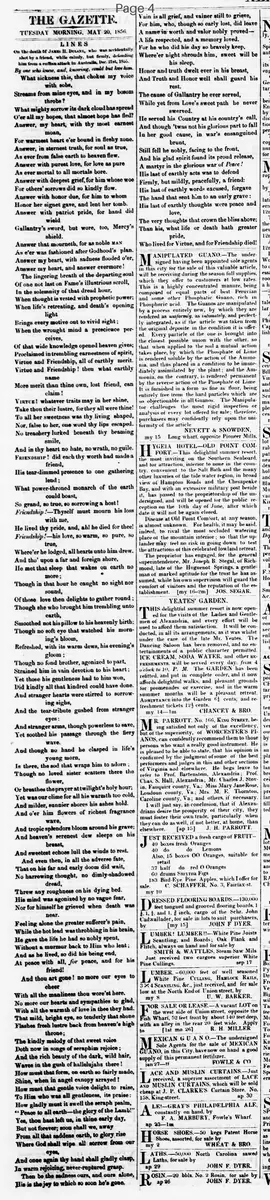
THE GAZETTE.
TUESDAY MORNING, MAY 20, 1856.
LINES
On the death of James H. Dulany, who was accidentally
shot by a friend, while calmly, but firmly, defending
him from a ruffian attack in Australia, Dec. 21st, 1855.
By one who knew, and, knowing, could but love him.
What sickness this, that chokes my voice
with sobs.
Streams from mine eyes, and in my bosom
throbs?
What mighty sorrow its dark cloud has spread
O'er all my hopes, that almost hope has fled?
Answer, my heart, with thy most earnest
moan
For warmest heart e'er bounding fleshly zone
Answer, in sternest truth, for soul as true
As ever from false earth to heaven flew.
Answer with purest love, for love as pure
As ever mortal to all mortals bore.
Answer with deepest grief, for him whose woe
For others' sorrows did so kindly flow.
Answer with honor due, for him to whom
Honor her signet gave, and lent her tomb.
Answer with patriot pride, for hand did
wield
Gallantry's sword, but wore, too, Mercy's
shield.
Answer that mourns, for as noble MAN
As e'er was fashioned after Godhood's plan.
Answer my heart, with sadness flooded o'er,
Answer my heart, and answer evermore!
The lingering breath of the departing soul
Of one not last on Fame's illustrious scroll.
In the solemnity of that dread hour,
When thought is vested with prophetic power:
When life's retreating, and death's opening
light
Brings every motive out to vivid sight;
When the wrought mind a prescience perceives,
Of that wide knowledge opened heaven gives;
Proclaimed in trembling earnestness of spirit,
Virtue and Friendship, all of earthly merit
Virtue and Friendship! then what earthly
name
More merit than thine own, lost friend, can
claim!
Virtue! whatever traits may in her shine,
Take thou their lustre, for they all were thine
To all her sweetness was thy living shaped,
Nor, false to her, one word thy lips escaped.
No treachery lurked beneath thy beaming
smile,
And in thy heart no hate, no wrath, no guile.
FRIENDSHIP! did each thy worth had made a
friend,
His tear-dimmed presence to one gathering
lend;
What power-throned monarch of the earth
could boast,
So grand, so true, so sorrowing about!
Friendship!-Thyself must mourn his loss
with me,
He lived thy pride, and, ah! he died for thee!
Friendship!-his love, so warm, so pure, so
true,
Where'er he lodged, all hearts unto him drew
And tho' upon a far and foreign shore,
He met that sleep that wakes on earth no
more;
Though in that hour he caught no sight nor
sound,
Of those love then delights to gather round
Though she who brought him trembling unto
earth,
Smoothed not his pillow to his heavenly birth;
Though no soft eye that watched his morning's
bloom,
Refreshed, with its warm dews, his evening's
gloom;
Though no fond brother, agonized to part,
Strained him in vain devotion to his heart;
Yet those his gentleness had to him won,
Did kindly all that kindred could have done.
And stranger hearts were stirred to sorrowing
sighs,
And the tear-tribute gushed from stranger
eyes:
And stranger arms, though powerless to save,
Yet soothed his passage through the fiery
wave.
And though no hand he clasped in life's
young worn,
Is there, the sod that wraps him to adorn;
Though no loved sister scatters there the
flower,
Or breathes the prayer at twilight's holy hour;
Yet was our clime for all his warmth too cold,
And milder, sunpier shores his ashes hold.
And o'er him flowers of richest fragrance
wave,
And tropic splendors bloom around his grave:
And heaven's serenest dew sleeps on his
breast,
And sweetest echoes lull the winds to rest.
And even then, in all the adverse fate,
That on his far and early doom did wait.
No harrowing thought, no dimly-shadowed
dread,
Threw any roughness on his dying bed.
His mind was agonized by no vague fear,
Nor for himself he grieved when death was
near.
Feeling alone the greater sufferer's pain.
While the hot lead was throbbing in his brain.
He gave the life he had so nobly spent,
Without a murmur back to Him who lent;
And as he lived, so did his being end,
At peace with all, for peace, and for his
friend!
And thou art gone! no more our eyes to
cheer
With all the manliness thou wore'st here.
No more our hearts and sympathies to glad,
With all the warmth of love in thee they had.
That mild, bright eye, so tenderly that shone
Flashes free lustre back from heaven's high
throne;
The kindly melody of that sweet voice
Doth now in song of seraphim rejoice;
And the rich beauty of the dark, wild hair.
Waves in the gush of hallelujahs there!
How must that form, on earth so fairly made
Shine, when in angel canopy arrayed!
How must that gentle voice delight to raise,
To Him who was all gentleness, its praise:
How gladly must it swell the seraph psalm,
"Peace to all earth-the glory of the Lamb!"
Yea, thou hast left us, in thine early day,
But not forever; soon shall we, away
From all that saddens earth, to glory rise
Where God shall wipe all sorrow from our
eyes,
And once again thy hand shall gladly clasp,
In warm rejoicing, never-ruptured grasp.
Then be the sadness ours, and ours alone,
His is the joy to which so soon he's gone.
Vain is all grief, and vainer still to grieve,
For him, who, though so early lost, did leave
A name in worth and valor nobly proved
A life respected, and a memory loved.
For he who did his day so bravely keep,
Where'er night shrouds him, sweet will be
his sleep.
Honor and truth dwelt ever in his breast.
And Truth and Honor wells shall guard his
rest.
The cause of Gallantry he ever served.
While yet from Love's sweet path he never
swerved.
He served his Country at his country's call,
And though 'twas not his glorious part to fall
In her good cause, in war's ensanguined
brunt,
Still fell he nobly, facing to the front,
And his glad spirit found its proud release,
A martyr in the glorious war of Peace!
His last of earthly acts was to defend
Firmly, but mildly, peacefully, a friend:
His last of earthly words excused, forgave
The hand that sent him to an early grave:
His last of earthly thoughts were peace and
love,
The very thoughts that crown the bliss above:
Than his, what life or death hath greater
pride,
Who lived for Virtue, and for Friendship died!
TUESDAY MORNING, MAY 20, 1856.
LINES
On the death of James H. Dulany, who was accidentally
shot by a friend, while calmly, but firmly, defending
him from a ruffian attack in Australia, Dec. 21st, 1855.
By one who knew, and, knowing, could but love him.
What sickness this, that chokes my voice
with sobs.
Streams from mine eyes, and in my bosom
throbs?
What mighty sorrow its dark cloud has spread
O'er all my hopes, that almost hope has fled?
Answer, my heart, with thy most earnest
moan
For warmest heart e'er bounding fleshly zone
Answer, in sternest truth, for soul as true
As ever from false earth to heaven flew.
Answer with purest love, for love as pure
As ever mortal to all mortals bore.
Answer with deepest grief, for him whose woe
For others' sorrows did so kindly flow.
Answer with honor due, for him to whom
Honor her signet gave, and lent her tomb.
Answer with patriot pride, for hand did
wield
Gallantry's sword, but wore, too, Mercy's
shield.
Answer that mourns, for as noble MAN
As e'er was fashioned after Godhood's plan.
Answer my heart, with sadness flooded o'er,
Answer my heart, and answer evermore!
The lingering breath of the departing soul
Of one not last on Fame's illustrious scroll.
In the solemnity of that dread hour,
When thought is vested with prophetic power:
When life's retreating, and death's opening
light
Brings every motive out to vivid sight;
When the wrought mind a prescience perceives,
Of that wide knowledge opened heaven gives;
Proclaimed in trembling earnestness of spirit,
Virtue and Friendship, all of earthly merit
Virtue and Friendship! then what earthly
name
More merit than thine own, lost friend, can
claim!
Virtue! whatever traits may in her shine,
Take thou their lustre, for they all were thine
To all her sweetness was thy living shaped,
Nor, false to her, one word thy lips escaped.
No treachery lurked beneath thy beaming
smile,
And in thy heart no hate, no wrath, no guile.
FRIENDSHIP! did each thy worth had made a
friend,
His tear-dimmed presence to one gathering
lend;
What power-throned monarch of the earth
could boast,
So grand, so true, so sorrowing about!
Friendship!-Thyself must mourn his loss
with me,
He lived thy pride, and, ah! he died for thee!
Friendship!-his love, so warm, so pure, so
true,
Where'er he lodged, all hearts unto him drew
And tho' upon a far and foreign shore,
He met that sleep that wakes on earth no
more;
Though in that hour he caught no sight nor
sound,
Of those love then delights to gather round
Though she who brought him trembling unto
earth,
Smoothed not his pillow to his heavenly birth;
Though no soft eye that watched his morning's
bloom,
Refreshed, with its warm dews, his evening's
gloom;
Though no fond brother, agonized to part,
Strained him in vain devotion to his heart;
Yet those his gentleness had to him won,
Did kindly all that kindred could have done.
And stranger hearts were stirred to sorrowing
sighs,
And the tear-tribute gushed from stranger
eyes:
And stranger arms, though powerless to save,
Yet soothed his passage through the fiery
wave.
And though no hand he clasped in life's
young worn,
Is there, the sod that wraps him to adorn;
Though no loved sister scatters there the
flower,
Or breathes the prayer at twilight's holy hour;
Yet was our clime for all his warmth too cold,
And milder, sunpier shores his ashes hold.
And o'er him flowers of richest fragrance
wave,
And tropic splendors bloom around his grave:
And heaven's serenest dew sleeps on his
breast,
And sweetest echoes lull the winds to rest.
And even then, in all the adverse fate,
That on his far and early doom did wait.
No harrowing thought, no dimly-shadowed
dread,
Threw any roughness on his dying bed.
His mind was agonized by no vague fear,
Nor for himself he grieved when death was
near.
Feeling alone the greater sufferer's pain.
While the hot lead was throbbing in his brain.
He gave the life he had so nobly spent,
Without a murmur back to Him who lent;
And as he lived, so did his being end,
At peace with all, for peace, and for his
friend!
And thou art gone! no more our eyes to
cheer
With all the manliness thou wore'st here.
No more our hearts and sympathies to glad,
With all the warmth of love in thee they had.
That mild, bright eye, so tenderly that shone
Flashes free lustre back from heaven's high
throne;
The kindly melody of that sweet voice
Doth now in song of seraphim rejoice;
And the rich beauty of the dark, wild hair.
Waves in the gush of hallelujahs there!
How must that form, on earth so fairly made
Shine, when in angel canopy arrayed!
How must that gentle voice delight to raise,
To Him who was all gentleness, its praise:
How gladly must it swell the seraph psalm,
"Peace to all earth-the glory of the Lamb!"
Yea, thou hast left us, in thine early day,
But not forever; soon shall we, away
From all that saddens earth, to glory rise
Where God shall wipe all sorrow from our
eyes,
And once again thy hand shall gladly clasp,
In warm rejoicing, never-ruptured grasp.
Then be the sadness ours, and ours alone,
His is the joy to which so soon he's gone.
Vain is all grief, and vainer still to grieve,
For him, who, though so early lost, did leave
A name in worth and valor nobly proved
A life respected, and a memory loved.
For he who did his day so bravely keep,
Where'er night shrouds him, sweet will be
his sleep.
Honor and truth dwelt ever in his breast.
And Truth and Honor wells shall guard his
rest.
The cause of Gallantry he ever served.
While yet from Love's sweet path he never
swerved.
He served his Country at his country's call,
And though 'twas not his glorious part to fall
In her good cause, in war's ensanguined
brunt,
Still fell he nobly, facing to the front,
And his glad spirit found its proud release,
A martyr in the glorious war of Peace!
His last of earthly acts was to defend
Firmly, but mildly, peacefully, a friend:
His last of earthly words excused, forgave
The hand that sent him to an early grave:
His last of earthly thoughts were peace and
love,
The very thoughts that crown the bliss above:
Than his, what life or death hath greater
pride,
Who lived for Virtue, and for Friendship died!
What sub-type of article is it?
Elegy
What themes does it cover?
Death Mourning
Friendship
Moral Virtue
What keywords are associated?
James H Dulany
Death Australia
Accidental Shooting
Defending Friend
Elegy Virtue
Friendship Sacrifice
Noble Death
What entities or persons were involved?
By One Who Knew, And, Knowing, Could But Love Him.
Poem Details
Title
Lines On The Death Of James H. Dulany, Who Was Accidentally Shot By A Friend, While Calmly, But Firmly, Defending Him From A Ruffian Attack In Australia, Dec. 21st, 1855.
Author
By One Who Knew, And, Knowing, Could But Love Him.
Subject
On The Death Of James H. Dulany
Form / Style
Rhymed Couplets
Key Lines
What Sickness This, That Chokes My Voice With Sobs.
Streams From Mine Eyes, And In My Bosom Throbs?
Answer My Heart, With Sadness Flooded O'er,
Answer My Heart, And Answer Evermore!
He Gave The Life He Had So Nobly Spent,
Without A Murmur Back To Him Who Lent;
And As He Lived, So Did His Being End,
At Peace With All, For Peace, And For His Friend!
His Last Of Earthly Acts Was To Defend
Firmly, But Mildly, Peacefully, A Friend:
His Last Of Earthly Words Excused, Forgave
The Hand That Sent Him To An Early Grave:
Than His, What Life Or Death Hath Greater Pride,
Who Lived For Virtue, And For Friendship Died!