Thank you for visiting SNEWPapers!
Sign up free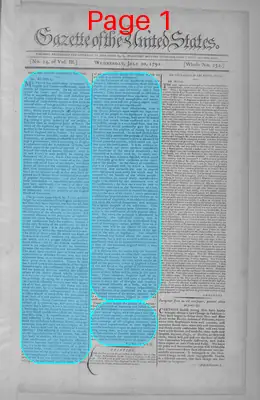
Letter to Editor
July 20, 1791
Gazette Of The United States
New York, New York County, New York
What is this article about?
Publicola critiques Thomas Paine's admiration for the French constitution's representation over England's, arguing that France's indirect, property-qualified elections create an unaccountable aristocracy, diluting true democracy, while praising America's balanced system.
Clipping
OCR Quality
98%
Excellent
Full Text
FROM THE (BOSTON) COLUMBIAN CENTINEL
MR. RUSSELL,
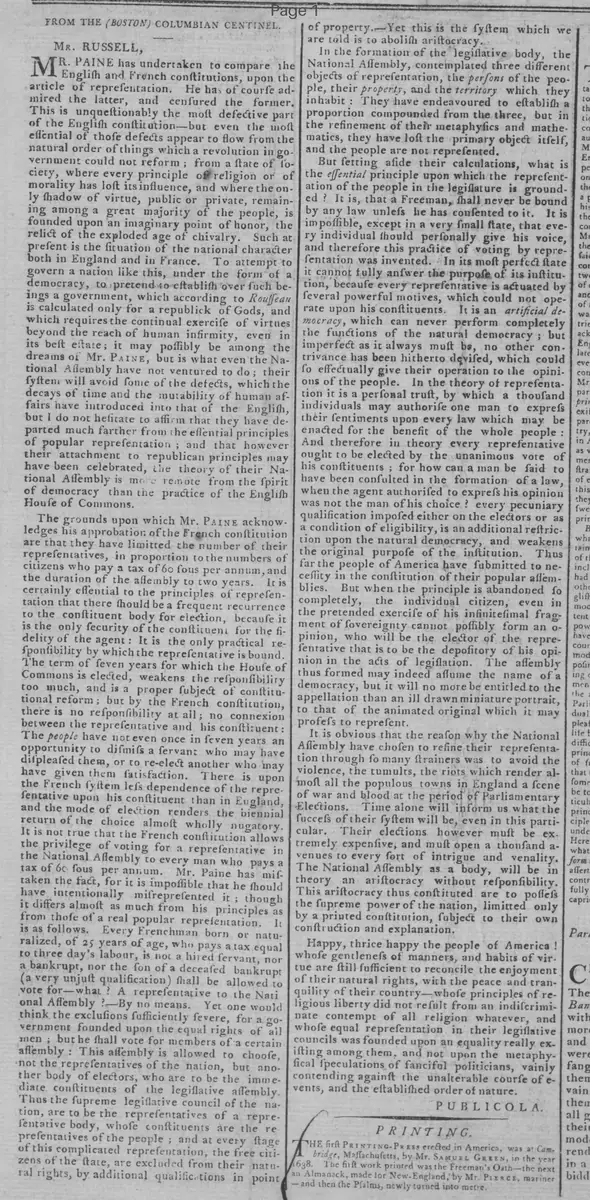
MR. PAINE has undertaken to compare the English and French constitutions, upon the article of representation. He has of course admired the latter, and censured the former.
This is unquestionably the most defective part of the English constitution—but even the most essential of those defects appear to flow from the natural order of things which a revolution in government could not reform: from a state of society, where every principle of religion or of morality has lost its influence, and where the only shadow of virtue, public or private, remaining among a great majority of the people, is founded upon an imaginary point of honor, the relict of the exploded age of chivalry. Such at present is the situation of the national character both in England and in France. To attempt to govern a nation like this, under the form of a democracy, to pretend to establish over such beings a government, which according to Rousseau is calculated only for a republic of Gods, and which requires the continual exercise of virtues beyond the reach of human infirmity, even in its best estate; it may possibly be among the dreams of Mr. PAINE, but is what even the National Assembly have not ventured to do; their system will avoid some of the defects, which the decays of time and the mutability of human affairs have introduced into that of the English, but I do not hesitate to affirm that they have departed much farther from the essential principles of popular representation; and that however their attachment to republican principles may have been celebrated, the theory of their National Assembly is more remote from the spirit of democracy than the practice of the English House of Commons.
The grounds upon which Mr. Paine acknowledges his approbation of the French constitution are that they have limited the number of their representatives, in proportion to the numbers of citizens who pay a tax of 60 sous per annum, and the duration of the assembly to two years. It is certainly essential to the principles of representation that there should be a frequent recurrence to the constituent body for election, because it is the only security of the constituent for the fidelity of the agent: It is the only practical responsibility by which the representative is bound.
The term of seven years for which the House of Commons is elected, weakens the responsibility too much, and is a proper subject of constitutional reform; but by the French constitution, there is no responsibility at all; no connexion between the representative and his constituent: The people have not even once in two years an opportunity to dismiss a servant who may have displeased them, or to re-elect another who may have given them satisfaction. There is upon the French system less dependence of the representative upon his constituent than in England, and the mode of election renders the biennial return of the choice almost wholly nugatory.
It is not true that the French constitution allows the privilege of voting for a representative in the National Assembly to every man who pays a tax of 60 sous per annum. Mr. Paine has mistaken the fact, for it is impossible that he should have intentionally misrepresented it; though it differs almost as much from his principles as from those of a real popular representation. It is as follows. Every Frenchman born or naturalized, of 25 years of age, who pays a tax equal to three day's labour, is not a hired servant, nor a bankrupt, nor the son of a deceased bankrupt (a very unjust qualification) shall be allowed to vote for—what! A representative to the National Assembly? By no means. Yet one would think the exclusions sufficiently severe, for a government founded upon the equal rights of all men; but he shall vote for members of a certain assembly: This assembly is allowed to choose, not the representatives of the nation, but another body of electors, who are to be the immediate constituents of the legislative assembly.
Thus the supreme legislative council of the nation, are to be the representatives of a representative body, whose constituents are the representatives of the people; and at every stage of this complicated representation, the free citizens of the state, are excluded from their natural rights, by additional qualifications in point of property.—Yet this is the system which we are told is to abolish aristocracy.
In the formation of the legislative body, the National Assembly, contemplated three different objects of representation, the persons of the people, their property, and the territory which they inhabit: They have endeavoured to establish a proportion compounded from the three, but in the refinement of their metaphysics and mathematics, they have lost the primary object itself, and the people are not represented.
But setting aside their calculations, what is the essential principle upon which the representation of the people in the legislature is grounded? It is, that a Freeman, shall never be bound by any law unless he has consented to it. It is impossible, except in a very small state, that every individual should personally give his voice, and therefore this practice of voting by representation was invented. In its most perfect state it cannot fully answer the purpose of its institution, because every representative is actuated by several powerful motives, which could not operate upon his constituents. It is an artificial democracy, which can never perform completely the functions of the natural democracy; but imperfect as it always must be, no other contrivance has been hitherto devised, which could so effectually give their operation to the opinions of the people. In the theory of representation it is a personal trust, by which a thousand individuals may authorize one man to express their sentiments upon every law which may be enacted for the benefit of the whole people:
And therefore in theory every representative ought to be elected by the unanimous vote of his constituents; for how can a man be said to have been consulted in the formation of a law, when the agent authorized to express his opinion was not the man of his choice? every pecuniary qualification imposed either on the electors or as a condition of eligibility, is an additional restriction upon the natural democracy, and weakens the original purpose of the institution. Thus far the people of America have submitted to necessity in the constitution of their popular assemblies. But when the principle is abandoned so completely, the individual citizen, even in the pretended exercise of his infinitesimal fragment of sovereignty cannot possibly form an opinion, who will be the elector of the representative that is to be the depository of his opinion in the acts of legislation. The assembly thus formed may indeed assume the name of a democracy, but it will no more be entitled to the appellation than an ill drawn miniature portrait, to that of the animated original which it may profess to represent.
It is obvious that the reason why the National Assembly have chosen to refine their representation through so many strainers was to avoid the violence, the tumults, the riots which render almost all the populous towns in England a scene of war and blood at the period of Parliamentary Elections. Time alone will inform us what the success of their system will be, even in this particular. Their elections however must be extremely expensive, and must open a thousand avenues to every sort of intrigue and venality.
The National Assembly as a body, will be in theory an aristocracy without responsibility. This aristocracy thus constituted are to possess the supreme power of the nation, limited only by a printed constitution, subject to their own construction and explanation.
Happy, thrice happy the people of America! whose gentleness of manners, and habits of virtue are still sufficient to reconcile the enjoyment of their natural rights, with the peace and tranquility of their country—whose principles of religious liberty did not result from an indiscriminate contempt of all religion whatever, and whose equal representation in their legislative councils was founded upon an equality really existing among them, and not upon the metaphysical speculations of fanciful politicians, vainly contending against the unalterable course of events, and the established order of nature.
PUBLICOLA.
MR. RUSSELL,
MR. PAINE has undertaken to compare the English and French constitutions, upon the article of representation. He has of course admired the latter, and censured the former.
This is unquestionably the most defective part of the English constitution—but even the most essential of those defects appear to flow from the natural order of things which a revolution in government could not reform: from a state of society, where every principle of religion or of morality has lost its influence, and where the only shadow of virtue, public or private, remaining among a great majority of the people, is founded upon an imaginary point of honor, the relict of the exploded age of chivalry. Such at present is the situation of the national character both in England and in France. To attempt to govern a nation like this, under the form of a democracy, to pretend to establish over such beings a government, which according to Rousseau is calculated only for a republic of Gods, and which requires the continual exercise of virtues beyond the reach of human infirmity, even in its best estate; it may possibly be among the dreams of Mr. PAINE, but is what even the National Assembly have not ventured to do; their system will avoid some of the defects, which the decays of time and the mutability of human affairs have introduced into that of the English, but I do not hesitate to affirm that they have departed much farther from the essential principles of popular representation; and that however their attachment to republican principles may have been celebrated, the theory of their National Assembly is more remote from the spirit of democracy than the practice of the English House of Commons.
The grounds upon which Mr. Paine acknowledges his approbation of the French constitution are that they have limited the number of their representatives, in proportion to the numbers of citizens who pay a tax of 60 sous per annum, and the duration of the assembly to two years. It is certainly essential to the principles of representation that there should be a frequent recurrence to the constituent body for election, because it is the only security of the constituent for the fidelity of the agent: It is the only practical responsibility by which the representative is bound.
The term of seven years for which the House of Commons is elected, weakens the responsibility too much, and is a proper subject of constitutional reform; but by the French constitution, there is no responsibility at all; no connexion between the representative and his constituent: The people have not even once in two years an opportunity to dismiss a servant who may have displeased them, or to re-elect another who may have given them satisfaction. There is upon the French system less dependence of the representative upon his constituent than in England, and the mode of election renders the biennial return of the choice almost wholly nugatory.
It is not true that the French constitution allows the privilege of voting for a representative in the National Assembly to every man who pays a tax of 60 sous per annum. Mr. Paine has mistaken the fact, for it is impossible that he should have intentionally misrepresented it; though it differs almost as much from his principles as from those of a real popular representation. It is as follows. Every Frenchman born or naturalized, of 25 years of age, who pays a tax equal to three day's labour, is not a hired servant, nor a bankrupt, nor the son of a deceased bankrupt (a very unjust qualification) shall be allowed to vote for—what! A representative to the National Assembly? By no means. Yet one would think the exclusions sufficiently severe, for a government founded upon the equal rights of all men; but he shall vote for members of a certain assembly: This assembly is allowed to choose, not the representatives of the nation, but another body of electors, who are to be the immediate constituents of the legislative assembly.
Thus the supreme legislative council of the nation, are to be the representatives of a representative body, whose constituents are the representatives of the people; and at every stage of this complicated representation, the free citizens of the state, are excluded from their natural rights, by additional qualifications in point of property.—Yet this is the system which we are told is to abolish aristocracy.
In the formation of the legislative body, the National Assembly, contemplated three different objects of representation, the persons of the people, their property, and the territory which they inhabit: They have endeavoured to establish a proportion compounded from the three, but in the refinement of their metaphysics and mathematics, they have lost the primary object itself, and the people are not represented.
But setting aside their calculations, what is the essential principle upon which the representation of the people in the legislature is grounded? It is, that a Freeman, shall never be bound by any law unless he has consented to it. It is impossible, except in a very small state, that every individual should personally give his voice, and therefore this practice of voting by representation was invented. In its most perfect state it cannot fully answer the purpose of its institution, because every representative is actuated by several powerful motives, which could not operate upon his constituents. It is an artificial democracy, which can never perform completely the functions of the natural democracy; but imperfect as it always must be, no other contrivance has been hitherto devised, which could so effectually give their operation to the opinions of the people. In the theory of representation it is a personal trust, by which a thousand individuals may authorize one man to express their sentiments upon every law which may be enacted for the benefit of the whole people:
And therefore in theory every representative ought to be elected by the unanimous vote of his constituents; for how can a man be said to have been consulted in the formation of a law, when the agent authorized to express his opinion was not the man of his choice? every pecuniary qualification imposed either on the electors or as a condition of eligibility, is an additional restriction upon the natural democracy, and weakens the original purpose of the institution. Thus far the people of America have submitted to necessity in the constitution of their popular assemblies. But when the principle is abandoned so completely, the individual citizen, even in the pretended exercise of his infinitesimal fragment of sovereignty cannot possibly form an opinion, who will be the elector of the representative that is to be the depository of his opinion in the acts of legislation. The assembly thus formed may indeed assume the name of a democracy, but it will no more be entitled to the appellation than an ill drawn miniature portrait, to that of the animated original which it may profess to represent.
It is obvious that the reason why the National Assembly have chosen to refine their representation through so many strainers was to avoid the violence, the tumults, the riots which render almost all the populous towns in England a scene of war and blood at the period of Parliamentary Elections. Time alone will inform us what the success of their system will be, even in this particular. Their elections however must be extremely expensive, and must open a thousand avenues to every sort of intrigue and venality.
The National Assembly as a body, will be in theory an aristocracy without responsibility. This aristocracy thus constituted are to possess the supreme power of the nation, limited only by a printed constitution, subject to their own construction and explanation.
Happy, thrice happy the people of America! whose gentleness of manners, and habits of virtue are still sufficient to reconcile the enjoyment of their natural rights, with the peace and tranquility of their country—whose principles of religious liberty did not result from an indiscriminate contempt of all religion whatever, and whose equal representation in their legislative councils was founded upon an equality really existing among them, and not upon the metaphysical speculations of fanciful politicians, vainly contending against the unalterable course of events, and the established order of nature.
PUBLICOLA.
What sub-type of article is it?
Persuasive
Political
Philosophical
What themes does it cover?
Politics
Constitutional Rights
What keywords are associated?
Thomas Paine
French Constitution
English Constitution
Representation
National Assembly
Democracy
Indirect Elections
Publicola
What entities or persons were involved?
Publicola
Mr. Russell
Letter to Editor Details
Author
Publicola
Recipient
Mr. Russell
Main Argument
critiques thomas paine's preference for the french constitution's representation, arguing its indirect elections and property qualifications create an unaccountable aristocracy farther from true democracy than england's flawed but more direct system, while praising america's virtuous balance.
Notable Details
References Rousseau's Ideal Republic
Describes French Indirect Elections Via Primary Assemblies
Contrasts With English House Of Commons
Praises American Religious Liberty And Equality