Thank you for visiting SNEWPapers!
Sign up free
Literary
September 10, 1925
The Monmouth Inquirer
Freehold, Monmouth County, New Jersey
What is this article about?
Dr. T. A. Jagger explains how water is chemically produced in volcanoes from hydrogen and oxygen in lavas and rocks, vaporized to cause eruptions, leading to lava flows, subsidence, earthquakes, and events like the 1919 Hawaii incident killing fish and causing tidal waves.
Clipping
OCR Quality
100%
Excellent
Full Text
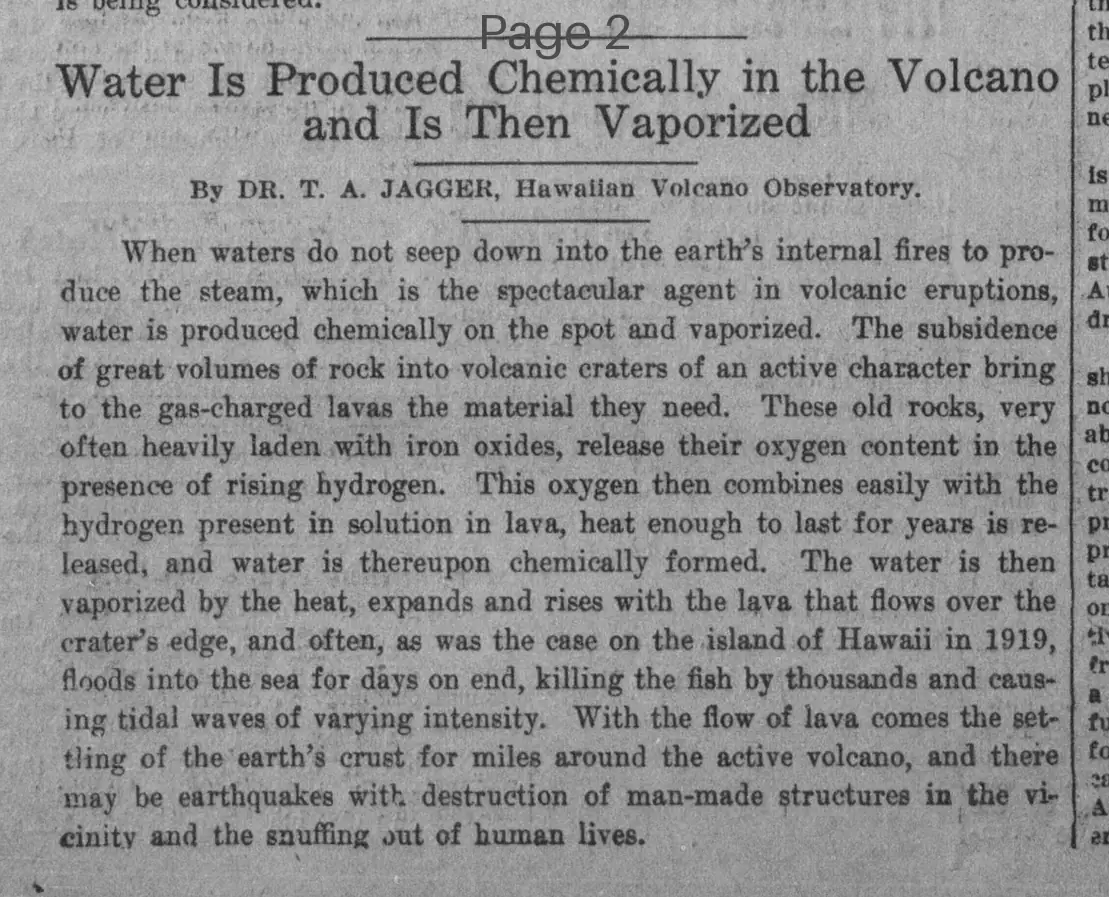
Water Is Produced Chemically in the Volcano and Is Then Vaporized
By DR. T. A. JAGGER, Hawaiian Volcano Observatory.
When waters do not seep down into the earth's internal fires to produce the steam, which is the spectacular agent in volcanic eruptions, water is produced chemically on the spot and vaporized. The subsidence of great volumes of rock into volcanic craters of an active character bring to the gas-charged lavas the material they need. These old rocks, very often heavily laden with iron oxides, release their oxygen content in the presence of rising hydrogen. This oxygen then combines easily with the hydrogen present in solution in lava, heat enough to last for years is released, and water is thereupon chemically formed. The water is then vaporized by the heat, expands and rises with the lava that flows over the crater's edge, and often, as was the case on the island of Hawaii in 1919, floods into the sea for days on end, killing the fish by thousands and causing tidal waves of varying intensity. With the flow of lava comes the settling of the earth's crust for miles around the active volcano, and there may be earthquakes with destruction of man-made structures in the vicinity and the snuffing out of human lives.
By DR. T. A. JAGGER, Hawaiian Volcano Observatory.
When waters do not seep down into the earth's internal fires to produce the steam, which is the spectacular agent in volcanic eruptions, water is produced chemically on the spot and vaporized. The subsidence of great volumes of rock into volcanic craters of an active character bring to the gas-charged lavas the material they need. These old rocks, very often heavily laden with iron oxides, release their oxygen content in the presence of rising hydrogen. This oxygen then combines easily with the hydrogen present in solution in lava, heat enough to last for years is released, and water is thereupon chemically formed. The water is then vaporized by the heat, expands and rises with the lava that flows over the crater's edge, and often, as was the case on the island of Hawaii in 1919, floods into the sea for days on end, killing the fish by thousands and causing tidal waves of varying intensity. With the flow of lava comes the settling of the earth's crust for miles around the active volcano, and there may be earthquakes with destruction of man-made structures in the vicinity and the snuffing out of human lives.
What sub-type of article is it?
Essay
What themes does it cover?
Nature
What keywords are associated?
Volcano
Lava
Steam
Hydrogen
Oxygen
Eruption
Hawaii
1919
What entities or persons were involved?
Dr. T. A. Jagger, Hawaiian Volcano Observatory.
Literary Details
Title
Water Is Produced Chemically In The Volcano And Is Then Vaporized
Author
Dr. T. A. Jagger, Hawaiian Volcano Observatory.
Key Lines
When Waters Do Not Seep Down Into The Earth's Internal Fires To Produce The Steam, Which Is The Spectacular Agent In Volcanic Eruptions, Water Is Produced Chemically On The Spot And Vaporized.
This Oxygen Then Combines Easily With The Hydrogen Present In Solution In Lava, Heat Enough To Last For Years Is Released, And Water Is Thereupon Chemically Formed.
And Often, As Was The Case On The Island Of Hawaii In 1919, Floods Into The Sea For Days On End, Killing The Fish By Thousands And Causing Tidal Waves Of Varying Intensity.