Thank you for visiting SNEWPapers!
Sign up free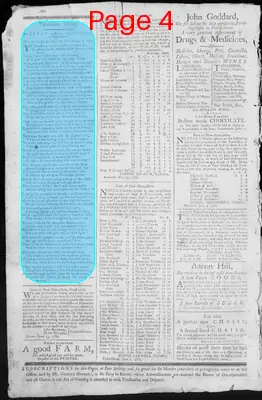
Poem
July 6, 1786
Fowle's New Hampshire Gazette And General Advertiser
Portsmouth, Rockingham County, New Hampshire
What is this article about?
An elegy mourning the British burning of Fairfield, Connecticut, in 1779 by General Tryon, written on site by Col. Humphreys. It laments the destruction, denounces Tryon's cruelty, and invokes patriot vengeance.
Clipping
OCR Quality
95%
Excellent
Full Text
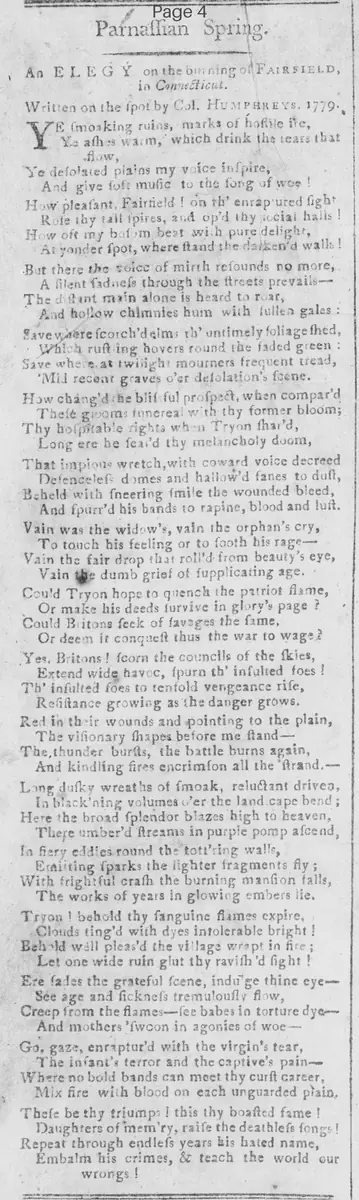
Parnassian Spring.
An ELEGY on the burning of FAIRFIELD,
in Connecticut.
Written on the spot by Col. Humphreys. 1779.
Ye smoking ruins, marks of hostile ire.
Ye ashes warm, which drink the tears that
flow,
Ye desolated plains my voice inspire,
And give soft music to the song of woe!
How pleasant, Fairfield! on th' enraptured sight
Rose thy tall spires, and op'd thy social halls!
How oft my bosom beat with pure delight.
At yonder spot, where stand the darkened walls!
But there the voice of mirth resounds no more,
A silent sadness through the streets prevails--
The distant main alone is heard to roar.
And hollow chimneys hung with sullen gales:
Save where scorch'd elms th' untimely foliage shed.
Which rustling hovers round the faded green:
Save where at twilight mourners frequent tread,
'Mid recent graves o'er desolation's scene.
How changed! ye blissful prospect, when compared
These gloomy tunereal with thy former bloom;
Thy hospitable rites when Tryon shared,
Long ere he seal'd thy melancholy doom,
That impious wretch, with coward voice decreed
Defenceless domes and hallowed fanes to dust,
Beheld with sneering smile the wounded bleed,
And spurr'd his bands to rapine, blood and lust.
Vain was the widow's. vain the orphan's cry,
To touch his feeling or to sooth his rage:
Vain the fair drop that roll'd from beauty's eye,
Vain the dumb grief of supplicating age.
Could Tryon hope to quench the patriot flame,
Or make his deeds survive in glory's page?
Could Britons seek of savages the same,
Or deem it conquest thus the war to wage?
Yes. Britons! scorn the councils of the skies,
Extend wide havoc, spurn th' insulted foes!
Th' insulted foes to tenfold vengeance rise,
Resistance growing as the danger grows.
Red in their wounds and pointing to the plain.
The visionary shapes before me stand--
The thunder bursts. the battle burns again.
And kindling fires encrimson all the strand.-
Long dusky wreaths of smoke, reluctant driven,
In black'ning volumes o'er the landscape bend;
Here the broad splendor blazes high to heaven,
There umber'd streams in purple pomp ascend,
In fiery eddies round the tot'ring walls,
Enwrapping sparks the lighter fragments fly;
With frightful crash the burning mansion falls,
The works of years in glowing embers lie.
Tryon I behold thy sanguine flames expire.
Clouds ting'd with dyes intolerable bright!
Behold well pleas'd the village wrapt in fire:
Let one wide ruin glut thy ravish'd sight!
Ere fades the grateful scene, indulge thine eye--
See age and sickness tremulously slow,
Creep from the flames--see babes in torture die--
And mothers swoon in agonies of woe--
Go, gaze, enraptur'd with the virgin's tear.
The infant's terror and the captive's pain--
Where no bold bands can meet thy curs'd career.
Mix fire with blood on each unguarded plain.
These be thy triumphs! this thy boasted fame!
Daughters of mem'ry, raise the deathless songs!
Repeat through endless years his hated name.
Embalm his crimes, & teach the world our
wrongs!
An ELEGY on the burning of FAIRFIELD,
in Connecticut.
Written on the spot by Col. Humphreys. 1779.
Ye smoking ruins, marks of hostile ire.
Ye ashes warm, which drink the tears that
flow,
Ye desolated plains my voice inspire,
And give soft music to the song of woe!
How pleasant, Fairfield! on th' enraptured sight
Rose thy tall spires, and op'd thy social halls!
How oft my bosom beat with pure delight.
At yonder spot, where stand the darkened walls!
But there the voice of mirth resounds no more,
A silent sadness through the streets prevails--
The distant main alone is heard to roar.
And hollow chimneys hung with sullen gales:
Save where scorch'd elms th' untimely foliage shed.
Which rustling hovers round the faded green:
Save where at twilight mourners frequent tread,
'Mid recent graves o'er desolation's scene.
How changed! ye blissful prospect, when compared
These gloomy tunereal with thy former bloom;
Thy hospitable rites when Tryon shared,
Long ere he seal'd thy melancholy doom,
That impious wretch, with coward voice decreed
Defenceless domes and hallowed fanes to dust,
Beheld with sneering smile the wounded bleed,
And spurr'd his bands to rapine, blood and lust.
Vain was the widow's. vain the orphan's cry,
To touch his feeling or to sooth his rage:
Vain the fair drop that roll'd from beauty's eye,
Vain the dumb grief of supplicating age.
Could Tryon hope to quench the patriot flame,
Or make his deeds survive in glory's page?
Could Britons seek of savages the same,
Or deem it conquest thus the war to wage?
Yes. Britons! scorn the councils of the skies,
Extend wide havoc, spurn th' insulted foes!
Th' insulted foes to tenfold vengeance rise,
Resistance growing as the danger grows.
Red in their wounds and pointing to the plain.
The visionary shapes before me stand--
The thunder bursts. the battle burns again.
And kindling fires encrimson all the strand.-
Long dusky wreaths of smoke, reluctant driven,
In black'ning volumes o'er the landscape bend;
Here the broad splendor blazes high to heaven,
There umber'd streams in purple pomp ascend,
In fiery eddies round the tot'ring walls,
Enwrapping sparks the lighter fragments fly;
With frightful crash the burning mansion falls,
The works of years in glowing embers lie.
Tryon I behold thy sanguine flames expire.
Clouds ting'd with dyes intolerable bright!
Behold well pleas'd the village wrapt in fire:
Let one wide ruin glut thy ravish'd sight!
Ere fades the grateful scene, indulge thine eye--
See age and sickness tremulously slow,
Creep from the flames--see babes in torture die--
And mothers swoon in agonies of woe--
Go, gaze, enraptur'd with the virgin's tear.
The infant's terror and the captive's pain--
Where no bold bands can meet thy curs'd career.
Mix fire with blood on each unguarded plain.
These be thy triumphs! this thy boasted fame!
Daughters of mem'ry, raise the deathless songs!
Repeat through endless years his hated name.
Embalm his crimes, & teach the world our
wrongs!
What sub-type of article is it?
Elegy
Satire
What themes does it cover?
War Military
Death Mourning
Political
What keywords are associated?
Elegy Fairfield
Burning Connecticut
Col Humphreys
General Tryon
British Raid
Patriot Vengeance
Revolutionary War
What entities or persons were involved?
Written On The Spot By Col. Humphreys.
Poem Details
Title
An Elegy On The Burning Of Fairfield, In Connecticut.
Author
Written On The Spot By Col. Humphreys.
Subject
The Burning Of Fairfield, In Connecticut
Form / Style
Rhymed Couplets
Key Lines
Ye Smoking Ruins, Marks Of Hostile Ire.
Ye Ashes Warm, Which Drink The Tears That Flow,
Ye Desolated Plains My Voice Inspire,
And Give Soft Music To The Song Of Woe!
That Impious Wretch, With Coward Voice Decreed
Defenceless Domes And Hallowed Fanes To Dust,
Beheld With Sneering Smile The Wounded Bleed,
And Spurr'd His Bands To Rapine, Blood And Lust.
These Be Thy Triumphs! This Thy Boasted Fame!
Daughters Of Mem'ry, Raise The Deathless Songs!
Repeat Through Endless Years His Hated Name.
Embalm His Crimes, & Teach The World Our Wrongs!