Thank you for visiting SNEWPapers!
Sign up free
Literary
November 3, 1817
Alexandria Gazette & Daily Advertiser
Alexandria, Virginia
What is this article about?
An observational essay classifying sponges as animal origin, similar to coralines, sourced mainly from the Mediterranean, especially Nicaria and Syme islands near Asia Minor and Rhodes. Describes Syme's sponge fishery as the sole support for its rocky, barren inhabitants who dive for them.
Clipping
OCR Quality
98%
Excellent
Full Text
SPONGE.
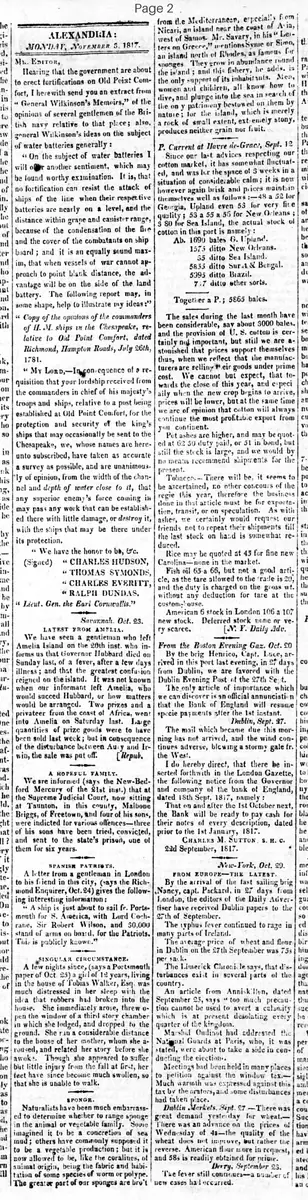
Naturalists have been much embarrassed to determine whether to range sponge in the animal or vegetable family. Some imagined it to be a concretion of sea mud; others have commonly supposed it to be a vegetable production; but it is now allowed to be, like the coralines, of animal origin, being the fabric and habitation of some species of worm or polype. The greater part of our sponges are brought from the Mediterranean, especially from Nicaria, an island near the coast of Asia Minor. Strabo mentions Syme or Simi west of Samos. Mr. Savary, in his "Letters on Greece," mentions Syme, an island north of Rhodes, as famous for sponges. They grow in abundance round the island : and this fishery, he adds, is the only support of its inhabitants. Men, women and children, all know how to dive, and plunge into the sea in search of natalie: for the island, which is merely a rock of small extent, extremely stony, produces neither grain nor fruit.
Naturalists have been much embarrassed to determine whether to range sponge in the animal or vegetable family. Some imagined it to be a concretion of sea mud; others have commonly supposed it to be a vegetable production; but it is now allowed to be, like the coralines, of animal origin, being the fabric and habitation of some species of worm or polype. The greater part of our sponges are brought from the Mediterranean, especially from Nicaria, an island near the coast of Asia Minor. Strabo mentions Syme or Simi west of Samos. Mr. Savary, in his "Letters on Greece," mentions Syme, an island north of Rhodes, as famous for sponges. They grow in abundance round the island : and this fishery, he adds, is the only support of its inhabitants. Men, women and children, all know how to dive, and plunge into the sea in search of natalie: for the island, which is merely a rock of small extent, extremely stony, produces neither grain nor fruit.
What sub-type of article is it?
Essay
What themes does it cover?
Nature
Commerce Trade
What keywords are associated?
Sponge
Natural History
Mediterranean
Nicaria
Syme Island
Sponge Fishery
Diving
Literary Details
Title
Sponge.
Key Lines
Naturalists Have Been Much Embarrassed To Determine Whether To Range Sponge In The Animal Or Vegetable Family.
The Greater Part Of Our Sponges Are Brought From The Mediterranean, Especially From Nicaria, An Island Near The Coast Of Asia Minor.
Mr. Savary, In His "Letters On Greece," Mentions Syme, An Island North Of Rhodes, As Famous For Sponges.
They Grow In Abundance Round The Island : And This Fishery, He Adds, Is The Only Support Of Its Inhabitants.
Men, Women And Children, All Know How To Dive, And Plunge Into The Sea In Search Of Natalie