Thank you for visiting SNEWPapers!
Sign up free
Literary
November 22, 1872
Connecticut Western News
North Canaan, Salisbury, Canaan, Litchfield County, Connecticut
What is this article about?
A prose essay extolling the beauty of American Indian summer, describing its atmospheric and natural features after harvest and before winter, contrasting it favorably with seasonal highlights in England, Italy, and Holland, and emphasizing its role in renewing home and social life.
Clipping
OCR Quality
98%
Excellent
Full Text
Indian Summer.
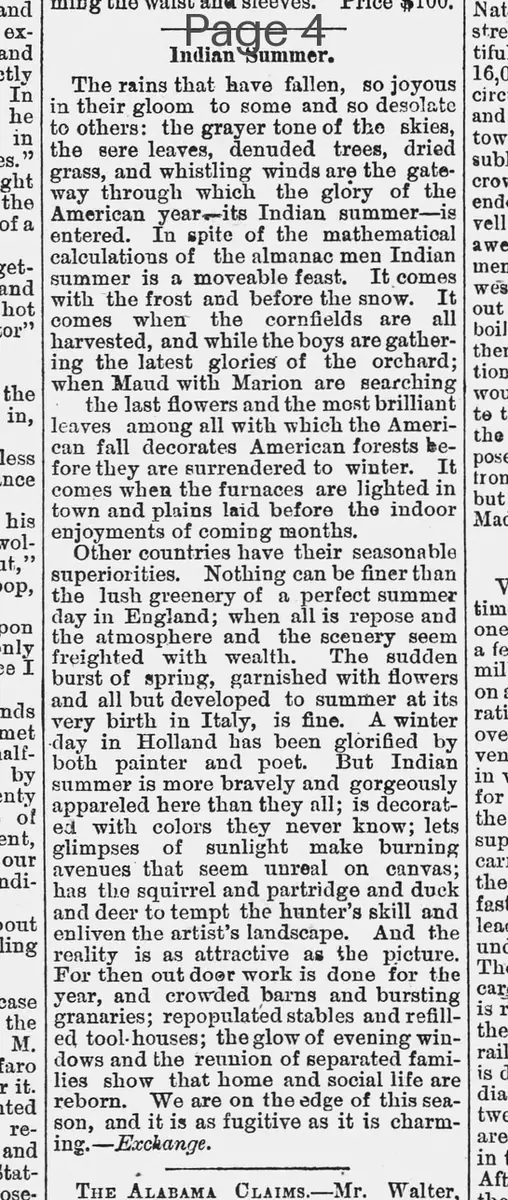
The rains that have fallen, so joyous in their gloom to some and so desolate to others: the graver tone of the skies, the sere leaves, denuded trees, dried grass, and whistling winds are the gateway through which the glory of the American year—its Indian summer—is entered. In spite of the mathematical calculations of the almanac men Indian summer is a moveable feast. It comes with the frost and before the snow. It comes when the cornfields are all harvested, and while the boys are gathering the latest glories of the orchard when Maud with Marion are searching the last flowers and the most brilliant leaves among all with which the American fall decorates American forests before they are surrendered to winter. It comes when the furnaces are lighted in town and plans laid before the indoor enjoyments of coming months.
Other countries have their seasonable superiorities. Nothing can be finer than the lush greenery of a perfect summer day in England: when all is repose and the atmosphere and the scenery seem freighted with wealth. The sudden burst of spring, garnished with flowers and all but developed to summer at its very birth in Italy, is fine. A winter day in Holland has been glorified by both painter and poet. But Indian summer is more bravely and gorgeously appareled here than they all; is decorated with colors they never know; lets glimpses of sunlight make burning avenues that seem unreal on canvas; has the squirrel and partridge and duck and deer to tempt the hunter's skill and enliven the artist's landscape. And the reality is as attractive as the picture. For then out door work is done for the year, and crowded barns and bursting granaries; repopulated stables and refilled tool-houses; the glow of evening windows and the reunion of separated families show that home and social life are reborn. We are on the edge of this season, and it is as fugitive as it is charming.—Exchange.
The rains that have fallen, so joyous in their gloom to some and so desolate to others: the graver tone of the skies, the sere leaves, denuded trees, dried grass, and whistling winds are the gateway through which the glory of the American year—its Indian summer—is entered. In spite of the mathematical calculations of the almanac men Indian summer is a moveable feast. It comes with the frost and before the snow. It comes when the cornfields are all harvested, and while the boys are gathering the latest glories of the orchard when Maud with Marion are searching the last flowers and the most brilliant leaves among all with which the American fall decorates American forests before they are surrendered to winter. It comes when the furnaces are lighted in town and plans laid before the indoor enjoyments of coming months.
Other countries have their seasonable superiorities. Nothing can be finer than the lush greenery of a perfect summer day in England: when all is repose and the atmosphere and the scenery seem freighted with wealth. The sudden burst of spring, garnished with flowers and all but developed to summer at its very birth in Italy, is fine. A winter day in Holland has been glorified by both painter and poet. But Indian summer is more bravely and gorgeously appareled here than they all; is decorated with colors they never know; lets glimpses of sunlight make burning avenues that seem unreal on canvas; has the squirrel and partridge and duck and deer to tempt the hunter's skill and enliven the artist's landscape. And the reality is as attractive as the picture. For then out door work is done for the year, and crowded barns and bursting granaries; repopulated stables and refilled tool-houses; the glow of evening windows and the reunion of separated families show that home and social life are reborn. We are on the edge of this season, and it is as fugitive as it is charming.—Exchange.
What sub-type of article is it?
Essay
What themes does it cover?
Nature
Seasonal Cycle
What keywords are associated?
Indian Summer
American Autumn
Seasonal Beauty
Nature Description
Harvest Time
Autumn Colors
What entities or persons were involved?
Exchange
Literary Details
Title
Indian Summer.
Author
Exchange
Subject
The American Indian Summer Season
Key Lines
The Graver Tone Of The Skies, The Sere Leaves, Denuded Trees, Dried Grass, And Whistling Winds Are The Gateway Through Which The Glory Of The American Year—Its Indian Summer—Is Entered.
Indian Summer Is A Moveable Feast. It Comes With The Frost And Before The Snow.
But Indian Summer Is More Bravely And Gorgeously Appareled Here Than They All; Is Decorated With Colors They Never Know;
For Then Out Door Work Is Done For The Year, And Crowded Barns And Bursting Granaries; Repopulated Stables And Refilled Tool Houses; The Glow Of Evening Windows And The Reunion Of Separated Families Show That Home And Social Life Are Reborn.
We Are On The Edge Of This Season, And It Is As Fugitive As It Is Charming.