Thank you for visiting SNEWPapers!
Sign up free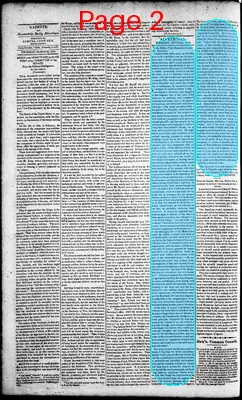
Letter to Editor
March 25, 1819
Alexandria Gazette & Daily Advertiser
Alexandria, Virginia
What is this article about?
In a letter to the editor, Dramaticus argues that Christianity is compatible with moderate rational enjoyments like theater, criticizing overly zealous sects for condemning them as unchristian. He contends that theaters, if properly regulated, promote virtue and reduce vices like drunkenness and prostitution.
Clipping
OCR Quality
98%
Excellent
Full Text
ALEXANDRIA:
THURSDAY, MARCH 25, 1819.
To the Editor of the Alexandria Gazette.
MR. SNOWDEN,
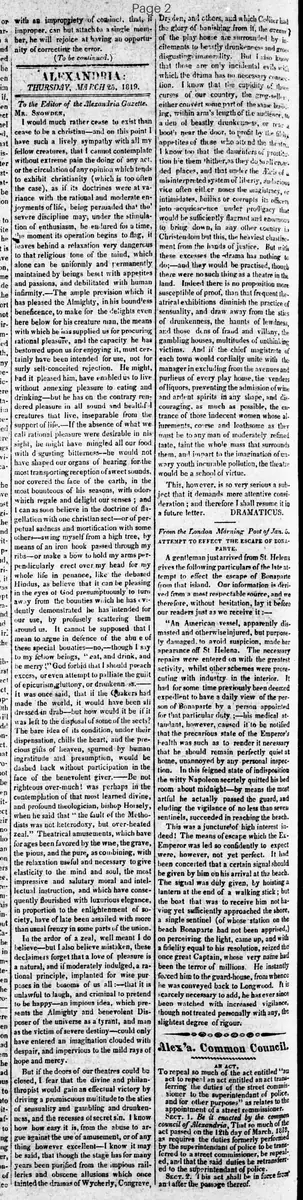
I would much rather cease to exist than cease to be a christian--and on this point I have such a lively sympathy with all my fellow creatures, that I cannot contemplate without extreme pain the doing of any act, or the circulation of any opinion which tends to exhibit christianity (which is too often the case), as if its doctrines were at variance with the rational and moderate enjoyments of life, being persuaded that tho' severe discipline may, under the stimulation of enthusiasm, be endured for a time, the moment its operation begins to flag, it leaves behind a relaxation very dangerous to that religious tone of the mind, which alone can be uniformly and permanently maintained by beings beset with appetites and passions, and debilitated with human infirmity.--The ample provision which it has pleased the Almighty, in his boundless beneficence, to make for the delights even here below for his creature man, the means with which he has supplied us for procuring rational pleasure, and the capacity he has bestowed upon us for enjoying it, must certainly have been intended for use, not for surly self-conceited rejection. He might, had it pleased him, have enabled us to live without annexing pleasure to eating and drinking but he has on the contrary rendered pleasure in all sound and healthful creatures that live, inseparable from the support of life.--If the absence of what we call rational pleasure were desirable in his sight, he might have mingled all our food with disgusting bitterness--he would not have shaped our organs of hearing for the most transporting reception of sweet sounds, nor covered the face of the earth, in the most bountcous of his seasons, with odors which regale and delight our senses: and I can as soon believe in the doctrine of flagellation with one christian sect--or of perpetual sadness and mortification with some others--swing myself from a high tree, by means of an iron hook passed through my ribs--or make a bow to hold my arms perpendicularly erect over my head for my whole life in penance, like the debased Hindus, as believe that it can be pleasing in the eyes of God presumptuously to turn away from the bounties which he has evidently demonstrated he has intended for our use, by profusely scattering them around us. It cannot be supposed that I mean to argue in defence of the abuse of these special bounties--no,--though I say to my fellow beings, "eat, and drink, and be merry!" God forbid that I should preach excess, or even attempt to palliate the guilt of epicurism, gluttony, or drunkenness.
It was once said, that if the Quakers had made the world, it would have been all dressed in drab--but how would it be if it was left to the disposal of some of the sects? The bare idea of its condition, under their dispensation, chills the heart, and the precious gifts of heaven, spurned by human ingratitude and presumption, would be dashed back without participation in the face of the benevolent giver.--Be not righteous over-much! was perhaps in the contemplation of that most learned divine, and profound theologician, bishop Horsely, when he said that "the fault of the Methodists was not heterodoxy, but over-heated zeal." Theatrical amusements, which have for ages been favored by the wise, the grave, the pious, and the pure, as combining, with the relaxation useful and necessary to give elasticity to the mind and soul, the most impressive and salutary moral and intellectual instruction, and which have consequently flourished with luxurious elegance, in proportion to the enlightenment of society, have of late been assailed with more than usual frenzy in some parts of the union.
In the ardor of a zeal, well meant I do believe--but I also believe mistaken, these declaimers forget that a love of pleasure is a natural, and if moderately indulged, a rational principle, implanted for wise purposes in the bosoms of us all:--that it is unlawful to laugh, and criminal to pretend to be happy--an impious idea, which presents the Almighty and benevolent Disposer of the universe as a tyrant, and man as the victim of severe destiny--could only have entered an imagination clouded with despair, and impervious to the mild rays of hope and mercy.
But if the doors of our theatres could be closed, I fear that the divine and philanthropist would gain an effectual victory by driving a promiscuous multitude to the sties of sensuality and gambling and drunkenness, and the recesses of secret sin. I know how easy it is, from the abuse to argue against the use of amusement, or of any thing however excellent--I know it may be said, that though the stage has or many years been purified from the impious raileries and obscene allusions which once tainted the dramas of Wycherly, Congreve Dryden, and others, and which Colier had the glory of banishing from it, the avenues of the play house are surrounded by incitements to beastly drunkenness and gross disgusting immorality. But I also know that those are only incidental evils with which the drama has no necessary connection. I know that the cupidity of those curses of our country, the grog-seller either convert some part of the same building, within arm's length of the audience, to a den of beastly drunkenness, or rear a booth near the door, to profit by the filthy appetites of those who attend the theatre.
I know too that the daughters of prostitution flock thither, as they do to all crowded places, and that under the guise of a misinterpreted system of liberty, audacious vice often either noses the magistracy, or intimidates, bullies or corrupts its officers into acquiescence under profligacy that would be sufficiently flagrant and enormous to bring down, in any other country in Christendom but this, the heaviest chastisement from the hands of justice. But with these excesses the drama has nothing to do:--and they would be practised, though there were no such thing as a theatre in the land. Indeed there is no proposition more susceptible of proof, than that frequent theatrical exhibitions diminish the practice of sensuality, and draw away from the sties of drunkenness, the haunts of lewdness, and those dens of fraud and villany, the gambling houses, multitudes of unthinking victims. And if the chief magistrate of each town would cordially unite with the manager in excluding from the avenues and purlieus of every play house, the venders of liquors, preventing the admission of wine and ardent spirits in any shape, and discouraging, as much as possible, the entrance of those indecent women whose allurements, coarse and loathsome as they must be to any man of moderately refined taste, taint the whole mass that surrounds them, and impart to the imagination of unwary youth incurable pollution, the theatre would be a school of virtue.
This, however, is so very serious a subject that it demands more attentive consideration; and therefore I shall resume it in a future letter.
DRAMATICUS.
THURSDAY, MARCH 25, 1819.
To the Editor of the Alexandria Gazette.
MR. SNOWDEN,
I would much rather cease to exist than cease to be a christian--and on this point I have such a lively sympathy with all my fellow creatures, that I cannot contemplate without extreme pain the doing of any act, or the circulation of any opinion which tends to exhibit christianity (which is too often the case), as if its doctrines were at variance with the rational and moderate enjoyments of life, being persuaded that tho' severe discipline may, under the stimulation of enthusiasm, be endured for a time, the moment its operation begins to flag, it leaves behind a relaxation very dangerous to that religious tone of the mind, which alone can be uniformly and permanently maintained by beings beset with appetites and passions, and debilitated with human infirmity.--The ample provision which it has pleased the Almighty, in his boundless beneficence, to make for the delights even here below for his creature man, the means with which he has supplied us for procuring rational pleasure, and the capacity he has bestowed upon us for enjoying it, must certainly have been intended for use, not for surly self-conceited rejection. He might, had it pleased him, have enabled us to live without annexing pleasure to eating and drinking but he has on the contrary rendered pleasure in all sound and healthful creatures that live, inseparable from the support of life.--If the absence of what we call rational pleasure were desirable in his sight, he might have mingled all our food with disgusting bitterness--he would not have shaped our organs of hearing for the most transporting reception of sweet sounds, nor covered the face of the earth, in the most bountcous of his seasons, with odors which regale and delight our senses: and I can as soon believe in the doctrine of flagellation with one christian sect--or of perpetual sadness and mortification with some others--swing myself from a high tree, by means of an iron hook passed through my ribs--or make a bow to hold my arms perpendicularly erect over my head for my whole life in penance, like the debased Hindus, as believe that it can be pleasing in the eyes of God presumptuously to turn away from the bounties which he has evidently demonstrated he has intended for our use, by profusely scattering them around us. It cannot be supposed that I mean to argue in defence of the abuse of these special bounties--no,--though I say to my fellow beings, "eat, and drink, and be merry!" God forbid that I should preach excess, or even attempt to palliate the guilt of epicurism, gluttony, or drunkenness.
It was once said, that if the Quakers had made the world, it would have been all dressed in drab--but how would it be if it was left to the disposal of some of the sects? The bare idea of its condition, under their dispensation, chills the heart, and the precious gifts of heaven, spurned by human ingratitude and presumption, would be dashed back without participation in the face of the benevolent giver.--Be not righteous over-much! was perhaps in the contemplation of that most learned divine, and profound theologician, bishop Horsely, when he said that "the fault of the Methodists was not heterodoxy, but over-heated zeal." Theatrical amusements, which have for ages been favored by the wise, the grave, the pious, and the pure, as combining, with the relaxation useful and necessary to give elasticity to the mind and soul, the most impressive and salutary moral and intellectual instruction, and which have consequently flourished with luxurious elegance, in proportion to the enlightenment of society, have of late been assailed with more than usual frenzy in some parts of the union.
In the ardor of a zeal, well meant I do believe--but I also believe mistaken, these declaimers forget that a love of pleasure is a natural, and if moderately indulged, a rational principle, implanted for wise purposes in the bosoms of us all:--that it is unlawful to laugh, and criminal to pretend to be happy--an impious idea, which presents the Almighty and benevolent Disposer of the universe as a tyrant, and man as the victim of severe destiny--could only have entered an imagination clouded with despair, and impervious to the mild rays of hope and mercy.
But if the doors of our theatres could be closed, I fear that the divine and philanthropist would gain an effectual victory by driving a promiscuous multitude to the sties of sensuality and gambling and drunkenness, and the recesses of secret sin. I know how easy it is, from the abuse to argue against the use of amusement, or of any thing however excellent--I know it may be said, that though the stage has or many years been purified from the impious raileries and obscene allusions which once tainted the dramas of Wycherly, Congreve Dryden, and others, and which Colier had the glory of banishing from it, the avenues of the play house are surrounded by incitements to beastly drunkenness and gross disgusting immorality. But I also know that those are only incidental evils with which the drama has no necessary connection. I know that the cupidity of those curses of our country, the grog-seller either convert some part of the same building, within arm's length of the audience, to a den of beastly drunkenness, or rear a booth near the door, to profit by the filthy appetites of those who attend the theatre.
I know too that the daughters of prostitution flock thither, as they do to all crowded places, and that under the guise of a misinterpreted system of liberty, audacious vice often either noses the magistracy, or intimidates, bullies or corrupts its officers into acquiescence under profligacy that would be sufficiently flagrant and enormous to bring down, in any other country in Christendom but this, the heaviest chastisement from the hands of justice. But with these excesses the drama has nothing to do:--and they would be practised, though there were no such thing as a theatre in the land. Indeed there is no proposition more susceptible of proof, than that frequent theatrical exhibitions diminish the practice of sensuality, and draw away from the sties of drunkenness, the haunts of lewdness, and those dens of fraud and villany, the gambling houses, multitudes of unthinking victims. And if the chief magistrate of each town would cordially unite with the manager in excluding from the avenues and purlieus of every play house, the venders of liquors, preventing the admission of wine and ardent spirits in any shape, and discouraging, as much as possible, the entrance of those indecent women whose allurements, coarse and loathsome as they must be to any man of moderately refined taste, taint the whole mass that surrounds them, and impart to the imagination of unwary youth incurable pollution, the theatre would be a school of virtue.
This, however, is so very serious a subject that it demands more attentive consideration; and therefore I shall resume it in a future letter.
DRAMATICUS.
What sub-type of article is it?
Persuasive
Religious
Ethical Moral
What themes does it cover?
Religion
Morality
Social Issues
What keywords are associated?
Christianity
Theater
Religious Zeal
Moral Enjoyment
Methodists
Quakers
Vice Reduction
What entities or persons were involved?
Dramaticus
Mr. Snowden, Editor Of The Alexandria Gazette
Letter to Editor Details
Author
Dramaticus
Recipient
Mr. Snowden, Editor Of The Alexandria Gazette
Main Argument
christianity does not oppose rational and moderate enjoyments of life, including theatrical amusements, which, if properly managed, serve as schools of virtue and reduce societal vices rather than promote them.
Notable Details
References To Quakers And Methodists As Overly Zealous Sects
Quotes Bishop Horsley On Methodists' Over Heated Zeal
Mentions Playwrights Wycherly, Congreve, Dryden, And Critic Colier
Compares Extreme Religious Practices To Hindu Penances And Flagellation