Thank you for visiting SNEWPapers!
Sign up free
Story
February 18, 1909
The Paducah Evening Sun
Paducah, Mccracken County, Kentucky
What is this article about?
Practical guide on farm building construction, arrangement, and materials for barns, silos, hog houses, and other structures to improve efficiency and animal care in modern agriculture.
Clipping
OCR Quality
95%
Excellent
Full Text
Home Course In Modern Agriculture
THE kind of buildings needed on the farm, their arrangement and location and the kind of material to make them of are problems that often perplex the farmer who is just starting out to improve his place. No attempt will be made here to give any specific plans, since the buildings must be constructed to meet the varying requirements of different farms and the still more varying ideas of the owners. A few suggestions. however. may help to solve some of the most troublesome building problems.
Aside from the house. which will be considered in the next article, the most important farm building Is the barn. This is usually built as a shelter for the cows, horses and young calves and to provide a storage place for hay. The barn should not be located near enough to the house so that the odor will be objectionable nor too far away, as this makes too many extra steps. About 300 feet is a good distance, if the yards and manure piles are on the side away from the house, as they should be.
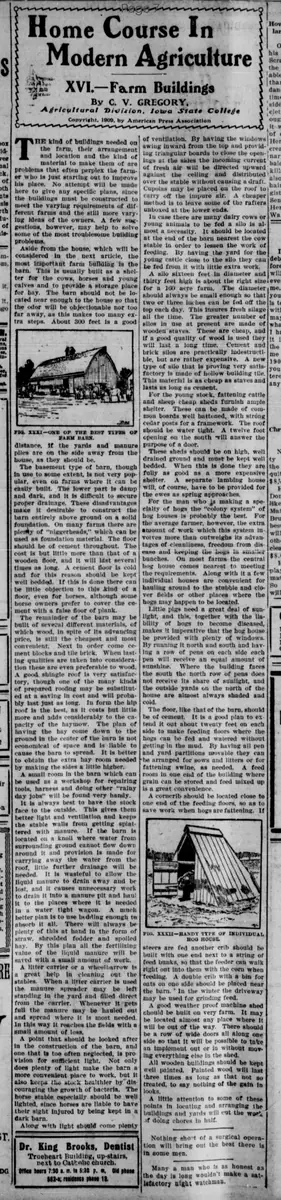
FIG. XXXI-ONE OF THE BEST TYPES OF FARM BARN.
The basement type of barn. though in use to some extent, is not very popular, even on farms where it can be easily built. The lower part is damp and dark, and it is difficult to secure proper drainage. These disadvantages make it desirable to construct the barn entirely above ground on a solid foundation. On many farms there are plenty of "niggerheads," which can be used as foundation material. The floor should be of cement throughout. The cost is but little more than that of a wooden floor. and it will last several times as long. A cement floor is cold and for this reason should be kept well bedded. If this is done there can be little objection to this kind of a floor, even for horses, although some horse owners prefer to cover the cement with a false floor of plank
The remainder of the barn may be built of several different materials, of which wood. in spite of Its advancing price, is still the cheapest and most convenient. Next in order come cement blocks and tile brick. When lasting qualities are taken into consideration these are even preferable to wood. A good shingle roof is very satisfactory, though one of the many kinds of prepared roofing may be substituted at a saving In cost and will probably last just as long. In form the hip roof is the best, as it costs but little more and adds considerably to the capacity of the haymow. The plan of having the hay come down to the ground in the center of the barn is not economical of space and is liable to cause the barn to spread. It is better to obtain the extra hay room needed by making the sides a little higher.
A small room In the barn which can be used as a workshop for repairing tools, harness and doing other "rainy day jobs" will be found very handy. It is always best to have the stock face to the outside. This gives them better light and ventilation and keeps the stable walls from getting splattered with manure. If the barn is located on a knoll where water from surrounding ground cannot flow down around it and provision is made for carrying away the water from the roof, little further drainage will be needed. It is wasteful to allow the liquid manure to drain away and be lost. and it causes unnecessary work to drain it into a manure pit and haul it to the places where it is needed in a water tight wagon. A much better plan is to use bedding enough to absorb it all. There will always be plenty of this at hand in the form of straw, shredded fodder and spoiled hay. By this plan all the fertilizing value of the liquid manure will be saved with a small amount of work.
A litter carrier or a wheelbarrow is a great help in cleaning out the stables. When a litter carrier is used the manure spreader may be left standing in the yard and filled direct from the carrier. Whenever it gets full the manure may be hauled out and spread where it is most needed. In this way It reaches the fields with a small amount of loss.
A point that should be looked after in the construction of the barn, and one that is too often neglected, is provision for sufficient light. Not only does plenty of light make the barn a more convenient place to work, but it also keeps the stock healthier by discouraging the growth of bacteria. The horse stable especially should be well lighted, since horses are liable to have their sight injured by being kept in a dark barn.
Along with light should come plenty of ventilation, By having the windows swing inward from the top and providing triangular boards to close the openings at the sides the incoming current of fresh air will be directed upward against the ceiling and distributed over the stable without causing a draft. Cupolas may be placed on the roof to carry off the impure air. A cheaper method is to leave some of the rafters unboxed at the lower ends.
In case there are many dairy cows or young animals to be fed a silo is almost a necessity. It should be located at the end of the barn nearest the cow stable in order to lessen the work of feeding. By having the yard for the young cattle close to the silo they can be fed from it with little extra work. A silo sixteen feet in diameter and thirty feet high is about the right size for a 160 acre farm, The diameter should always be small enough so that two or three inches can be fed off the top each day. This insures fresh silage all the time. The greater number of silos in use at present are made of wooden staves. These are cheap, and if a good quality of wood is used they will last a long time. Cement and brick silos are practically indestructible, but are rather expensive. A new type of silo that is proving very satisfactory is made of hollow building tile. This material is as cheap as staves and lasts as long as cement.
For the young stock, fattening cattle and sheep cheap sheds furnish ample shelter. These can be made of common boards well battened, with strong cedar posts for a framework. The roof should be water tight. A twelve foot opening on the south will answer the purpose of a door. These sheds should be on high, well drained ground and must be kept well bedded. When this is done they are fully as good as a more expensive shelter. A separate lambing house will, of course, have to be provided for the ewes as spring approaches.
For the man who is making a specialty of hogs the "colony system" of hog houses is probably the best. For the average farmer, however, the extra amount of work which this system involves more than outweighs its advantages of cleanliness, freedom from disease and keeping the hogs in smaller bunches. On most farms the central hog house comes nearest to meeting the requirements. Along with It a few individual houses are convenient for hauling around to the stubble and clover fields or other places where the hogs may happen to be located.
Little pigs need a great deal of sunlight, and this, together with the liability of hogs to become diseased, makes it imperative that the hog house be provided with plenty of windows. By running it north and south and having a row of pens on each side each pen will receive an equal amount of sunshine. Where the building faces the south the north row of pens does not receive its share of sunlight, and the outside yards on the north of the house are almost always shaded and cold.
The floor, like that of the barn, should be of cement. It is a good plan to extend it out about twenty feet on each side to make feeding floors where the hogs can be fed and watered without getting In the mud. By having all pen and yard partitions movable they can be arranged for sows and litters or for fattening swine. as needed. A feed room in one end of the building where grain can be stored and feed mixed up is a great convenience
A corncrib should be located close to one end of the feeding floors. so as to save work when hogs are fattening. If steers are fed another crib should be built with one end next to a string of feed bunks, so that the feeder can walk right out into them with the corn when feeding. A double crib with a bin for oats on one side should be placed near the barn. 'In the winter the driveway may be used for grinding feed.
A good weather proof machine shed should be built on very farm. It may be located almost any place where it will be out of the way. There should be a row of wide doors all along one side so that it will be possible to take an implement out or in without moving everything else in the shed.
All wooden buildings should be kept well painted. Painted wood will last three times as long as that not so treated, to say nothing of the gain in looks.
A little attention to some of these points in locating and arranging the buildings and yards will cut the work of doing chores in half.
Nothing short of a surgical operation will bring out the best there is in some men.
Many a man who is as honest as the day is long wouldn't make a satisfactory night watchman.
THE kind of buildings needed on the farm, their arrangement and location and the kind of material to make them of are problems that often perplex the farmer who is just starting out to improve his place. No attempt will be made here to give any specific plans, since the buildings must be constructed to meet the varying requirements of different farms and the still more varying ideas of the owners. A few suggestions. however. may help to solve some of the most troublesome building problems.
Aside from the house. which will be considered in the next article, the most important farm building Is the barn. This is usually built as a shelter for the cows, horses and young calves and to provide a storage place for hay. The barn should not be located near enough to the house so that the odor will be objectionable nor too far away, as this makes too many extra steps. About 300 feet is a good distance, if the yards and manure piles are on the side away from the house, as they should be.
FIG. XXXI-ONE OF THE BEST TYPES OF FARM BARN.
The basement type of barn. though in use to some extent, is not very popular, even on farms where it can be easily built. The lower part is damp and dark, and it is difficult to secure proper drainage. These disadvantages make it desirable to construct the barn entirely above ground on a solid foundation. On many farms there are plenty of "niggerheads," which can be used as foundation material. The floor should be of cement throughout. The cost is but little more than that of a wooden floor. and it will last several times as long. A cement floor is cold and for this reason should be kept well bedded. If this is done there can be little objection to this kind of a floor, even for horses, although some horse owners prefer to cover the cement with a false floor of plank
The remainder of the barn may be built of several different materials, of which wood. in spite of Its advancing price, is still the cheapest and most convenient. Next in order come cement blocks and tile brick. When lasting qualities are taken into consideration these are even preferable to wood. A good shingle roof is very satisfactory, though one of the many kinds of prepared roofing may be substituted at a saving In cost and will probably last just as long. In form the hip roof is the best, as it costs but little more and adds considerably to the capacity of the haymow. The plan of having the hay come down to the ground in the center of the barn is not economical of space and is liable to cause the barn to spread. It is better to obtain the extra hay room needed by making the sides a little higher.
A small room In the barn which can be used as a workshop for repairing tools, harness and doing other "rainy day jobs" will be found very handy. It is always best to have the stock face to the outside. This gives them better light and ventilation and keeps the stable walls from getting splattered with manure. If the barn is located on a knoll where water from surrounding ground cannot flow down around it and provision is made for carrying away the water from the roof, little further drainage will be needed. It is wasteful to allow the liquid manure to drain away and be lost. and it causes unnecessary work to drain it into a manure pit and haul it to the places where it is needed in a water tight wagon. A much better plan is to use bedding enough to absorb it all. There will always be plenty of this at hand in the form of straw, shredded fodder and spoiled hay. By this plan all the fertilizing value of the liquid manure will be saved with a small amount of work.
A litter carrier or a wheelbarrow is a great help in cleaning out the stables. When a litter carrier is used the manure spreader may be left standing in the yard and filled direct from the carrier. Whenever it gets full the manure may be hauled out and spread where it is most needed. In this way It reaches the fields with a small amount of loss.
A point that should be looked after in the construction of the barn, and one that is too often neglected, is provision for sufficient light. Not only does plenty of light make the barn a more convenient place to work, but it also keeps the stock healthier by discouraging the growth of bacteria. The horse stable especially should be well lighted, since horses are liable to have their sight injured by being kept in a dark barn.
Along with light should come plenty of ventilation, By having the windows swing inward from the top and providing triangular boards to close the openings at the sides the incoming current of fresh air will be directed upward against the ceiling and distributed over the stable without causing a draft. Cupolas may be placed on the roof to carry off the impure air. A cheaper method is to leave some of the rafters unboxed at the lower ends.
In case there are many dairy cows or young animals to be fed a silo is almost a necessity. It should be located at the end of the barn nearest the cow stable in order to lessen the work of feeding. By having the yard for the young cattle close to the silo they can be fed from it with little extra work. A silo sixteen feet in diameter and thirty feet high is about the right size for a 160 acre farm, The diameter should always be small enough so that two or three inches can be fed off the top each day. This insures fresh silage all the time. The greater number of silos in use at present are made of wooden staves. These are cheap, and if a good quality of wood is used they will last a long time. Cement and brick silos are practically indestructible, but are rather expensive. A new type of silo that is proving very satisfactory is made of hollow building tile. This material is as cheap as staves and lasts as long as cement.
For the young stock, fattening cattle and sheep cheap sheds furnish ample shelter. These can be made of common boards well battened, with strong cedar posts for a framework. The roof should be water tight. A twelve foot opening on the south will answer the purpose of a door. These sheds should be on high, well drained ground and must be kept well bedded. When this is done they are fully as good as a more expensive shelter. A separate lambing house will, of course, have to be provided for the ewes as spring approaches.
For the man who is making a specialty of hogs the "colony system" of hog houses is probably the best. For the average farmer, however, the extra amount of work which this system involves more than outweighs its advantages of cleanliness, freedom from disease and keeping the hogs in smaller bunches. On most farms the central hog house comes nearest to meeting the requirements. Along with It a few individual houses are convenient for hauling around to the stubble and clover fields or other places where the hogs may happen to be located.
Little pigs need a great deal of sunlight, and this, together with the liability of hogs to become diseased, makes it imperative that the hog house be provided with plenty of windows. By running it north and south and having a row of pens on each side each pen will receive an equal amount of sunshine. Where the building faces the south the north row of pens does not receive its share of sunlight, and the outside yards on the north of the house are almost always shaded and cold.
The floor, like that of the barn, should be of cement. It is a good plan to extend it out about twenty feet on each side to make feeding floors where the hogs can be fed and watered without getting In the mud. By having all pen and yard partitions movable they can be arranged for sows and litters or for fattening swine. as needed. A feed room in one end of the building where grain can be stored and feed mixed up is a great convenience
A corncrib should be located close to one end of the feeding floors. so as to save work when hogs are fattening. If steers are fed another crib should be built with one end next to a string of feed bunks, so that the feeder can walk right out into them with the corn when feeding. A double crib with a bin for oats on one side should be placed near the barn. 'In the winter the driveway may be used for grinding feed.
A good weather proof machine shed should be built on very farm. It may be located almost any place where it will be out of the way. There should be a row of wide doors all along one side so that it will be possible to take an implement out or in without moving everything else in the shed.
All wooden buildings should be kept well painted. Painted wood will last three times as long as that not so treated, to say nothing of the gain in looks.
A little attention to some of these points in locating and arranging the buildings and yards will cut the work of doing chores in half.
Nothing short of a surgical operation will bring out the best there is in some men.
Many a man who is as honest as the day is long wouldn't make a satisfactory night watchman.
What sub-type of article is it?
Agricultural Guide
Practical Advice
What keywords are associated?
Farm Barn
Silo Construction
Hog Houses
Manure Management
Ventilation
Cement Floors
Building Materials
Story Details
Story Details
Advice on farm buildings: barn placement and construction with cement floors, wood or cement materials, hip roofs; silo for feed; sheds for stock; hog houses with sunlight and cement; corncribs; machine sheds; painting for longevity.