Thank you for visiting SNEWPapers!
Sign up free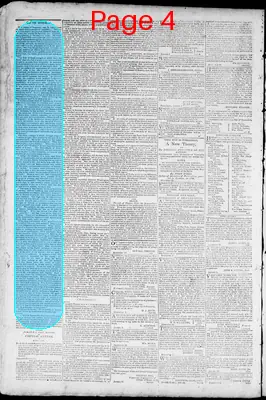
Editorial
January 13, 1810
The Enquirer
Richmond, Henrico County, Virginia
What is this article about?
Editorial excerpting and interpreting Rousseau's 'Social Contract' on Corsica's potential for legislation and 'Emilius' on social revolutions, linking to French Revolution outcomes and critiquing the decline of European monarchies through admiration of Rousseau's foresight.
Clipping

OCR Quality
98%
Excellent
Full Text
For the Enquirer.
The works of Rousseau are in many places stamped with a species of inspiration. His bold and enthusiastic imagination seems to have soared into the regions of futurity, and snatched a hasty glimpse of the times to come. He whom the Tyrants of Europe could not awe, nor the fetters of Superstition repress, has equally dared to draw aside the mystic veil of time. Hence in the following extracts, we behold the spirit of a prophet; but it is the prophetic spirit of the philosopher, who has deeply meditated the order of things, and traced effects from their causes—as one, who sees in the prolific germ of the seed before him, the future plant luxuriant and developed.
The first of these extracts is taken from his Social Contract—but it is not in so just a spirit of prophecy as some have imagined. It evidently does not point to so extraordinary a man, as Bonaparte—but to the state of the island itself. It does not point to the appearance of a man, who would arise in that isle to rule the sceptre of France and the destinies of Europe—but simply to the rise of a political system among themselves, which would astonish the world. In this last sense, the prophecy is not realised by fact—Corsica has not yet astonished Europe, by the production of a legislator, who has given her a wise and free system of laws: and it is only true in one sense, as it shows Rousseau's discernment of the spirit of a people whose manners were capable of producing a man who would astonish the world. In this passage, Rousseau is touching the question, what people are in a proper state to receive laws? After delivering his own opinion upon it, he thus goes on:
"In the arduous work of legislation, it is less difficult to know what to establish than what to destroy; and that makes legislators succeed so seldom, is the impossibility of uniting the simple system of nature with those establishments which are necessary for the welfare of Society. But as we rarely see all the circumstances requisite to form a state combine together, so we seldom find any state well constructed. There is still in this quarter of the world one country proper to receive legislation; it is the island of Corsica. The valour and constancy with which that brave people have recovered their liberty, well deserves to have some wise man step forward and teach them how to preserve it; and I have a presentiment that this little island will some day astonish all Europe."
The other passage is much stronger in point. It seems to have been written by the pen of inspiration itself. He is the Daniel or the Isaiah that preceded the French revolution. What was then prophecy is now history. What was on the pages of the "Emilius," is now inscribed on the annals of France. The descendants of those, who were shining in splendor, are now compelled to wander in other countries, and live on the produce of mechanical employments:
"Adapt the situation of a man, says Rousseau, to his personal, and not accidental abilities. Do not you see, that by bringing him up only to fill one station in life, you make him unfit for every other? and that mere accident may render all the pains you have taken useless, or destructive to him? Is there a more ridiculous being on earth, than a lord become a beggar, and retaining in his misery the prejudices attached to his birth? What is more vile and contemptible than a rich man become poor, sensible of the disgrace of poverty, and reduced to the lowest of the human species? The one hath no other resource than to turn common cheat, and the other servilely to put on a livery with this fine phrase in their mouths, we must live.
"You make a dependence on the actual order of society, without thinking that order subject to unavoidable revolutions, and that it is impossible to foresee or prevent that which may affect your children. The high may be reduced low, and the rich may become poor—and even the monarch dwindle into a subject—Are these changes of fortune so unfrequent, that you can flatter yourself your pupil will be exempt from them? We certainly are approaching the crisis of human establishments, the age of political revolutions."
Who can assure you, what will be your lot? All that men made, they may destroy. There are no characters indelible but those imprinted by nature—and nature never made man royal, noble, or rich.
What then will become of the pupil you have educated to live only with splendor, when he is reduced into indigence and meanness? What will become of a farmer of the revenues, whose soul delights in nothing but wealth, when he is reduced to want and beggary? How miserable must be the situation of that pampered, helpless being, who, destitute of every thing, is incapable of providing in the least for himself, and places all his satisfaction in things, dependent on others?
Happy is he who knows how to quit a rank that is quitting him, and to remain still a man in spite of fortune! Let others lavish what encomiums they please on the frantic behavior of the vanquished monarch, who wanted to bury himself alive in the ruins of his throne; for my part, I hold him in contempt. It appears to me, that his existence depended on his crown: and that, had he not been a king, he would have been nothing at all. But the monarch who can throw aside the robes of royalty and be still himself, is, in my opinion, infinitely superior to a crown. From the rank of a king, which may be filled up by a coward, a knave, or a fool, he rises to that of a man, which so few are able to fill with delicacy and dignity. Such a man may brave the vicissitudes of fortune, and will triumph over them. He owes nothing to any one but himself; and though destitute of all adventitious substance, is not therefore annihilated; he is still something. Yes, I prefer infinitely the character of a king of Syracuse turned school-master at Corinth, of a king of Macedon become a notary at Rome, to that of an unhappy Tarquin ignorant how to subsist without a kingdom; of an heir to a race of kings, become the sport of all who are brutal enough to exult in his misery, wandering from court to court in search of relief, and meeting on every side with nothing but mockery, insult, and affronts; and all for want of knowing how to exercise any employment different from that to which he has been educated, and which is no longer in his power."
Eloquent Genevese! What fidelity in his pictures! What spirit and soul in his colorings! I hold it impossible that the great monarchs of Europe can subsist much longer, they all affect magnificence and splendor. Every state that doth this, is upon its decline. I would give very particular and cogent reasons for this assertion; but it may not be proper; and indeed they are but too obvious.
The works of Rousseau are in many places stamped with a species of inspiration. His bold and enthusiastic imagination seems to have soared into the regions of futurity, and snatched a hasty glimpse of the times to come. He whom the Tyrants of Europe could not awe, nor the fetters of Superstition repress, has equally dared to draw aside the mystic veil of time. Hence in the following extracts, we behold the spirit of a prophet; but it is the prophetic spirit of the philosopher, who has deeply meditated the order of things, and traced effects from their causes—as one, who sees in the prolific germ of the seed before him, the future plant luxuriant and developed.
The first of these extracts is taken from his Social Contract—but it is not in so just a spirit of prophecy as some have imagined. It evidently does not point to so extraordinary a man, as Bonaparte—but to the state of the island itself. It does not point to the appearance of a man, who would arise in that isle to rule the sceptre of France and the destinies of Europe—but simply to the rise of a political system among themselves, which would astonish the world. In this last sense, the prophecy is not realised by fact—Corsica has not yet astonished Europe, by the production of a legislator, who has given her a wise and free system of laws: and it is only true in one sense, as it shows Rousseau's discernment of the spirit of a people whose manners were capable of producing a man who would astonish the world. In this passage, Rousseau is touching the question, what people are in a proper state to receive laws? After delivering his own opinion upon it, he thus goes on:
"In the arduous work of legislation, it is less difficult to know what to establish than what to destroy; and that makes legislators succeed so seldom, is the impossibility of uniting the simple system of nature with those establishments which are necessary for the welfare of Society. But as we rarely see all the circumstances requisite to form a state combine together, so we seldom find any state well constructed. There is still in this quarter of the world one country proper to receive legislation; it is the island of Corsica. The valour and constancy with which that brave people have recovered their liberty, well deserves to have some wise man step forward and teach them how to preserve it; and I have a presentiment that this little island will some day astonish all Europe."
The other passage is much stronger in point. It seems to have been written by the pen of inspiration itself. He is the Daniel or the Isaiah that preceded the French revolution. What was then prophecy is now history. What was on the pages of the "Emilius," is now inscribed on the annals of France. The descendants of those, who were shining in splendor, are now compelled to wander in other countries, and live on the produce of mechanical employments:
"Adapt the situation of a man, says Rousseau, to his personal, and not accidental abilities. Do not you see, that by bringing him up only to fill one station in life, you make him unfit for every other? and that mere accident may render all the pains you have taken useless, or destructive to him? Is there a more ridiculous being on earth, than a lord become a beggar, and retaining in his misery the prejudices attached to his birth? What is more vile and contemptible than a rich man become poor, sensible of the disgrace of poverty, and reduced to the lowest of the human species? The one hath no other resource than to turn common cheat, and the other servilely to put on a livery with this fine phrase in their mouths, we must live.
"You make a dependence on the actual order of society, without thinking that order subject to unavoidable revolutions, and that it is impossible to foresee or prevent that which may affect your children. The high may be reduced low, and the rich may become poor—and even the monarch dwindle into a subject—Are these changes of fortune so unfrequent, that you can flatter yourself your pupil will be exempt from them? We certainly are approaching the crisis of human establishments, the age of political revolutions."
Who can assure you, what will be your lot? All that men made, they may destroy. There are no characters indelible but those imprinted by nature—and nature never made man royal, noble, or rich.
What then will become of the pupil you have educated to live only with splendor, when he is reduced into indigence and meanness? What will become of a farmer of the revenues, whose soul delights in nothing but wealth, when he is reduced to want and beggary? How miserable must be the situation of that pampered, helpless being, who, destitute of every thing, is incapable of providing in the least for himself, and places all his satisfaction in things, dependent on others?
Happy is he who knows how to quit a rank that is quitting him, and to remain still a man in spite of fortune! Let others lavish what encomiums they please on the frantic behavior of the vanquished monarch, who wanted to bury himself alive in the ruins of his throne; for my part, I hold him in contempt. It appears to me, that his existence depended on his crown: and that, had he not been a king, he would have been nothing at all. But the monarch who can throw aside the robes of royalty and be still himself, is, in my opinion, infinitely superior to a crown. From the rank of a king, which may be filled up by a coward, a knave, or a fool, he rises to that of a man, which so few are able to fill with delicacy and dignity. Such a man may brave the vicissitudes of fortune, and will triumph over them. He owes nothing to any one but himself; and though destitute of all adventitious substance, is not therefore annihilated; he is still something. Yes, I prefer infinitely the character of a king of Syracuse turned school-master at Corinth, of a king of Macedon become a notary at Rome, to that of an unhappy Tarquin ignorant how to subsist without a kingdom; of an heir to a race of kings, become the sport of all who are brutal enough to exult in his misery, wandering from court to court in search of relief, and meeting on every side with nothing but mockery, insult, and affronts; and all for want of knowing how to exercise any employment different from that to which he has been educated, and which is no longer in his power."
Eloquent Genevese! What fidelity in his pictures! What spirit and soul in his colorings! I hold it impossible that the great monarchs of Europe can subsist much longer, they all affect magnificence and splendor. Every state that doth this, is upon its decline. I would give very particular and cogent reasons for this assertion; but it may not be proper; and indeed they are but too obvious.
What sub-type of article is it?
Social Reform
Constitutional
Moral Or Religious
What keywords are associated?
Rousseau
Social Contract
Emilius
Corsica
French Revolution
Monarchy Decline
Political Revolutions
European Tyrants
What entities or persons were involved?
Rousseau
Bonaparte
Corsica
French Monarchs
Tyrants Of Europe
Editorial Details
Primary Topic
Rousseau's Prophetic Insights On Corsica And Social Revolutions
Stance / Tone
Admiring Endorsement Of Rousseau's Philosophy Critiquing Monarchy
Key Figures
Rousseau
Bonaparte
Corsica
French Monarchs
Tyrants Of Europe
Key Arguments
Rousseau's Writings Prophetically Foresee Social And Political Revolutions
Corsica's People Are Suited For Wise Legislation But Have Not Yet Realized It
Education Should Prepare For Life's Uncertainties And Revolutions
Monarchs Dependent On Splendor Are Doomed To Decline
True Dignity Lies In Being A Man Beyond Royal Rank