Thank you for visiting SNEWPapers!
Sign up free
Literary
September 21, 1836
The Rhode Island Republican
Newport, Newport County, Rhode Island
What is this article about?
Anecdotes from the London Mirror on Napoleon Bonaparte: his generous payment to a armor maker after testing a bulletproof coat; his cynical views on friendship expressed to Bourrienne; and ironic French newspaper bulletins tracking his 1815 return from Elba, shifting from hostility to acclaim.
Clipping
OCR Quality
98%
Excellent
Full Text
From the London Mirror.
BONAPARTIANA.
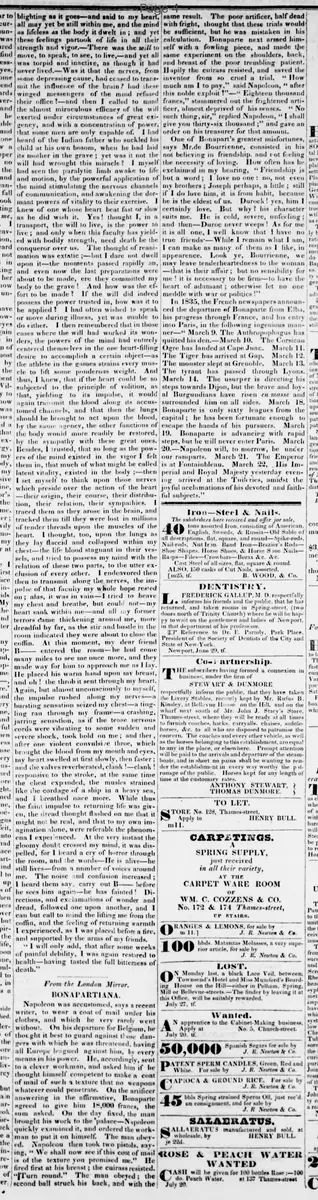
Napoleon was accustomed, says a recent writer, to wear a coat of mail under his clothes, and which he very rarely went without. On his departure for Belgium, he thought it best to guard against those dangers with which he was threatened, having all Europe leagued against him, by every means in his power. He, accordingly, sent to a clever workman, and asked him if he thought himself competent to make a coat of mail of such a texture that no weapons whatever could penetrate. On the artificer answering in the affirmative, Bonaparte agreed to give him 18,000 francs, the sum asked. On the day fixed, the man brought his work to the palace—Napoleon quickly examined it, and ordered the workman to put it on himself. The man obeyed. Napoleon then took two pistols, saying, "We shall now see if this coat of mail is of the texture you promised me." He fired first at his breast; the cuirass resisted. "Turn round." The man obeyed; the second ball struck his back, and with the same result. The poor artificer, half dead with fright, thought that these trials would be sufficient, but he was mistaken in his calculation. Bonaparte next armed himself with a fowling piece, and made the same experiment on the shoulders, back, and breast of the poor trembling patient. Happily the cuirass resisted, and saved the inventor from so cruel a trial. "How much am I to pay," said Napoleon, "after this noble exploit?"—"Eighteen thousand francs," stammered out the frightened artificer, almost deprived of his senses. "No such thing, sir," replied Napoleon, "I shall give you thirty-six thousand;" and gave an order on his treasurer for that amount.
One of Bonaparte's greatest misfortunes, says Mr. de Bourrienne, consisted in his not believing in friendship, and not feeling the necessity of loving. How often has he exclaimed in my hearing, "Friendship is but a word; I love no one: no, not even my brothers; Joseph perhaps, a little; still if I do love him, it is from habit, because he is the eldest of us. Duroc! yes, him I certainly love. But why? his character suits me. He is cold, severe, unfeeling; and then—Duroc never weeps! As for me it is all one, I well know that I have no true friends'—While I remain what I am, I can make as many of them as I like, in appearance. Look ye, Bourrienne, we may leave tenderheartedness to the women —that is their affair; but no sensibility for me! it is necessary to be firm—to have the heart of adamant; otherwise let no one meddle with war or politics!"
In 1815, the French newspapers announced the departure of Bonaparte from Elba, his progress through France, and his entry into Paris, in the following ingenious manner—"March 9. The Anthropophagus has quitted his den.—March 10. The Corsican Ogre has landed at Cape Juan. March 11. The Tiger has arrived at Gap. March 12. The monster slept at Grenoble. March 13. The tyrant has passed through Lyons. March 14. The usurper is directing his steps towards Dijon, but the brave and loyal Burgundians have risen en masse and surrounded him on all sides. March 18. Bonaparte is only sixty leagues from the capital; he has been fortunate enough to escape the hands of his pursuers. March 19. Bonaparte is advancing with rapid steps, but he will never enter Paris. March 20.—Napoleon will, to morrow, be under our ramparts. March 21. The Emperor is at Fontainebleau. March 22, His Imperial and Royal Majesty yesterday evening arrived at the Tuileries, amidst the joyful acclamations of his devoted and faithful subjects."
BONAPARTIANA.
Napoleon was accustomed, says a recent writer, to wear a coat of mail under his clothes, and which he very rarely went without. On his departure for Belgium, he thought it best to guard against those dangers with which he was threatened, having all Europe leagued against him, by every means in his power. He, accordingly, sent to a clever workman, and asked him if he thought himself competent to make a coat of mail of such a texture that no weapons whatever could penetrate. On the artificer answering in the affirmative, Bonaparte agreed to give him 18,000 francs, the sum asked. On the day fixed, the man brought his work to the palace—Napoleon quickly examined it, and ordered the workman to put it on himself. The man obeyed. Napoleon then took two pistols, saying, "We shall now see if this coat of mail is of the texture you promised me." He fired first at his breast; the cuirass resisted. "Turn round." The man obeyed; the second ball struck his back, and with the same result. The poor artificer, half dead with fright, thought that these trials would be sufficient, but he was mistaken in his calculation. Bonaparte next armed himself with a fowling piece, and made the same experiment on the shoulders, back, and breast of the poor trembling patient. Happily the cuirass resisted, and saved the inventor from so cruel a trial. "How much am I to pay," said Napoleon, "after this noble exploit?"—"Eighteen thousand francs," stammered out the frightened artificer, almost deprived of his senses. "No such thing, sir," replied Napoleon, "I shall give you thirty-six thousand;" and gave an order on his treasurer for that amount.
One of Bonaparte's greatest misfortunes, says Mr. de Bourrienne, consisted in his not believing in friendship, and not feeling the necessity of loving. How often has he exclaimed in my hearing, "Friendship is but a word; I love no one: no, not even my brothers; Joseph perhaps, a little; still if I do love him, it is from habit, because he is the eldest of us. Duroc! yes, him I certainly love. But why? his character suits me. He is cold, severe, unfeeling; and then—Duroc never weeps! As for me it is all one, I well know that I have no true friends'—While I remain what I am, I can make as many of them as I like, in appearance. Look ye, Bourrienne, we may leave tenderheartedness to the women —that is their affair; but no sensibility for me! it is necessary to be firm—to have the heart of adamant; otherwise let no one meddle with war or politics!"
In 1815, the French newspapers announced the departure of Bonaparte from Elba, his progress through France, and his entry into Paris, in the following ingenious manner—"March 9. The Anthropophagus has quitted his den.—March 10. The Corsican Ogre has landed at Cape Juan. March 11. The Tiger has arrived at Gap. March 12. The monster slept at Grenoble. March 13. The tyrant has passed through Lyons. March 14. The usurper is directing his steps towards Dijon, but the brave and loyal Burgundians have risen en masse and surrounded him on all sides. March 18. Bonaparte is only sixty leagues from the capital; he has been fortunate enough to escape the hands of his pursuers. March 19. Bonaparte is advancing with rapid steps, but he will never enter Paris. March 20.—Napoleon will, to morrow, be under our ramparts. March 21. The Emperor is at Fontainebleau. March 22, His Imperial and Royal Majesty yesterday evening arrived at the Tuileries, amidst the joyful acclamations of his devoted and faithful subjects."
What sub-type of article is it?
Essay
Satire
What themes does it cover?
Political
Friendship
What keywords are associated?
Napoleon Bonaparte
Coat Of Mail
Friendship
Elba
Return To Paris
French Newspapers
Satirical Reports
What entities or persons were involved?
From The London Mirror.
Literary Details
Title
Bonapartiana.
Author
From The London Mirror.
Key Lines
"Friendship Is But A Word; I Love No One: No, Not Even My Brothers; Joseph Perhaps, A Little; Still If I Do Love Him, It Is From Habit, Because He Is The Eldest Of Us. Duroc! Yes, Him I Certainly Love. But Why? His Character Suits Me. He Is Cold, Severe, Unfeeling; And Then—Duroc Never Weeps!"
"March 9. The Anthropophagus Has Quitted His Den.—March 10. The Corsican Ogre Has Landed At Cape Juan. March 11. The Tiger Has Arrived At Gap. March 12. The Monster Slept At Grenoble. March 13. The Tyrant Has Passed Through Lyons. March 14. The Usurper Is Directing His Steps Towards Dijon, But The Brave And Loyal Burgundians Have Risen En Masse And Surrounded Him On All Sides. March 18. Bonaparte Is Only Sixty Leagues From The Capital; He Has Been Fortunate Enough To Escape The Hands Of His Pursuers. March 19. Bonaparte Is Advancing With Rapid Steps, But He Will Never Enter Paris. March 20.—Napoleon Will, To Morrow, Be Under Our Ramparts. March 21. The Emperor Is At Fontainebleau. March 22, His Imperial And Royal Majesty Yesterday Evening Arrived At The Tuileries, Amidst The Joyful Acclamations Of His Devoted And Faithful Subjects."