Thank you for visiting SNEWPapers!
Sign up free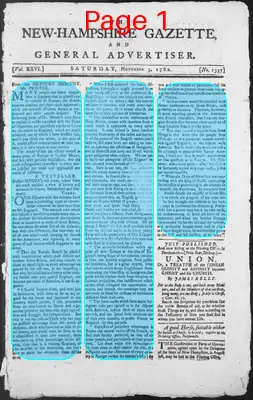
The New Hampshire Gazette And General Advertiser
Portsmouth, Exeter, Rockingham County, New Hampshire
What is this article about?
A Traveller submits to the Newport Mercury printer an excerpt from Dr. Moore's travel letters, explaining European admiration for American resistance against Britain due to British arrogance, pride, and failure to cultivate foreign goodwill, with observations from Vienna and references to European leaders.
Clipping
OCR Quality
Full Text
Mr. PRINTER,
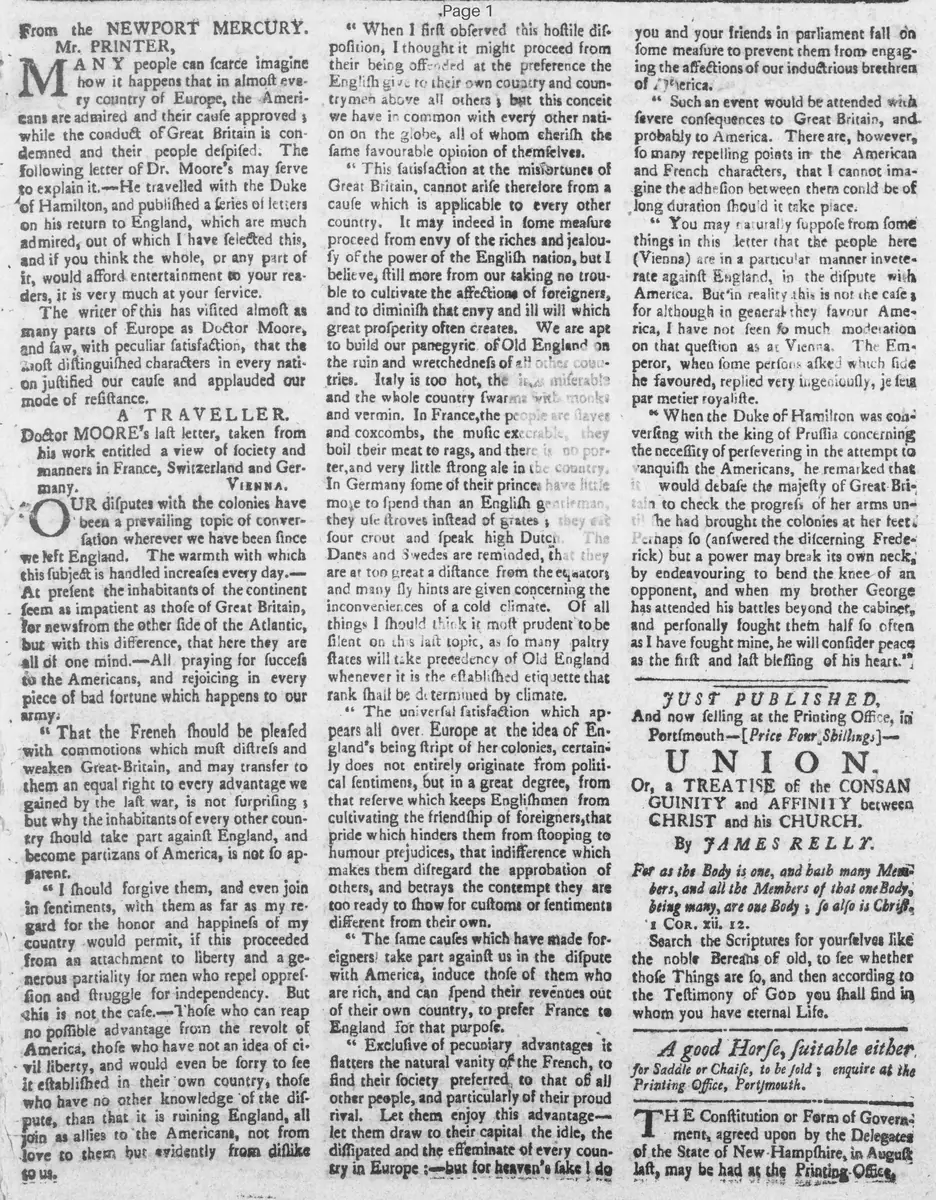
Any people can scarce imagine how it happens that in almost every country of Europe, the Americans are admired and their cause approved; while the conduct of Great Britain is condemned and their people despised: The following letter of Dr. Moore's may serve to explain it.--He travelled with the Duke of Hamilton, and published a series of letters on his return to England, which are much admired, out of which I have selected this. And if you think the whole, or any part of it, would afford entertainment to your readers, it is very much at your service.
The writer of this has visited almost as many parts of Europe as Doctor Moore, and saw, with peculiar satisfaction, that the most distinguished characters in every nation justified our cause and applauded our mode of resistance.
A TRAVELLER.
Doctor MOORE's last letter, taken from his work entitled a view of society and manners in France, Switzerland and Germany.
VIENNA.
Our disputes with the colonies have been a prevailing topic of conversation wherever we have been since we left England. The warmth with which this subject is handled increases every day. At present the inhabitants of the continent seem as impatient as those of Great Britain for news from the other side of the Atlantic, but with this difference, that here they are all of one mind. All praying for success to the Americans, and rejoicing in every piece of bad fortune which happens to our army:
"That the French should be pleased with commotions which must distress and weaken Great-Britain, and may transfer to them an equal right to every advantage we gained by the last war, is not surprising; but why the inhabitants of every other country should take part against England, and become partisans of America, is not so apparent.
"I should forgive them, and even join in sentiments, with them as far as my regard for the honor and happiness of my country would permit, if this proceeded from an attachment to liberty and a generous partiality for men who repel oppression and struggle for independency. But this is not the case.--Those who can reap no possible advantage from the revolt of America, those who have not an idea of civil liberty, and would even be sorry to see it established in their own country, those who have no other knowledge of the dispute, than that it is ruining England, all join as allies to the Americans, not from love to them but evidently from dislike to us.
See when I first observed this hostile disposition, I thought it might proceed from their being offended at the preference the English give to their own country and countrymen above all others; but this conceit we have in common with every other nation on the globe, all of whom cherish the same favourable opinion of themselves.
This satisfaction at the misfortunes of Great Britain, cannot arise therefore from a cause which is applicable to every other country. It may indeed in some measure proceed from envy of the riches and jealousy of the power of the English nation, but I believe till more from our taking no trouble to cultivate the affection of foreigners, and to diminish that envy and ill will which great prosperity often creates. We are apt to build our panegyric of Old England on the ruin and wretchedness of all other countries. Italy is too hot, the its miserable and the whole country swarms with monks and vermin. In France, the people are slaves and coxcombs, the music execrable, they boil their meat to rags, and there is no porter, and very little strong ale in the country. In Germany some of their princes have little more to spend than an English gentleman, they use stoves instead of grates; they eat our crout and speak high Dutch.
The Danes and Swedes are reminded, that they are at too great a distance from the equator, and many sly hints are given concerning the inconveniences of a cold climate. Of all things I should think it most prudent to be silent on this last topic, as so many paltry states will take precedency of Old England whenever it is the established etiquette that rank shall be determined by climate.
The universal satisfaction which appears all over Europe at the idea of England's being stript of her colonies, certainly does not entirely originate from political sentiments, but in a great degree, from that reserve which keeps Englishmen from cultivating the friendship of foreigners, that pride which hinders them from stooping to humour prejudices, that indifference which makes them disregard the approbation of others, and betrays the contempt they are too ready to show for customs or sentiments different from their own.
The same causes which have made foreigners take part against us in the dispute with America, induce those of them who are rich, and can spend their revenues out of their own country, to prefer France to England for that purpose.
"Exclusive of pecuniary advantages it flatters the natural vanity of the French, to find their society preferred to that of all other people, and particularly of their proud rival. Let them enjoy this advantage--let them draw to their capital the idle, the dissipated and the effeminate of every country in Europe: but for heaven's sake I do
you and your friends in parliament fall on some measure to prevent them from engaging the affections of our industrious brethren of America.
Such an event would be attended with severe consequences to Great Britain, and probably to America. There are, however, so many repelling points in the American and French characters, that I cannot imagine the adhesion between them could be of long duration should it take place.
You may naturally suppose from some things in this letter that the people here (Vienna) are in a particular manner inveterate against England, in the dispute with America. But in reality this is not the case; for although in general they favour America, I have not seen so much moderation on that question as at Vienna. The Emperor, when some persons asked which side he favoured, replied very ingeniously, je suis par metier royaliste.
When the Duke of Hamilton was conversing with the king of Prussia concerning the necessity of persevering in the attempt to vanquish the Americans, he remarked that would debase the majesty of Great Britain to check the progress of her arms until he had brought the colonies at her feet. Perhaps so (answered the discerning Frederick) but a power may break its own neck, by endeavouring to bend the knee of an opponent, and when my brother George has attended his battles beyond the cabinet, and personally fought them half so often as I have fought mine, he will consider peace as the first and last blessing of his heart."
What sub-type of article is it?
What themes does it cover?
What keywords are associated?
What entities or persons were involved?
Letter to Editor Details
Author
A Traveller
Recipient
Mr. Printer
Main Argument
europeans support the american cause against britain not primarily from love of liberty but from dislike of british arrogance, pride, and failure to cultivate foreign friendships, as evidenced by widespread satisfaction at britain's colonial troubles and preference for france over england.
Notable Details