Thank you for visiting SNEWPapers!
Sign up free
Literary
December 18, 1824
Alexandria Gazette & Advertiser
Alexandria, Virginia
What is this article about?
A collection of aphorisms offering witty observations on human character, virtue, social manners, resilience, and critiques of hypocrisy and mediocrity.
Clipping
OCR Quality
95%
Excellent
Full Text
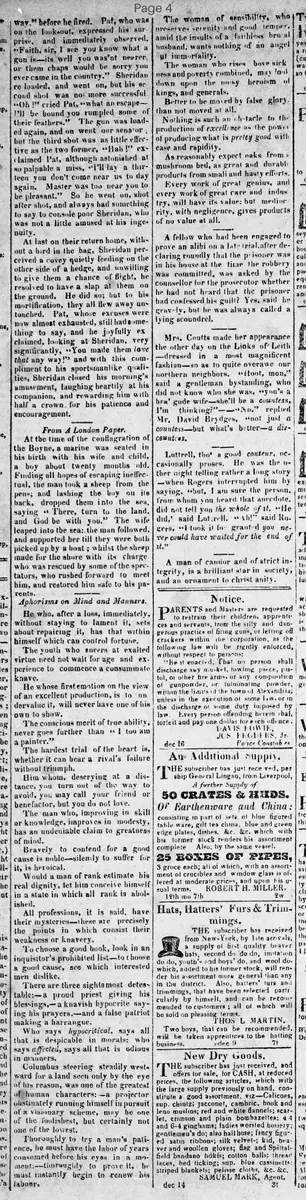
Aphorisms on Mind and Manners.
He who, after a loss, immediately, without staying to lament it, sets about repairing it, has that within himself which can control fortune.
The youth who sneers at exalted virtue need not wait for age and experience to commence a consummate knave.
He whose first emotion on the view of an excellent production, is to undervalue it, will never have one of his own to show.
The conscious merit of true ability, never goes further than "I too am a painter."
The hardest trial of the heart is, whether it can bear a rival's failure without triumph.
Him whom, descrying at a distance, you turn out of the way to avoid, you may call your friend or benefactor, but you do not love.
The man who, improving in skill or knowledge, improves in modesty, has an undeniable claim to greatness of mind.
Bravely to contend for a good cause is noble—silently to suffer for it, is heroical.
Would a man of rank estimate his real dignity, let him conceive himself in a state in which all rank is abolished.
All professions, it is said, have their mysteries—these are precisely the points in which consist their weakness or knavery.
To choose a good book, look in an inquisitor's prohibited list—to choose a good cause, see which interested men dislike.
There are three sights most detestable:—a proud priest giving his blessings,—a knavish hypocrite saying his prayers.—and a false patriot making a harangue.
Who says hypocritical, says all that is despicable in morals: who says affected, says all that is odious in manners.
Columbus steering steadily westward for a land seen only by the eye of his reason, was one of the greatest of human characters:—a projector obstinately running himself in pursuit of a visionary scheme, may be one of the foolishest, but certainly not one of the lowest.
Thoroughly to try a man's patience, he must have the labor of years consumed before his eyes in a moment:—thoroughly to prove it, he must instantly begin to renew his labour.
The woman of sensibility, who preserves serenity and good temper, amid the insults of a faithless brutal husband, wants nothing of an angel but immortality.
The woman who rises above sickness and poverty combined, may look down upon the noisy heroism of kings, and generals.
Better to be moved by false glory than not moved at all.
Nothing is such an obstacle to the production of excellence as the power of producing what is pretty good with ease and rapidity.
As reasonably expect oaks from a mushroom bed, as great and durable products from small and hasty efforts.
Every work of great genius, and every work of great care and industry, will have its value: but mediocrity, with negligence, gives products of no value at all.
He who, after a loss, immediately, without staying to lament it, sets about repairing it, has that within himself which can control fortune.
The youth who sneers at exalted virtue need not wait for age and experience to commence a consummate knave.
He whose first emotion on the view of an excellent production, is to undervalue it, will never have one of his own to show.
The conscious merit of true ability, never goes further than "I too am a painter."
The hardest trial of the heart is, whether it can bear a rival's failure without triumph.
Him whom, descrying at a distance, you turn out of the way to avoid, you may call your friend or benefactor, but you do not love.
The man who, improving in skill or knowledge, improves in modesty, has an undeniable claim to greatness of mind.
Bravely to contend for a good cause is noble—silently to suffer for it, is heroical.
Would a man of rank estimate his real dignity, let him conceive himself in a state in which all rank is abolished.
All professions, it is said, have their mysteries—these are precisely the points in which consist their weakness or knavery.
To choose a good book, look in an inquisitor's prohibited list—to choose a good cause, see which interested men dislike.
There are three sights most detestable:—a proud priest giving his blessings,—a knavish hypocrite saying his prayers.—and a false patriot making a harangue.
Who says hypocritical, says all that is despicable in morals: who says affected, says all that is odious in manners.
Columbus steering steadily westward for a land seen only by the eye of his reason, was one of the greatest of human characters:—a projector obstinately running himself in pursuit of a visionary scheme, may be one of the foolishest, but certainly not one of the lowest.
Thoroughly to try a man's patience, he must have the labor of years consumed before his eyes in a moment:—thoroughly to prove it, he must instantly begin to renew his labour.
The woman of sensibility, who preserves serenity and good temper, amid the insults of a faithless brutal husband, wants nothing of an angel but immortality.
The woman who rises above sickness and poverty combined, may look down upon the noisy heroism of kings, and generals.
Better to be moved by false glory than not moved at all.
Nothing is such an obstacle to the production of excellence as the power of producing what is pretty good with ease and rapidity.
As reasonably expect oaks from a mushroom bed, as great and durable products from small and hasty efforts.
Every work of great genius, and every work of great care and industry, will have its value: but mediocrity, with negligence, gives products of no value at all.
What sub-type of article is it?
Essay
What themes does it cover?
Moral Virtue
Social Manners
What keywords are associated?
Aphorisms
Mind
Manners
Virtue
Hypocrisy
Resilience
Excellence
Morality
Literary Details
Title
Aphorisms On Mind And Manners
Key Lines
He Who, After A Loss, Immediately, Without Staying To Lament It, Sets About Repairing It, Has That Within Himself Which Can Control Fortune.
The Hardest Trial Of The Heart Is, Whether It Can Bear A Rival's Failure Without Triumph.
Bravely To Contend For A Good Cause Is Noble—Silently To Suffer For It, Is Heroical.
Who Says Hypocritical, Says All That Is Despicable In Morals: Who Says Affected, Says All That Is Odious In Manners.
Every Work Of Great Genius, And Every Work Of Great Care And Industry, Will Have Its Value: But Mediocrity, With Negligence, Gives Products Of No Value At All.