Thank you for visiting SNEWPapers!
Sign up free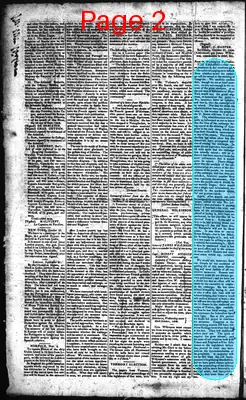
Editorial
November 11, 1808
Berkeley And Jefferson Intelligencer
Martinsburg, Berkeley County, Virginia
What is this article about?
Editorial from Washington Federalist predicts the Embargo will be raised at the upcoming Congress session due to widespread public discontent and its failure to achieve goals like coercing Britain or repatriating shipping, criticizing the Jefferson administration's reluctance to admit error amid partisan tensions.
Clipping

OCR Quality
95%
Excellent
Full Text
From the Washington Federalist.
THE EMBARGO. Our correspondents in the northern part of the union are urging us to inform them whether or not the embargo will be raised at the meeting of Congress. We candidly confess that, though we are at head quarters, we are not enough in the secrets of the great marquee, or as the red men of Baltimore or New York would say, the great wigwam, to determine the point.
We, however, have an opinion, and that is, that the embargo will be raised. Not that we think the administration have any desire to raise it, but because the people of the U. States will bear it no longer. The administration are not quite so infatuated as not to know that the idea of the embargo being raised at the meeting of Congress is the only thing which has kept their friends in countenance in any of the states. Not a single election has taken place but the democrats have propagated stories of raising the embargo. In some places expresses have arrived with news that the embargo was actually raised; and in others it has been asserted from the BEST AUTHORITY that it would soon be raised. These things shew that the minions of the administration are aware of the discontent of the people, on account of the embargo, and that they are satisfied, however popular they may represent the measure, that were the people sure it would lie ten months longer, there would not a single vote be obtained, especially in the northern states, for our present rulers.
Again, what reason can now be assigned for continuing the embargo, unless we take Mr. Jefferson's plan and make it permanent? It has had a fair trial, and none of the advantages contemplated at laying it, have been experienced, or are ever like to be derived from it. It was said at first to be laid to bring home our shipping it has not done this, for Bonaparte will not let them come. It was then to coerce Great-Britain but it has failed. for Britain laughs at it, and will in a few years be willing to pay us a subsidy for continuing it. Shall it then be continued when it has no good effect and is the source of many evils? Reason and common sense would say, certainly not.
We would not, however, have our friends be too confident of getting rid of this most distressing and most foolish of all restrictive measures. Reason and common sense do not always govern politicians: and we have not a doubt but that an effort will be made by the executive to continue the embargo. He has committed himself by laying it, and to take it off at this time will be acknowledging that it was a weak and useless measure at least this he will not do—he will rather see the U. States in the enslaved situation of France than candidly confess he has been wrong, and his opponents the federalists have been right. But at this period we doubt his power to continue his measure.
Congress at the approaching session will have different feelings from what they had at the last. They will deliberate before they act. The spirit of enquiry has gone abroad; and the state of our relations both with France and England will be fully known to the legislature before they proceed to enact any more laws on the recommendation of the president. A majority will see by this time the evil consequences of legislating blindfolded. and we have great reason to hope that the proceedings of the coming session will be more honorable to men of sense, and independent feelings, than were those of the last.
THE EMBARGO. Our correspondents in the northern part of the union are urging us to inform them whether or not the embargo will be raised at the meeting of Congress. We candidly confess that, though we are at head quarters, we are not enough in the secrets of the great marquee, or as the red men of Baltimore or New York would say, the great wigwam, to determine the point.
We, however, have an opinion, and that is, that the embargo will be raised. Not that we think the administration have any desire to raise it, but because the people of the U. States will bear it no longer. The administration are not quite so infatuated as not to know that the idea of the embargo being raised at the meeting of Congress is the only thing which has kept their friends in countenance in any of the states. Not a single election has taken place but the democrats have propagated stories of raising the embargo. In some places expresses have arrived with news that the embargo was actually raised; and in others it has been asserted from the BEST AUTHORITY that it would soon be raised. These things shew that the minions of the administration are aware of the discontent of the people, on account of the embargo, and that they are satisfied, however popular they may represent the measure, that were the people sure it would lie ten months longer, there would not a single vote be obtained, especially in the northern states, for our present rulers.
Again, what reason can now be assigned for continuing the embargo, unless we take Mr. Jefferson's plan and make it permanent? It has had a fair trial, and none of the advantages contemplated at laying it, have been experienced, or are ever like to be derived from it. It was said at first to be laid to bring home our shipping it has not done this, for Bonaparte will not let them come. It was then to coerce Great-Britain but it has failed. for Britain laughs at it, and will in a few years be willing to pay us a subsidy for continuing it. Shall it then be continued when it has no good effect and is the source of many evils? Reason and common sense would say, certainly not.
We would not, however, have our friends be too confident of getting rid of this most distressing and most foolish of all restrictive measures. Reason and common sense do not always govern politicians: and we have not a doubt but that an effort will be made by the executive to continue the embargo. He has committed himself by laying it, and to take it off at this time will be acknowledging that it was a weak and useless measure at least this he will not do—he will rather see the U. States in the enslaved situation of France than candidly confess he has been wrong, and his opponents the federalists have been right. But at this period we doubt his power to continue his measure.
Congress at the approaching session will have different feelings from what they had at the last. They will deliberate before they act. The spirit of enquiry has gone abroad; and the state of our relations both with France and England will be fully known to the legislature before they proceed to enact any more laws on the recommendation of the president. A majority will see by this time the evil consequences of legislating blindfolded. and we have great reason to hope that the proceedings of the coming session will be more honorable to men of sense, and independent feelings, than were those of the last.
What sub-type of article is it?
Economic Policy
Partisan Politics
Foreign Affairs
What keywords are associated?
Embargo
Congress Session
Jefferson Administration
Public Discontent
Trade Coercion
Britain
France Relations
What entities or persons were involved?
Jefferson
Administration
Democrats
Federalists
Bonaparte
Great Britain
Congress
Editorial Details
Primary Topic
Opposition To Continuing The Embargo
Stance / Tone
Critical Of Administration And Supportive Of Lifting The Embargo
Key Figures
Jefferson
Administration
Democrats
Federalists
Bonaparte
Great Britain
Congress
Key Arguments
Public Discontent Will Force The Embargo's End
Administration Uses Rumors Of Lifting To Maintain Support In Elections
Embargo Failed To Repatriate Shipping Or Coerce Britain
Continuing It Admits No Good Effect And Causes Evils
Executive Reluctant To Admit Error Despite Evidence
Congress Will Deliberate More Independently This Session