Thank you for visiting SNEWPapers!
Sign up free
Story
November 5, 1877
The Wheeling Daily Register
Wheeling, Ohio County, West Virginia
What is this article about?
An essay contrasting the contented, pleasure-seeking habits of European laboring classes, resigned to class barriers, with the ambitious, wealth-driven discontent of American workers who sacrifice present joys for future prosperity, advocating for more balanced enjoyment of life.
Clipping
OCR Quality
95%
Excellent
Full Text
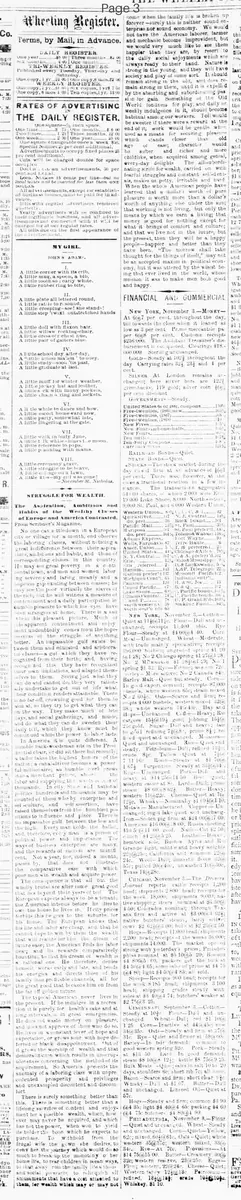
STRUGGLE FOR WEALTH.
The Aspirations, Ambitions and
Habits of the
Wealthy
Classes
of Europe and America Contrasted.
From Scribner's Magazine.
No one can settle down in a European
city or village for a month, and observe
the laboring classes, without noticing a
great indifference between their aspirations, ambitions and habits, and those of
corresponding classes in this country.
He may see great poverty in a continental town, and men and women laboring severely and living meanly, and a
hopeless gap existing between classes; he
may see the poor virtually the slaves of
the rich; but he will witness a measure of
contentment and a daily participation in
humble pleasures to which his eyes have
been strangers at home. There is a sad
side to his pleasant picture. Much of
this apparent contentment and enjoyment undoubtedly comes from the hopelessness of the struggle for anything
better. An impassable gulf exists between them and educated and aristocratic classes-a gulf which they have recognized from their birth; and, having
recognized this, they have recognized
their own limitations, and adapted themselves to them. Seeing just what they
can do and cannot do, they very rationally undertake to get out of life what
their condition renders attainable. There
is no far-off, crowning good for them to
aim at, so they try to get what they can
on the way. They make much of fetes
a days, and social gatherings, and music,
and do what they can to sweeten their
daily toil, which they know must be continued while the power to labor lasts.
In America it is quite different. A
humble back-woodsman sits in the Presidential chair, or did sit there but recently. A tailor takes the highest honors of the nation; a canal driver becomes a powerful militaire; an humble clerk rises
to a merchant prince, short of the
thousand. In city and national politics hundreds and thousands may be
counted of those who by enterprise and
self-culture, and self assertion, have
raised themselves from the humblest positions to influence and place. There is
no impassable gulf between the low and
the high. Every man holds the ballot,
and, therefore, every man is a person of
political power and importance. The
ways of business enterprise are many.
and the rewards of success are munificent. Not a year, nor, indeed a month,
passes by, that does not illustrate
the comparative ease with which
poor men win wealth and acquire power.
The consequence is that all but the
wholly brutal are after some great good
that lies beyond their years of toil. The
European expects always to be a tenant,
the American intends before he dies to
own the house he lives in. If city prices
forbids this he goes to the suburbs for
his home. The European knows that
his life and labor are cheap, and that he
cannot hope to win by them the wealth
that will realize for him the dream of
future ease; the American finds his labor dear and its rewards comparatively
bountiful, so that his dream of wealth is
a rational one. He therefore denies
himself, works early and late, and bends
his energies and directs those of his
family into profitable channels, all for
the great good that beckons him on from
the far off golden future.
The typical American never lives in
the present. If he indulges in a recreation it is purely for health's sake and at
long intervals or in great emergencies.
He does not waste money on pleasure,
and does not approve of those who do so.
He lives in a constant fever of hope and
expectation, or grows sour with hope deferred or blank disappointment. Out of
it grows the worship of wealth and that
demoralization which results in unscrupulousness concerning the method of its
acquirement. So America presents the
anomaly of a laboring class with unprecedented prosperity and privileges
and unexampled discontent and discomfort.
There is surely something better than
this. There is something better than a
lifelong sacrifice of content and enjoyment for a possible wealth, which, however may never be acquired, and which
has not the power, when won to yield
its holder the boon which he expects to
purchase. To withhold from the
frugal wife the gown she desires, to deny her the journey which would do so
much to break up the monotony of her
home life, to rear children in mean ways,
to shut away from the family life thousands of social pleasures to relinquish all
amusements that have a cost attached to
them, for wealth which may or may not
come when the family life is broken up
forever -surely this is neither sound enterprise nor sound economy. We would
not have the American laborer, farmer
and mechanic become improvident, but
we would very much like to see them
happier than they are, by resort to
the daily social enjoyments which are
always ready to their hand. Nature is
strong in the young, and they will have
society and play of some sort. It should
remain strong in the old, and does remain strong in them, until it is expelled
by the absorbing and subordinating passion for gain. Something of the Old
World fondness for play, and daily or
weekly indulgence in it, should become
habitual among our workers. Life would
be sweeter if there were a reward at the
end of it; work would be gentler when
used as a means for securing pleasure
which stands closer
than
old
age
of
ease;
character
would
be softer
and richer and more
childlike, when acquired among genial,
every-day delights. The all-subordinating strife for wealth, carried on with
fearful struggles and constant self-denials, makes us petty, irritable and hard.
When the whole American people have
learned that a dollar's worth of pure
pleasure is worth more than a dollar's
worth of anything else under the sun;
that working is not living, but only the
means by which we earn a living; that
money is good for nothing except for
what it brings of comfort and culture;
and that we live not in the future, but
the present, then they will be a happy
people-happier and better than they
have been. "The morrow shall take
thought for the things of itself," may not
be an accepted maxim in political economy, but it was uttered by the wisest being that ever lived in the world, whose
mission it was to make men both good
and happy.
The Aspirations, Ambitions and
Habits of the
Wealthy
Classes
of Europe and America Contrasted.
From Scribner's Magazine.
No one can settle down in a European
city or village for a month, and observe
the laboring classes, without noticing a
great indifference between their aspirations, ambitions and habits, and those of
corresponding classes in this country.
He may see great poverty in a continental town, and men and women laboring severely and living meanly, and a
hopeless gap existing between classes; he
may see the poor virtually the slaves of
the rich; but he will witness a measure of
contentment and a daily participation in
humble pleasures to which his eyes have
been strangers at home. There is a sad
side to his pleasant picture. Much of
this apparent contentment and enjoyment undoubtedly comes from the hopelessness of the struggle for anything
better. An impassable gulf exists between them and educated and aristocratic classes-a gulf which they have recognized from their birth; and, having
recognized this, they have recognized
their own limitations, and adapted themselves to them. Seeing just what they
can do and cannot do, they very rationally undertake to get out of life what
their condition renders attainable. There
is no far-off, crowning good for them to
aim at, so they try to get what they can
on the way. They make much of fetes
a days, and social gatherings, and music,
and do what they can to sweeten their
daily toil, which they know must be continued while the power to labor lasts.
In America it is quite different. A
humble back-woodsman sits in the Presidential chair, or did sit there but recently. A tailor takes the highest honors of the nation; a canal driver becomes a powerful militaire; an humble clerk rises
to a merchant prince, short of the
thousand. In city and national politics hundreds and thousands may be
counted of those who by enterprise and
self-culture, and self assertion, have
raised themselves from the humblest positions to influence and place. There is
no impassable gulf between the low and
the high. Every man holds the ballot,
and, therefore, every man is a person of
political power and importance. The
ways of business enterprise are many.
and the rewards of success are munificent. Not a year, nor, indeed a month,
passes by, that does not illustrate
the comparative ease with which
poor men win wealth and acquire power.
The consequence is that all but the
wholly brutal are after some great good
that lies beyond their years of toil. The
European expects always to be a tenant,
the American intends before he dies to
own the house he lives in. If city prices
forbids this he goes to the suburbs for
his home. The European knows that
his life and labor are cheap, and that he
cannot hope to win by them the wealth
that will realize for him the dream of
future ease; the American finds his labor dear and its rewards comparatively
bountiful, so that his dream of wealth is
a rational one. He therefore denies
himself, works early and late, and bends
his energies and directs those of his
family into profitable channels, all for
the great good that beckons him on from
the far off golden future.
The typical American never lives in
the present. If he indulges in a recreation it is purely for health's sake and at
long intervals or in great emergencies.
He does not waste money on pleasure,
and does not approve of those who do so.
He lives in a constant fever of hope and
expectation, or grows sour with hope deferred or blank disappointment. Out of
it grows the worship of wealth and that
demoralization which results in unscrupulousness concerning the method of its
acquirement. So America presents the
anomaly of a laboring class with unprecedented prosperity and privileges
and unexampled discontent and discomfort.
There is surely something better than
this. There is something better than a
lifelong sacrifice of content and enjoyment for a possible wealth, which, however may never be acquired, and which
has not the power, when won to yield
its holder the boon which he expects to
purchase. To withhold from the
frugal wife the gown she desires, to deny her the journey which would do so
much to break up the monotony of her
home life, to rear children in mean ways,
to shut away from the family life thousands of social pleasures to relinquish all
amusements that have a cost attached to
them, for wealth which may or may not
come when the family life is broken up
forever -surely this is neither sound enterprise nor sound economy. We would
not have the American laborer, farmer
and mechanic become improvident, but
we would very much like to see them
happier than they are, by resort to
the daily social enjoyments which are
always ready to their hand. Nature is
strong in the young, and they will have
society and play of some sort. It should
remain strong in the old, and does remain strong in them, until it is expelled
by the absorbing and subordinating passion for gain. Something of the Old
World fondness for play, and daily or
weekly indulgence in it, should become
habitual among our workers. Life would
be sweeter if there were a reward at the
end of it; work would be gentler when
used as a means for securing pleasure
which stands closer
than
old
age
of
ease;
character
would
be softer
and richer and more
childlike, when acquired among genial,
every-day delights. The all-subordinating strife for wealth, carried on with
fearful struggles and constant self-denials, makes us petty, irritable and hard.
When the whole American people have
learned that a dollar's worth of pure
pleasure is worth more than a dollar's
worth of anything else under the sun;
that working is not living, but only the
means by which we earn a living; that
money is good for nothing except for
what it brings of comfort and culture;
and that we live not in the future, but
the present, then they will be a happy
people-happier and better than they
have been. "The morrow shall take
thought for the things of itself," may not
be an accepted maxim in political economy, but it was uttered by the wisest being that ever lived in the world, whose
mission it was to make men both good
and happy.
What sub-type of article is it?
Social Essay
Cultural Comparison
What themes does it cover?
Social Manners
Moral Virtue
Misfortune
What keywords are associated?
Wealth Struggle
Laboring Classes
European Contentment
American Ambition
Social Enjoyments
Class Differences
Where did it happen?
Europe And America
Story Details
Location
Europe And America
Story Details
The article contrasts the resigned contentment of European working classes, who enjoy simple pleasures despite class barriers, with the ambitious, future-oriented toil of Americans pursuing wealth at the expense of present happiness, advocating for more immediate joys to foster better lives.