Thank you for visiting SNEWPapers!
Sign up free
Literary
November 21, 1820
The Rhode Island American, And General Advertiser
Providence, Providence County, Rhode Island
What is this article about?
Excerpt from Chalmers' sermons arguing that people often ignore religion until deathbed, when the Gospel's message of Christ's righteousness brings peace and hope amid suffering, contrasting self-righteousness with faith in atonement.
Clipping
OCR Quality
98%
Excellent
Full Text
FROM CHALMERS' SERMONS.
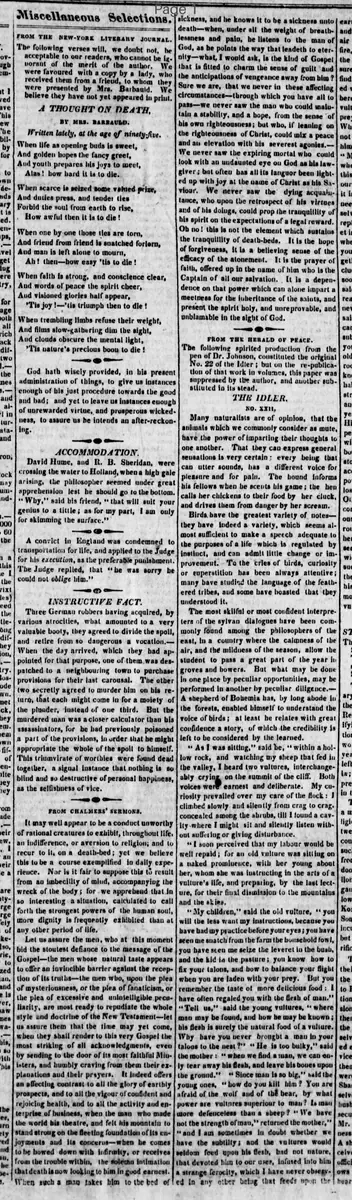
It may well appear to be a conduct unworthy of rational creatures to exhibit, throughout life, an indifference, or aversion to religion; and to recur to it, on a death-bed; yet we believe this to be a course exemplified in daily experience. Nor is it fair to suppose this to result from an imbecility of mind, accompanying the wreck of the body; for we apprehend that in so interesting a situation, calculated to call forth the strongest powers of the human soul, more dignity is frequently exhibited than at any other period of life.
Let us assure the men, who at this moment bid the stoutest defiance to the message of the Gospel—the men whose natural taste appears to offer an invincible barrier against the reception of its truths—the men who, upon the plea of mysteriousness, or the plea of fanaticism, or the plea of excessive and unintelligible peculiarity, are most ready to repudiate the whole style and doctrine of the New Testament—let us assure them that the time may yet come, when they shall render to this very Gospel the most striking of all acknowledgements, even by sending to the door of its most faithful Ministers, and humbly craving from them their explanations and their prayers. It indeed offers an affecting contrast to all the glory of earthly prospects, and to all the vigour of confident and rejoicing health, and to all the activity and enterprise of business, when the man who made the world his theatre, and felt his mountain to stand strong on the fleeting foundation of its enjoyments and its concerns—when he comes to be bowed down with infirmity, or receives from the trouble within, the solemn intimation that death is now looking to him in good earnest.
When such a man takes him to the bed of sickness, and he knows it to be a sickness unto death—when, under all the weight of breathlessness and pain, he listens to the man of God, as he points the way that leadeth to eternity—what, I would ask, is the kind of Gospel that is fitted to charm the sense of guilt and the anticipations of vengeance away from him? Sure we are, that we never in these affecting circumstances—through which you have all to pass—we never saw the man who could maintain a stability, and a hope, from the sense of his own righteousness; but who, leaning on the righteousness of Christ, could mix a peace and an elevation with his severest agonies.
We never saw the expiring mortal who could look with an undaunted eye on God as his law-giver; but often has all its languor been lightened up with joy at the name of Christ as his Saviour. We never saw the dying acquaintance, who upon the retrospect of his virtues and of his doings, could prop the tranquillity of his spirit on the expectations of a legal reward.
Oh no! this is not the element which sustains the tranquillity of death-beds. It is the hope of forgiveness, it is a believing sense of the efficacy of the atonement. It is the prayer of faith, offered up in the name of him who is the Captain of all our salvation. It is a dependence on that power which can alone impart a meetness for the inheritance of the saints, and present the spirit holy, and unreprovable, and unblameable in the sight of God.
It may well appear to be a conduct unworthy of rational creatures to exhibit, throughout life, an indifference, or aversion to religion; and to recur to it, on a death-bed; yet we believe this to be a course exemplified in daily experience. Nor is it fair to suppose this to result from an imbecility of mind, accompanying the wreck of the body; for we apprehend that in so interesting a situation, calculated to call forth the strongest powers of the human soul, more dignity is frequently exhibited than at any other period of life.
Let us assure the men, who at this moment bid the stoutest defiance to the message of the Gospel—the men whose natural taste appears to offer an invincible barrier against the reception of its truths—the men who, upon the plea of mysteriousness, or the plea of fanaticism, or the plea of excessive and unintelligible peculiarity, are most ready to repudiate the whole style and doctrine of the New Testament—let us assure them that the time may yet come, when they shall render to this very Gospel the most striking of all acknowledgements, even by sending to the door of its most faithful Ministers, and humbly craving from them their explanations and their prayers. It indeed offers an affecting contrast to all the glory of earthly prospects, and to all the vigour of confident and rejoicing health, and to all the activity and enterprise of business, when the man who made the world his theatre, and felt his mountain to stand strong on the fleeting foundation of its enjoyments and its concerns—when he comes to be bowed down with infirmity, or receives from the trouble within, the solemn intimation that death is now looking to him in good earnest.
When such a man takes him to the bed of sickness, and he knows it to be a sickness unto death—when, under all the weight of breathlessness and pain, he listens to the man of God, as he points the way that leadeth to eternity—what, I would ask, is the kind of Gospel that is fitted to charm the sense of guilt and the anticipations of vengeance away from him? Sure we are, that we never in these affecting circumstances—through which you have all to pass—we never saw the man who could maintain a stability, and a hope, from the sense of his own righteousness; but who, leaning on the righteousness of Christ, could mix a peace and an elevation with his severest agonies.
We never saw the expiring mortal who could look with an undaunted eye on God as his law-giver; but often has all its languor been lightened up with joy at the name of Christ as his Saviour. We never saw the dying acquaintance, who upon the retrospect of his virtues and of his doings, could prop the tranquillity of his spirit on the expectations of a legal reward.
Oh no! this is not the element which sustains the tranquillity of death-beds. It is the hope of forgiveness, it is a believing sense of the efficacy of the atonement. It is the prayer of faith, offered up in the name of him who is the Captain of all our salvation. It is a dependence on that power which can alone impart a meetness for the inheritance of the saints, and present the spirit holy, and unreprovable, and unblameable in the sight of God.
What sub-type of article is it?
Essay
What themes does it cover?
Religious
Death Mortality
Moral Virtue
What keywords are associated?
Deathbed Conversion
Gospel Message
Christian Atonement
Forgiveness
Salvation
What entities or persons were involved?
Chalmers
Literary Details
Title
From Chalmers' Sermons
Author
Chalmers
Subject
The Efficacy Of The Gospel On Deathbeds
Form / Style
Sermon Excerpt In Prose
Key Lines
It May Well Appear To Be A Conduct Unworthy Of Rational Creatures To Exhibit, Throughout Life, An Indifference, Or Aversion To Religion; And To Recur To It, On A Death Bed; Yet We Believe This To Be A Course Exemplified In Daily Experience.
Let Us Assure The Men, Who At This Moment Bid The Stoutest Defiance To The Message Of The Gospel—The Men Whose Natural Taste Appears To Offer An Invincible Barrier Against The Reception Of Its Truths—The Men Who, Upon The Plea Of Mysteriousness, Or The Plea Of Fanaticism, Or The Plea Of Excessive And Unintelligible Peculiarity, Are Most Ready To Repudiate The Whole Style And Doctrine Of The New Testament—Let Us Assure Them That The Time May Yet Come, When They Shall Render To This Very Gospel The Most Striking Of All Acknowledgements, Even By Sending To The Door Of Its Most Faithful Ministers, And Humbly Craving From Them Their Explanations And Their Prayers.
We Never Saw The Expiring Mortal Who Could Look With An Undaunted Eye On God As His Law Giver; But Often Has All Its Languor Been Lightened Up With Joy At The Name Of Christ As His Saviour.
Oh No! This Is Not The Element Which Sustains The Tranquillity Of Death Beds. It Is The Hope Of Forgiveness, It Is A Believing Sense Of The Efficacy Of The Atonement.