Thank you for visiting SNEWPapers!
Sign up free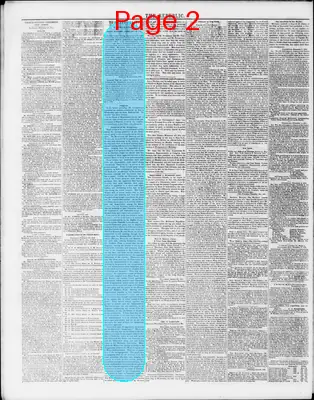
Editorial
February 20, 1852
The Republic
Washington, District Of Columbia
What is this article about?
Editorial from Feb. 20, 1852, quotes Washington on neutrality and Whig resolution on Compromise; briefly reports congressional proceedings; criticizes fractured Democratic Party over secession and abolition, predicts Whig success on Compromise platform under Fillmore.
Clipping

OCR Quality
98%
Excellent
Full Text
THE REPUBLIC.
WASHINGTON:
FRIDAY MORNING, FEBRUARY 20, 1852.
"A crisis is approaching that must, if it cannot be arrested, soon decide whether order and good government shall be preserved, or anarchy and confusion ensue. I can most religiously aver I have no wish that is incompatible with the dignity, happiness, and true interest of the people of this country. My ardent desire is, and my aim has been, as far as depended upon the Executive Department, to comply strictly with all our engagements, foreign and domestic; but to keep the United States free from political connexions with every other country, to see them independent of all and under the influence of none. In a word, I want an American character, that the powers of Europe may be convinced we act for ourselves and not for others. This, in my judgment, is the only way to be respected abroad and happy at home; and not, by becoming the partisans of Great Britain or France, create dissensions, disturb the public tranquillity, and destroy, perhaps forever the cement which binds the Union."
[George Washington, 1795.]
"Resolved, That we regard the series of acts known as the Adjustment measures as forming in their mutual dependence and connexion a system of compromise the most conciliatory and the best for the entire country that could be obtained from conflicting sectional interests and opinions, and that, therefore, they ought to be adhered to and carried into faithful execution, as a final settlement in principle and substance of the dangerous and exciting subjects which they embrace."
Resolution of Whig Congressional Caucus, December 1, 1851.
Congress.
In the Senate yesterday Mr. Underwood concluded the remarks commenced by him on Wednesday upon the Iowa Railroad bill. No question was taken thereon.
In the House of Representatives the bill to grant the right of way and a portion of the public domain to Missouri, to aid in the construction of railroads in that State, was discussed.
Prospects of the Democracy.
There seems to be no inconsiderable activity among the leading politicians of the Democratic party in this metropolis just at this moment. Mr. Buchanan, Mr. Dallas, and Mr. Nicholson, we notice by the papers, have been for some days sojourning in the vicinity, with the charitable view no doubt of soothing asperities and healing differences in the Democratic ranks. Judging from the appearance of the two organs of the party in this city—the Union and the Southern Press—we should infer that the mission of these sages and sachems to this political Mecca is likely to be quite unavailing. Never within our recollection have such bitter and irreconcilable feuds raged among "harmonious Democracy" as prevail at the present moment. Never did that party occupy a position so little contemplating success. At the South it is so absorbed by the heresies of Secession, practical and theoretical, that its fate is sealed. Unless the Democratic members of the Union party are more false and profligate than the opponents they have denounced, they must maintain their organization in opposition to a spirit more eager, defiant, and overbearing to-day than at any time during the recent contests. The Union Whigs will of course remain true to their connexions and relations, and form the basis of a party strong enough to put down the actual and the amateur Disunionists. At the North, the Democratic party is so entirely abolitionized and Kossuthized, among the Kings, Conns, Charles Sumners and Van Burens, that the tendency to open disruption between the conservative and destructive wings of it becomes daily more urgent and conclusive.
Look now at the party that claims to be Democratic, and let us see how it is controlled. It is governed entirely by the Buffalo Conventionists and the Nashville Conventionists. It is a pseudo-Democratic party, and its majority is composed of men who are more Secessionists and more Abolitionists than they are any thing else. The Van Burens, Blairs, Dixes, on one side, represented by and speaking through the old family organ, the Evening Post; and the Vennables, Meades, Bococks, and Rhetts, on the other side, uttering themselves through the Southern Press, a journal that has been diligently laboring for months to stir up sectional strife, bitterness, and animosity, with a view to the dissolution of the Union—these are the men, and these are the presses, that not now merely represent but are the organized Democracy of the country. These men, and men like them, went into the Democratic caucus at the commencement of the session, and profiting by the greenness and inexperience of the new representatives there assembled, passed the whole concern under the Caudine forks of Abolition and Secession. They took entire control of the organization—made the Speaker and Clerk—laughed down Major Polk, General Bayly, and certain Union gentlemen of somewhat infirm purpose—and commenced their Congressional session amid the stifled groans of all the sound and conservative presses of their party, and the paeans of the Evening Post and Southern Press. Starting with a large nominal majority in both branches, the "harmonious Democracy"—"pure and simple"—cannot carry through a political measure at the present day in either branch of Congress! They cannot occupy together any ground of assault upon the Administration. They cannot pass any one resolution, in our judgment, condemning any one act of the Administration, or any one feature of its policy, foreign or domestic. If they think they can do it, we should like to see them begin to try. If the Administration is to be attacked, let us know upon what points, and let us see who will make the most of them, the Administration or its opponents.
Pretty dark days, we apprehend, are in store for the self-styled "Democracy." We do not believe that any man can be elected to the Presidency who looks for his support either to Buffalo or Nashville; and it is now well settled and understood that Buffalo and Nashville control the Democratic party, and will dictate terms to the Baltimore Convention. Meanwhile the Whigs are coming up kindly to the Compromise platform of a Union Congress and a Whig Administration. They are in possession of the vantage-ground. The people have no sympathy with the old sectional, local, factious politicians who have been keeping the country in a broil by their narrow, petulant, prejudiced criminations and recriminations. The recent elections have demonstrated, as a general fact, that immense majorities of the people in all sections are in favor of the policy of President Fillmore in regard to the Compromise, and are disposed to make an emphatic manifestation of their intention to treat it as a "finality."
The Whig Presidential candidate will of course be called upon to express himself in the most marked and distinct terms on this point, unless he is already in print in the premises. While the triple-headed Abolition-Secession-Democratic candidate will be compelled to play the deaf mute, and neither hear nor speak on the subject.
We fear that Mr. Buchanan and Mr. Dallas, and Mr. Stevenson and Mr. Nicholson, have undertaken more than they can accomplish, when they seek to evolve from the Democratic chaos around them a permanent cohesion of discordant atoms. Men must think alike on some matter of immediate and general interest before they can consent or contrive to act together in a party organization. The Democrats differ among themselves on vital questions of Abolition and Secession; and though their leaders have agreed in caucus to waive those matters, there is no one other question on which they agree sufficiently, or in which they are sufficiently interested, to venture a rally upon it. They may try intervention. Let them. This will only widen the existing breaches.
WASHINGTON:
FRIDAY MORNING, FEBRUARY 20, 1852.
"A crisis is approaching that must, if it cannot be arrested, soon decide whether order and good government shall be preserved, or anarchy and confusion ensue. I can most religiously aver I have no wish that is incompatible with the dignity, happiness, and true interest of the people of this country. My ardent desire is, and my aim has been, as far as depended upon the Executive Department, to comply strictly with all our engagements, foreign and domestic; but to keep the United States free from political connexions with every other country, to see them independent of all and under the influence of none. In a word, I want an American character, that the powers of Europe may be convinced we act for ourselves and not for others. This, in my judgment, is the only way to be respected abroad and happy at home; and not, by becoming the partisans of Great Britain or France, create dissensions, disturb the public tranquillity, and destroy, perhaps forever the cement which binds the Union."
[George Washington, 1795.]
"Resolved, That we regard the series of acts known as the Adjustment measures as forming in their mutual dependence and connexion a system of compromise the most conciliatory and the best for the entire country that could be obtained from conflicting sectional interests and opinions, and that, therefore, they ought to be adhered to and carried into faithful execution, as a final settlement in principle and substance of the dangerous and exciting subjects which they embrace."
Resolution of Whig Congressional Caucus, December 1, 1851.
Congress.
In the Senate yesterday Mr. Underwood concluded the remarks commenced by him on Wednesday upon the Iowa Railroad bill. No question was taken thereon.
In the House of Representatives the bill to grant the right of way and a portion of the public domain to Missouri, to aid in the construction of railroads in that State, was discussed.
Prospects of the Democracy.
There seems to be no inconsiderable activity among the leading politicians of the Democratic party in this metropolis just at this moment. Mr. Buchanan, Mr. Dallas, and Mr. Nicholson, we notice by the papers, have been for some days sojourning in the vicinity, with the charitable view no doubt of soothing asperities and healing differences in the Democratic ranks. Judging from the appearance of the two organs of the party in this city—the Union and the Southern Press—we should infer that the mission of these sages and sachems to this political Mecca is likely to be quite unavailing. Never within our recollection have such bitter and irreconcilable feuds raged among "harmonious Democracy" as prevail at the present moment. Never did that party occupy a position so little contemplating success. At the South it is so absorbed by the heresies of Secession, practical and theoretical, that its fate is sealed. Unless the Democratic members of the Union party are more false and profligate than the opponents they have denounced, they must maintain their organization in opposition to a spirit more eager, defiant, and overbearing to-day than at any time during the recent contests. The Union Whigs will of course remain true to their connexions and relations, and form the basis of a party strong enough to put down the actual and the amateur Disunionists. At the North, the Democratic party is so entirely abolitionized and Kossuthized, among the Kings, Conns, Charles Sumners and Van Burens, that the tendency to open disruption between the conservative and destructive wings of it becomes daily more urgent and conclusive.
Look now at the party that claims to be Democratic, and let us see how it is controlled. It is governed entirely by the Buffalo Conventionists and the Nashville Conventionists. It is a pseudo-Democratic party, and its majority is composed of men who are more Secessionists and more Abolitionists than they are any thing else. The Van Burens, Blairs, Dixes, on one side, represented by and speaking through the old family organ, the Evening Post; and the Vennables, Meades, Bococks, and Rhetts, on the other side, uttering themselves through the Southern Press, a journal that has been diligently laboring for months to stir up sectional strife, bitterness, and animosity, with a view to the dissolution of the Union—these are the men, and these are the presses, that not now merely represent but are the organized Democracy of the country. These men, and men like them, went into the Democratic caucus at the commencement of the session, and profiting by the greenness and inexperience of the new representatives there assembled, passed the whole concern under the Caudine forks of Abolition and Secession. They took entire control of the organization—made the Speaker and Clerk—laughed down Major Polk, General Bayly, and certain Union gentlemen of somewhat infirm purpose—and commenced their Congressional session amid the stifled groans of all the sound and conservative presses of their party, and the paeans of the Evening Post and Southern Press. Starting with a large nominal majority in both branches, the "harmonious Democracy"—"pure and simple"—cannot carry through a political measure at the present day in either branch of Congress! They cannot occupy together any ground of assault upon the Administration. They cannot pass any one resolution, in our judgment, condemning any one act of the Administration, or any one feature of its policy, foreign or domestic. If they think they can do it, we should like to see them begin to try. If the Administration is to be attacked, let us know upon what points, and let us see who will make the most of them, the Administration or its opponents.
Pretty dark days, we apprehend, are in store for the self-styled "Democracy." We do not believe that any man can be elected to the Presidency who looks for his support either to Buffalo or Nashville; and it is now well settled and understood that Buffalo and Nashville control the Democratic party, and will dictate terms to the Baltimore Convention. Meanwhile the Whigs are coming up kindly to the Compromise platform of a Union Congress and a Whig Administration. They are in possession of the vantage-ground. The people have no sympathy with the old sectional, local, factious politicians who have been keeping the country in a broil by their narrow, petulant, prejudiced criminations and recriminations. The recent elections have demonstrated, as a general fact, that immense majorities of the people in all sections are in favor of the policy of President Fillmore in regard to the Compromise, and are disposed to make an emphatic manifestation of their intention to treat it as a "finality."
The Whig Presidential candidate will of course be called upon to express himself in the most marked and distinct terms on this point, unless he is already in print in the premises. While the triple-headed Abolition-Secession-Democratic candidate will be compelled to play the deaf mute, and neither hear nor speak on the subject.
We fear that Mr. Buchanan and Mr. Dallas, and Mr. Stevenson and Mr. Nicholson, have undertaken more than they can accomplish, when they seek to evolve from the Democratic chaos around them a permanent cohesion of discordant atoms. Men must think alike on some matter of immediate and general interest before they can consent or contrive to act together in a party organization. The Democrats differ among themselves on vital questions of Abolition and Secession; and though their leaders have agreed in caucus to waive those matters, there is no one other question on which they agree sufficiently, or in which they are sufficiently interested, to venture a rally upon it. They may try intervention. Let them. This will only widen the existing breaches.
What sub-type of article is it?
Partisan Politics
Slavery Abolition
Constitutional
What keywords are associated?
Democratic Prospects
Whig Compromise
Secession
Abolition
Union Preservation
Buffalo Convention
Nashville Convention
Fillmore Administration
What entities or persons were involved?
Democratic Party
Whig Party
George Washington
Mr. Buchanan
Mr. Dallas
Mr. Nicholson
Van Burens
Blairs
Dixes
Vennables
Meades
Bococks
Rhetts
President Fillmore
Buffalo Conventionists
Nashville Conventionists
Editorial Details
Primary Topic
Critique Of Democratic Party Prospects And Support For Whig Compromise
Stance / Tone
Anti Democratic, Pro Whig And Pro Compromise
Key Figures
Democratic Party
Whig Party
George Washington
Mr. Buchanan
Mr. Dallas
Mr. Nicholson
Van Burens
Blairs
Dixes
Vennables
Meades
Bococks
Rhetts
President Fillmore
Buffalo Conventionists
Nashville Conventionists
Key Arguments
Democratic Party Is Fractured By Secession And Abolition Factions
Whigs Are Unified On Compromise Platform
Compromise Measures Should Be Final Settlement
Democrats Cannot Pass Measures In Congress Due To Internal Divisions
No Viable Democratic Presidential Candidate Without Buffalo Or Nashville Support
People Favor Fillmore's Compromise Policy
Intervention Attempts Will Widen Democratic Breaches