Thank you for visiting SNEWPapers!
Sign up free
Literary
December 17, 1841
Southern Christian Advocate
Charleston, Charleston County, South Carolina
What is this article about?
Mrs. Lydia H. Sigourney's essay argues that cultivating plants refines character, fosters affection for nature as divine teachers, counters modern restlessness and greed, promotes health and cheerfulness, benefits society, and praises simple rural labors in verse.
Clipping
OCR Quality
98%
Excellent
Full Text
HORTICULTURE.
BY MRS. LYDIA H. SIGOURNEY.
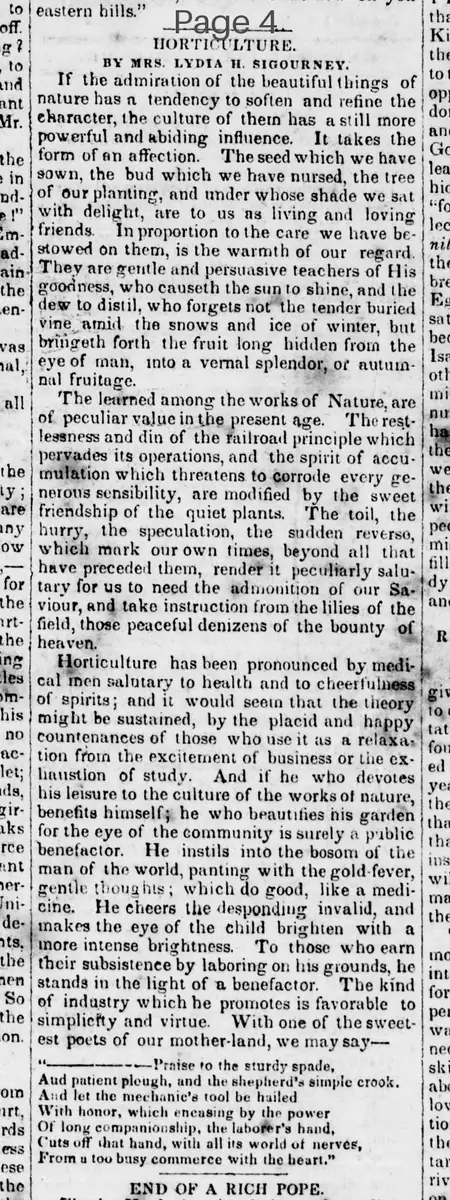
If the admiration of the beautiful things of nature has a tendency to soften and refine the character, the culture of them has a still more powerful and abiding influence. It takes the form of an affection. The seed which we have sown, the bud which we have nursed, the tree of our planting, and under whose shade we sat with delight, are to us as living and loving friends. In proportion to the care we have bestowed on them, is the warmth of our regard. They are gentle and persuasive teachers of His goodness, who causeth the sun to shine, and the dew to distil, who forgets not the tender buried vine amid the snows and ice of winter, but bringeth forth the fruit long hidden from the eye of man, into a vernal splendor, of autumnal fruitage.
The learned among the works of Nature, are of peculiar value in the present age. The restlessness and din of the railroad principle which pervades its operations, and the spirit of accumulation which threatens to corrode every generous sensibility, are modified by the sweet friendship of the quiet plants. The toil, the hurry, the speculation, the sudden reverse, which mark our own times, beyond all that have preceded them, render it peculiarly salutary for us to need the admonition of our Saviour, and take instruction from the lilies of the field, those peaceful denizens of the bounty of heaven.
Horticulture has been pronounced by medical men salutary to health and to cheerfulness of spirits; and it would seem that the theory might be sustained, by the placid and happy countenances of those who use it as a relaxation from the excitement of business or the exhaustion of study. And if he who devotes his leisure to the culture of the works of nature, benefits himself; he who beautifies his garden for the eye of the community is surely a public benefactor. He instils into the bosom of the man of the world, panting with the gold-fever, gentle thoughts; which do good, like a medicine. He cheers the desponding invalid, and makes the eye of the child brighten with a more intense brightness. To those who earn their subsistence by laboring on his grounds, he stands in the light of a benefactor. The kind of industry which he promotes is favorable to simplicity and virtue. With one of the sweetest poets of our mother-land, we may say—
Praise to the sturdy spade,
And patient plough, and the shepherd's simple crook.
And let the mechanic's tool be hailed
With honor, which encasing by the power
Of long companionship, the laborer's hand,
Cuts off that hand, with all its world of nerves,
From a too busy commerce with the heart.
BY MRS. LYDIA H. SIGOURNEY.
If the admiration of the beautiful things of nature has a tendency to soften and refine the character, the culture of them has a still more powerful and abiding influence. It takes the form of an affection. The seed which we have sown, the bud which we have nursed, the tree of our planting, and under whose shade we sat with delight, are to us as living and loving friends. In proportion to the care we have bestowed on them, is the warmth of our regard. They are gentle and persuasive teachers of His goodness, who causeth the sun to shine, and the dew to distil, who forgets not the tender buried vine amid the snows and ice of winter, but bringeth forth the fruit long hidden from the eye of man, into a vernal splendor, of autumnal fruitage.
The learned among the works of Nature, are of peculiar value in the present age. The restlessness and din of the railroad principle which pervades its operations, and the spirit of accumulation which threatens to corrode every generous sensibility, are modified by the sweet friendship of the quiet plants. The toil, the hurry, the speculation, the sudden reverse, which mark our own times, beyond all that have preceded them, render it peculiarly salutary for us to need the admonition of our Saviour, and take instruction from the lilies of the field, those peaceful denizens of the bounty of heaven.
Horticulture has been pronounced by medical men salutary to health and to cheerfulness of spirits; and it would seem that the theory might be sustained, by the placid and happy countenances of those who use it as a relaxation from the excitement of business or the exhaustion of study. And if he who devotes his leisure to the culture of the works of nature, benefits himself; he who beautifies his garden for the eye of the community is surely a public benefactor. He instils into the bosom of the man of the world, panting with the gold-fever, gentle thoughts; which do good, like a medicine. He cheers the desponding invalid, and makes the eye of the child brighten with a more intense brightness. To those who earn their subsistence by laboring on his grounds, he stands in the light of a benefactor. The kind of industry which he promotes is favorable to simplicity and virtue. With one of the sweetest poets of our mother-land, we may say—
Praise to the sturdy spade,
And patient plough, and the shepherd's simple crook.
And let the mechanic's tool be hailed
With honor, which encasing by the power
Of long companionship, the laborer's hand,
Cuts off that hand, with all its world of nerves,
From a too busy commerce with the heart.
What sub-type of article is it?
Essay
What themes does it cover?
Nature
Moral Virtue
Agriculture Rural
What keywords are associated?
Horticulture
Nature Culture
Moral Influence
Health Benefits
Simple Labor
What entities or persons were involved?
By Mrs. Lydia H. Sigourney.
Literary Details
Title
Horticulture.
Author
By Mrs. Lydia H. Sigourney.
Key Lines
If The Admiration Of The Beautiful Things Of Nature Has A Tendency To Soften And Refine The Character, The Culture Of Them Has A Still More Powerful And Abiding Influence.
The Restlessness And Din Of The Railroad Principle Which Pervades Its Operations, And The Spirit Of Accumulation Which Threatens To Corrode Every Generous Sensibility, Are Modified By The Sweet Friendship Of The Quiet Plants.
Horticulture Has Been Pronounced By Medical Men Salutary To Health And To Cheerfulness Of Spirits;
Praise To The Sturdy Spade,
And Patient Plough, And The Shepherd's Simple Crook.
And Let The Mechanic's Tool Be Hailed
With Honor, Which Encasing By The Power
Of Long Companionship, The Laborer's Hand,
Cuts Off That Hand, With All Its World Of Nerves,
From A Too Busy Commerce With The Heart.