Thank you for visiting SNEWPapers!
Sign up free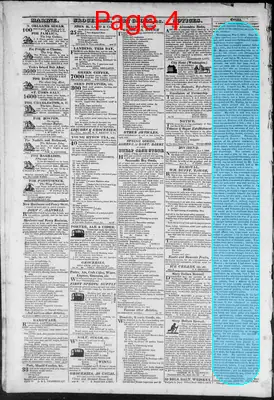
Domestic News
May 12, 1824
The Alexandria Herald
Alexandria, Virginia
What is this article about?
Newspaper corrects and republishes a letter from Gen. Andrew Jackson dated May 6, 1824, to George Kremer, denying he wrote to President Monroe recommending a balanced cabinet of two Republicans and two Federalists, and clarifying his advice on selecting cabinet members based on merit over party.
Clipping

OCR Quality
95%
Excellent
Full Text
A material error, in making some transpositions, in Gen. Jackson's letter, having occurred in a part of our last publication, we republish it below, corrected:
Washington, May 6. 1824. Dear Sir:
I have received your letter of yesterday: and with much cheerfulness and candor, shall reply to your inquiry.
It has been repeatedly pressed before the public, that I had written a letter to Mr. Monroe, recommending him to select for his cabinet, 'two distinguished republicans and two distinguished federalists;' and that to Mr. Lowrie and Mr. Findlay, senators from the state of Pennsylvania, the letter had been read. I have not been able to persuade myself that the fact was so, inasmuch as our correspondence was private and confidential--because Mr. Findlay, who was present, has no recollection of it--because no such letter was ever written by me--and because the president denies that he read any such letter, or, indeed, any letter at all. I regret that Mr. Lowrie, in presenting this matter, should not recollect one material circumstance. When first it was spoken of, he stated to me, and to others, that a letter purporting, and declared to be mine, had been read to himself and Mr. Findlay, by the president, which advised that his cabinet should be formed of 'two distinguished republicans, and two distinguished federalists.' My reply to him was, that no such letter had ever been written by me; that so far as I could recollect, only one person, Col. Drayton, of S. Carolina, had been recommended to him; that I had suggested to the president the propriety of appointing him secretary of war; for the reason that he was a man of high and honorable feelings, honest, virtuous, and of energetic character. Personally, I knew not Col. Drayton: but, from information of his general character, felt satisfied he could do more to correct the feuds which unhappily prevailed in the army, than any other man of whom I had any knowledge. The contents of my letter, as read to him by the president, that two distinguished federalists, and two distinguished republicans, should be selected, was not only stated by Mr. Lowrie to me, but to yourself, and to Mr. Eaton, of the senate, and to others. He has changed, however, his ground, and now says, it was a recommendation to the president, to form his cabinet from the two great leading parties of the country. Both statements are alike unfounded; no such letter was ever written by me; on the contrary, my advice to the president was, that, in the selection of his cabinet, he should act upon principles like these; consider himself the head of the nation, not of a party; that he should have around him the best talents the country could afford, without regard to sectional divisions; and should, in his selection seek after men of probity, virtue, capacity, and firmness; and in this way, he would go far to eradicate those feelings, which on former occasions, threw so many obstacles in the way of government; and be enabled, perhaps, to unite a people heretofore politically divided.
I gave it as my opinion, that the best evidence of devotion to the government, its constitution, and laws, which any could afford, was, when these were assailed to venture forth in their defence, and maintain them amidst privations, and at the sacrifice of domestic quiet. That names were mere bubbles; and he who would, as Col. Drayton had done, abandon his fireside and the comforts of home, and continue in the defence and protection of his country, through the war, merited the confidence of the government, let him bear what name of party he might: such a man I did recommend to Mr. Monroe; he was one I had never seen; yet one whose conduct, character, and good qualities, entitled him to any and every confidence. As well might the conclusion be adduced, that I had recommended a selection exclusively from one or the other of the parties, as that the cabinet, from a motive of policy, should be kept equally poised, by appointing two of each, for my advice was, to select men of probity, virtue and talents, without regard to party.
The voice of Washington, in his farewell address to the nation, was, that party animosity was not to be encouraged, because it was calculated to distract the public councils, and enfeeble the public administration; and, with his, the voice of every patriot will accord. Virtue being the main pillar of a republican government, unless virtuous men shall be drawn into its administration, the fabric must tremble. Designing and corrupt men may cover their intrigues under a pretended love for virtue and patriotism; but a truly pure man will be without disguise, verifying, as he passes along, the old adage, that the tree is best known by its fruit.
My letters have, by the president, and with my consent, been placed in the hands of a mutual friend, Mr. Eaton, with permission to publish them wherever he pleases to do so. I care not where it is done, for I am without concealment of any kind. My opinions and sentiments, such as they have been written, or expressed at any time, each and every one are at all times welcome to. In public or in private letters, I but breathe the sentiments I feel, and which my judgment sanctions; and no disposition will ever be entertained by me, either to disguise or to suppress them.
I am, very respectfully, your most obedient servant, AND'W. JACKSON.
George Kremer, esq.
Washington, May 6. 1824. Dear Sir:
I have received your letter of yesterday: and with much cheerfulness and candor, shall reply to your inquiry.
It has been repeatedly pressed before the public, that I had written a letter to Mr. Monroe, recommending him to select for his cabinet, 'two distinguished republicans and two distinguished federalists;' and that to Mr. Lowrie and Mr. Findlay, senators from the state of Pennsylvania, the letter had been read. I have not been able to persuade myself that the fact was so, inasmuch as our correspondence was private and confidential--because Mr. Findlay, who was present, has no recollection of it--because no such letter was ever written by me--and because the president denies that he read any such letter, or, indeed, any letter at all. I regret that Mr. Lowrie, in presenting this matter, should not recollect one material circumstance. When first it was spoken of, he stated to me, and to others, that a letter purporting, and declared to be mine, had been read to himself and Mr. Findlay, by the president, which advised that his cabinet should be formed of 'two distinguished republicans, and two distinguished federalists.' My reply to him was, that no such letter had ever been written by me; that so far as I could recollect, only one person, Col. Drayton, of S. Carolina, had been recommended to him; that I had suggested to the president the propriety of appointing him secretary of war; for the reason that he was a man of high and honorable feelings, honest, virtuous, and of energetic character. Personally, I knew not Col. Drayton: but, from information of his general character, felt satisfied he could do more to correct the feuds which unhappily prevailed in the army, than any other man of whom I had any knowledge. The contents of my letter, as read to him by the president, that two distinguished federalists, and two distinguished republicans, should be selected, was not only stated by Mr. Lowrie to me, but to yourself, and to Mr. Eaton, of the senate, and to others. He has changed, however, his ground, and now says, it was a recommendation to the president, to form his cabinet from the two great leading parties of the country. Both statements are alike unfounded; no such letter was ever written by me; on the contrary, my advice to the president was, that, in the selection of his cabinet, he should act upon principles like these; consider himself the head of the nation, not of a party; that he should have around him the best talents the country could afford, without regard to sectional divisions; and should, in his selection seek after men of probity, virtue, capacity, and firmness; and in this way, he would go far to eradicate those feelings, which on former occasions, threw so many obstacles in the way of government; and be enabled, perhaps, to unite a people heretofore politically divided.
I gave it as my opinion, that the best evidence of devotion to the government, its constitution, and laws, which any could afford, was, when these were assailed to venture forth in their defence, and maintain them amidst privations, and at the sacrifice of domestic quiet. That names were mere bubbles; and he who would, as Col. Drayton had done, abandon his fireside and the comforts of home, and continue in the defence and protection of his country, through the war, merited the confidence of the government, let him bear what name of party he might: such a man I did recommend to Mr. Monroe; he was one I had never seen; yet one whose conduct, character, and good qualities, entitled him to any and every confidence. As well might the conclusion be adduced, that I had recommended a selection exclusively from one or the other of the parties, as that the cabinet, from a motive of policy, should be kept equally poised, by appointing two of each, for my advice was, to select men of probity, virtue and talents, without regard to party.
The voice of Washington, in his farewell address to the nation, was, that party animosity was not to be encouraged, because it was calculated to distract the public councils, and enfeeble the public administration; and, with his, the voice of every patriot will accord. Virtue being the main pillar of a republican government, unless virtuous men shall be drawn into its administration, the fabric must tremble. Designing and corrupt men may cover their intrigues under a pretended love for virtue and patriotism; but a truly pure man will be without disguise, verifying, as he passes along, the old adage, that the tree is best known by its fruit.
My letters have, by the president, and with my consent, been placed in the hands of a mutual friend, Mr. Eaton, with permission to publish them wherever he pleases to do so. I care not where it is done, for I am without concealment of any kind. My opinions and sentiments, such as they have been written, or expressed at any time, each and every one are at all times welcome to. In public or in private letters, I but breathe the sentiments I feel, and which my judgment sanctions; and no disposition will ever be entertained by me, either to disguise or to suppress them.
I am, very respectfully, your most obedient servant, AND'W. JACKSON.
George Kremer, esq.
What sub-type of article is it?
Politics
Appointment
What keywords are associated?
Andrew Jackson Letter
Monroe Cabinet
Political Parties
Federalists Republicans
Col Drayton Appointment
What entities or persons were involved?
Gen. Jackson
Mr. Monroe
Mr. Lowrie
Mr. Findlay
Col. Drayton
Mr. Eaton
George Kremer
Where did it happen?
Washington
Domestic News Details
Primary Location
Washington
Event Date
May 6. 1824
Key Persons
Gen. Jackson
Mr. Monroe
Mr. Lowrie
Mr. Findlay
Col. Drayton
Mr. Eaton
George Kremer
Event Details
Gen. Jackson denies writing a letter to President Monroe recommending a cabinet of two distinguished Republicans and two Federalists, clarifies he only recommended Col. Drayton for Secretary of War based on merit, and advises selecting cabinet members without regard to party, emphasizing virtue and talent.