Thank you for visiting SNEWPapers!
Sign up free
Literary
November 19, 1845
Morning Star
Limerick, York County, Maine
What is this article about?
Religious essay critiquing hypocritical prayers for revival, wisdom, and repentance without action or sincerity. Urges consistent faith, drawing from Psalms, Solomon's temple prayer, and God's promises, emphasizing repentance and using means like Scripture study. Signed by WM. F. Merrill for the Morning Star.
Clipping
OCR Quality
95%
Excellent
Full Text
For the Morning Star.
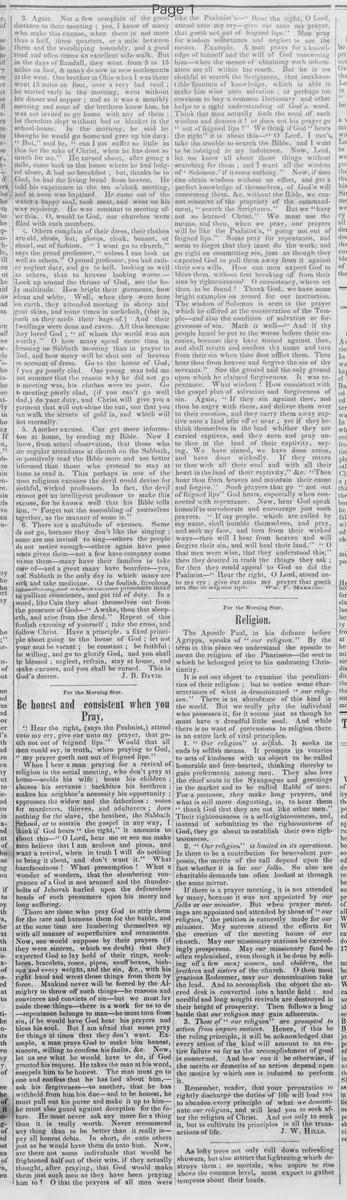
Be honest and consistent when you Pray.
Hear the right, (says the Psalmist,) attend unto my cry, give ear unto my prayer, that goeth not out of feigned lips." Would that all men could say, in truth, when praying to God, my prayer goeth not out of feigned lips."
When I hear a man praying for a revival of religion in the social meeting, who don't pray at home—scolds his wife; beats his children; abuses his servants: backbites his brethren; makes his neighbor's necessity his opportunity; oppresses the widow and the fatherless: votes for murderers, thieves, and adulterers; does nothing for the slave, the heathen, the Sabbath School, or to sustain the gospel in any way, I think if God hears "the right," it amounts to about this—"O Lord, hear me or see me make men believe that I am zealous and pious, and want a revival, when in truth I will do nothing to bring it about, and don't want it." What barefacedness! What presumption! What a wonder of wonders, that the slumbering vengeance of a God is not aroused and the thunder-bolts of Jehovah hurled upon the defenceless heads of such presumers upon his mercy and long suffering.
There are those who pray God to strip them for the race and harness them for the battle, and at the same time are lumbering themselves up with all manner of superfluities and ornaments. Now, one would suppose by their prayers (if they were sincere, which we doubt) that they expected God to lay hold of their rings, necklaces, bracelets, ruffles, pipes, snuff boxes, bishops and every weight, and the sin, &c., with his right hand and wrest those things from them by force. Mankind never will be forced by the Almighty to throw off such things—he reasons and convinces and convicts of sin—but we must lay aside these things—there is a work for us to do—repentance belongs to man—he must turn from sin, if he would have God hear his prayers and bless his soul. But I am afraid that some pray for things at times that they don't want. Example, a man prays God to make him honest, sincere, willing to confess his faults, &c. Now, let us see what he would have to do, if God granted his request. He takes the man at his word, compels him to be honest. The man must go to one and confess that he has lied about him,—ask his forgiveness—to another, that he has withheld from him his due—and to be honest, he must pull out his purse and make it up to him—he must also guard against deception for the future. He must never ask any more for a thing than it is really worth. Never recommend any thing to be better than it really is—pay all honest debts. In short, do unto others just as he would have them do unto him. Now, are there not some individuals that would be frightened half out of their wits, if they actually thought, after praying, that God would make them just such men as they have been praying him to! O that the prayers of all men were like the Psalmist's "Hear the right, O Lord, attend unto my cry—give ear unto my prayer that goeth not out of feigned lips."
Men pray for wisdom sometimes and neglect to use the means. Example. A man prays for a knowledge of himself and the will of God concerning him—when the means of obtaining such information are all within his reach. But he is too slothful to search the Scriptures, that inexhaustible fountain of knowledge, which is able to make him wise unto salvation; or perhaps too covetous to buy a common Dictionary and other helps to a right understanding of God's word. Think that man actually feels the need of such wisdom and desires it? or does not his prayer go out of feigned lips? We think if God "hears the right" it is about this—"O Lord, I can't take the trouble to search the Bible, and I want to be indulged in my indolence. Now, Lord, let me know all about these things without searching for them: and I want all the wisdom of Solomon, if it costs nothing." Now, if men can obtain wisdom without an effort, and get a perfect knowledge of themselves, of God's will concerning them, &c. without the Bible, we cannot conceive of the propriety of the commandment, "search the Scriptures." But we "have not so learned Christ." We must use the means, and then, when we pray, our prayers will be like the Psalmist's, "going not out of feigned lips." Some pray for repentance, and seem to forget that they must do the work; and go right on committing sin, just as though they expected God to pull them away from it against their own wills. How can men expect God to bless them, without first breaking off from their sins by righteousness? O consistency, where art thou to be found? Thank God, we have some bright examples on record for our instruction. The wisdom of Solomon is seen in the prayer which he offered at the consecration of the Temple—and also the condition of salvation or forgiveness of sin. Mark it well—"And if thy people Israel be put to the worse before their enemies, because they have sinned against thee, and shall return and confess thy name and turn from their sin when thou dost afflict them. Then hear thou from heaven and forgive the sin of thy servants." See the ground and the only ground upon which he claimed forgiveness. It was repentance. What wisdom! How consistent with the gospel plan of salvation and forgiveness of sin. Again, "If they sin against thee, and thou be angry with them, and deliver them over to their enemies, and they carry them away captive unto a land afar off or near: yet if they bethink themselves in the land whither they are carried captives, and they turn and pray unto thee in the land of their captivity, saying, We have sinned, we have done amiss, and have done wickedly. If they return to thee with all their soul and with all their heart in the land of their captivity," &c. Then hear thou from heaven and maintain their cause and forgive." Such prayers that go "not out of feigned lips" God hears, especially when connected with repentance. Now, hear God speak himself to corroborate and encourage just such prayers. "If my people, which are called by my name, shall humble themselves, and pray, and seek my face, and turn from their wicked ways—then will I hear from heaven and will forgive their sin, and will heal their land." "O that men were wise, that they understood this;" then they desired in truth the things they ask; for then they could appeal to God as did the Psalmist—"Hear the right, O Lord, attend unto my cry; give ear unto my prayer that goeth not out of feigned lips."
WM. F. MERRILL.
Be honest and consistent when you Pray.
Hear the right, (says the Psalmist,) attend unto my cry, give ear unto my prayer, that goeth not out of feigned lips." Would that all men could say, in truth, when praying to God, my prayer goeth not out of feigned lips."
When I hear a man praying for a revival of religion in the social meeting, who don't pray at home—scolds his wife; beats his children; abuses his servants: backbites his brethren; makes his neighbor's necessity his opportunity; oppresses the widow and the fatherless: votes for murderers, thieves, and adulterers; does nothing for the slave, the heathen, the Sabbath School, or to sustain the gospel in any way, I think if God hears "the right," it amounts to about this—"O Lord, hear me or see me make men believe that I am zealous and pious, and want a revival, when in truth I will do nothing to bring it about, and don't want it." What barefacedness! What presumption! What a wonder of wonders, that the slumbering vengeance of a God is not aroused and the thunder-bolts of Jehovah hurled upon the defenceless heads of such presumers upon his mercy and long suffering.
There are those who pray God to strip them for the race and harness them for the battle, and at the same time are lumbering themselves up with all manner of superfluities and ornaments. Now, one would suppose by their prayers (if they were sincere, which we doubt) that they expected God to lay hold of their rings, necklaces, bracelets, ruffles, pipes, snuff boxes, bishops and every weight, and the sin, &c., with his right hand and wrest those things from them by force. Mankind never will be forced by the Almighty to throw off such things—he reasons and convinces and convicts of sin—but we must lay aside these things—there is a work for us to do—repentance belongs to man—he must turn from sin, if he would have God hear his prayers and bless his soul. But I am afraid that some pray for things at times that they don't want. Example, a man prays God to make him honest, sincere, willing to confess his faults, &c. Now, let us see what he would have to do, if God granted his request. He takes the man at his word, compels him to be honest. The man must go to one and confess that he has lied about him,—ask his forgiveness—to another, that he has withheld from him his due—and to be honest, he must pull out his purse and make it up to him—he must also guard against deception for the future. He must never ask any more for a thing than it is really worth. Never recommend any thing to be better than it really is—pay all honest debts. In short, do unto others just as he would have them do unto him. Now, are there not some individuals that would be frightened half out of their wits, if they actually thought, after praying, that God would make them just such men as they have been praying him to! O that the prayers of all men were like the Psalmist's "Hear the right, O Lord, attend unto my cry—give ear unto my prayer that goeth not out of feigned lips."
Men pray for wisdom sometimes and neglect to use the means. Example. A man prays for a knowledge of himself and the will of God concerning him—when the means of obtaining such information are all within his reach. But he is too slothful to search the Scriptures, that inexhaustible fountain of knowledge, which is able to make him wise unto salvation; or perhaps too covetous to buy a common Dictionary and other helps to a right understanding of God's word. Think that man actually feels the need of such wisdom and desires it? or does not his prayer go out of feigned lips? We think if God "hears the right" it is about this—"O Lord, I can't take the trouble to search the Bible, and I want to be indulged in my indolence. Now, Lord, let me know all about these things without searching for them: and I want all the wisdom of Solomon, if it costs nothing." Now, if men can obtain wisdom without an effort, and get a perfect knowledge of themselves, of God's will concerning them, &c. without the Bible, we cannot conceive of the propriety of the commandment, "search the Scriptures." But we "have not so learned Christ." We must use the means, and then, when we pray, our prayers will be like the Psalmist's, "going not out of feigned lips." Some pray for repentance, and seem to forget that they must do the work; and go right on committing sin, just as though they expected God to pull them away from it against their own wills. How can men expect God to bless them, without first breaking off from their sins by righteousness? O consistency, where art thou to be found? Thank God, we have some bright examples on record for our instruction. The wisdom of Solomon is seen in the prayer which he offered at the consecration of the Temple—and also the condition of salvation or forgiveness of sin. Mark it well—"And if thy people Israel be put to the worse before their enemies, because they have sinned against thee, and shall return and confess thy name and turn from their sin when thou dost afflict them. Then hear thou from heaven and forgive the sin of thy servants." See the ground and the only ground upon which he claimed forgiveness. It was repentance. What wisdom! How consistent with the gospel plan of salvation and forgiveness of sin. Again, "If they sin against thee, and thou be angry with them, and deliver them over to their enemies, and they carry them away captive unto a land afar off or near: yet if they bethink themselves in the land whither they are carried captives, and they turn and pray unto thee in the land of their captivity, saying, We have sinned, we have done amiss, and have done wickedly. If they return to thee with all their soul and with all their heart in the land of their captivity," &c. Then hear thou from heaven and maintain their cause and forgive." Such prayers that go "not out of feigned lips" God hears, especially when connected with repentance. Now, hear God speak himself to corroborate and encourage just such prayers. "If my people, which are called by my name, shall humble themselves, and pray, and seek my face, and turn from their wicked ways—then will I hear from heaven and will forgive their sin, and will heal their land." "O that men were wise, that they understood this;" then they desired in truth the things they ask; for then they could appeal to God as did the Psalmist—"Hear the right, O Lord, attend unto my cry; give ear unto my prayer that goeth not out of feigned lips."
WM. F. MERRILL.
What sub-type of article is it?
Essay
What themes does it cover?
Religious
Moral Virtue
What keywords are associated?
Prayer
Sincerity
Repentance
Hypocrisy
Bible
Wisdom
Morality
Revival
What entities or persons were involved?
Wm. F. Merrill.
Literary Details
Title
Be Honest And Consistent When You Pray.
Author
Wm. F. Merrill.
Subject
On Sincere And Consistent Prayer
Key Lines
Hear The Right, (Says The Psalmist,) Attend Unto My Cry, Give Ear Unto My Prayer, That Goeth Not Out Of Feigned Lips.
O That The Prayers Of All Men Were Like The Psalmist's "Hear The Right, O Lord, Attend Unto My Cry—Give Ear Unto My Prayer That Goeth Not Out Of Feigned Lips."
If My People, Which Are Called By My Name, Shall Humble Themselves, And Pray, And Seek My Face, And Turn From Their Wicked Ways—Then Will I Hear From Heaven And Will Forgive Their Sin, And Will Heal Their Land."