Thank you for visiting SNEWPapers!
Sign up free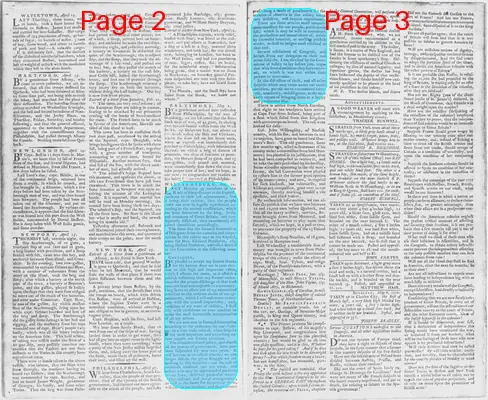
The Virginia Gazette
Williamsburg, Virginia
What is this article about?
On May 10 in Williamsburg, the House of Burgesses dissolved itself over subverted representation by Britain. The General Convention of Delegates convened, electing Edmund Pendleton president, who spoke on justice suspension, military needs, resources like salt, and congressional matters.
Merged-components note: Continuation of Edmund Pendleton's address to the General Convention across pages.
Clippings
1 of 2
OCR Quality
Full Text
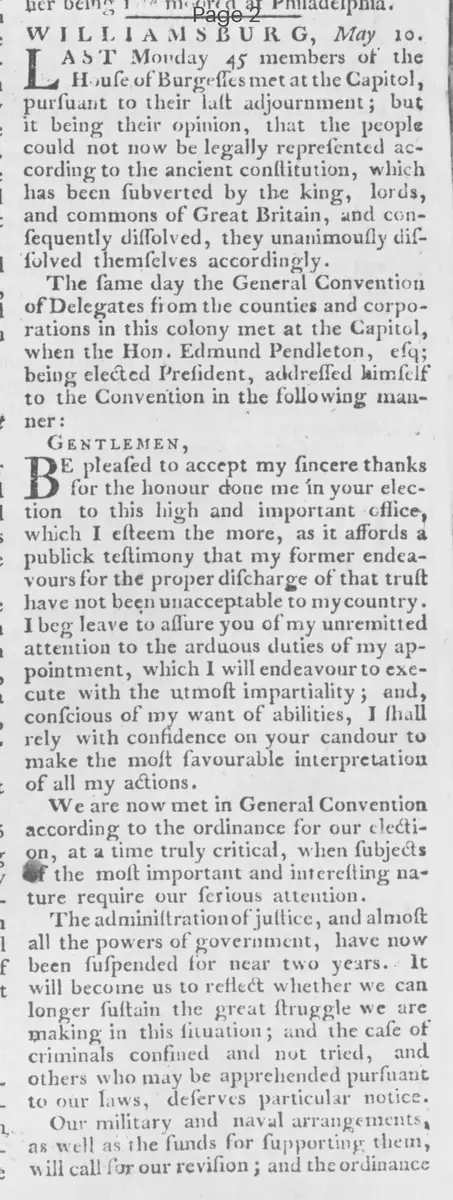
Last Monday 45 members of the House of Burgesses met at the Capitol, pursuant to their last adjournment; but it being their opinion, that the people could not now be legally represented according to the ancient constitution, which has been subverted by the king, lords, and commons of Great Britain, and consequently dissolved, they unanimously dissolved themselves accordingly.
The same day the General Convention of Delegates from the counties and corporations in this colony met at the Capitol, when the Hon. Edmund Pendleton, Esq; being elected President, addressed himself to the Convention in the following manner:
GENTLEMEN,
I am pleased to accept my sincere thanks for the honour done me in your election to this high and important office, which I esteem the more, as it affords a public testimony that my former endeavours for the proper discharge of that trust have not been unacceptable to my country.
I beg leave to assure you of my unremitted attention to the arduous duties of my appointment, which I will endeavour to execute with the utmost impartiality; and, conscious of my want of abilities, I shall rely with confidence on your candour to make the most favourable interpretation of all my actions.
We are now met in General Convention according to the ordinance for our election, at a time truly critical, when subjects of the most important and interesting nature require our serious attention.
The administration of justice, and almost all the powers of government, have now been suspended for near two years. It will become us to reflect whether we can longer sustain the great struggle we are making in this situation; and the case of criminals confined and not tried, and others who may be apprehended pursuant to our laws, deserves particular notice.
Our military and naval arrangements, as well as the funds for supporting them, will call for our revision; and the ordinance
prescribing a mode of punishment for the enemies of America in this colony being very defective, will require amendment.
There are some articles more immediately necessary for our people, particularly salt, which it may be wise to encourage the production and manufacture of, either by increased bounties, or erecting public works, as shall be judged most effectual to that end.
Several resolutions of Congress, and letters from our delegates on these and other subjects, I am directed by the Committee of Safety to lay before you, together with several petitions they have received, on which it was not within their powers to determine.
In the discussion of these, and all other subjects which may come under our consideration, permit me to recommend calmness, unanimity, and diligence, as the most likely means of bringing them to a happy and prosperous issue.
What sub-type of article is it?
What keywords are associated?
What entities or persons were involved?
Where did it happen?
Domestic News Details
Primary Location
Williamsburg
Event Date
May 10
Key Persons
Outcome
house of burgesses unanimously dissolved itself; general convention met and elected edmund pendleton as president
Event Details
Last Monday 45 members of the House of Burgesses met at the Capitol and dissolved themselves, believing the people could not be legally represented due to the subverted constitution by the king, lords, and commons of Great Britain. The same day, the General Convention of Delegates from the counties and corporations met at the Capitol. Edmund Pendleton was elected President and delivered an address on the critical situation, suspended justice and government powers, military and naval arrangements, funds, amendment of punishment ordinance, encouragement of salt production, resolutions from Congress, letters from delegates, and petitions.