Thank you for visiting SNEWPapers!
Sign up free
Literary
July 7, 1790
Gazette Of The United States
New York, New York County, New York
What is this article about?
An essay exploring the nature of enthusiasm as a bold, independent mind that defies reason and prudence. It discusses its origins, positive contributions to institutions and reforms, and role in discoveries, despite potential for delusion.
Clipping
OCR Quality
98%
Excellent
Full Text
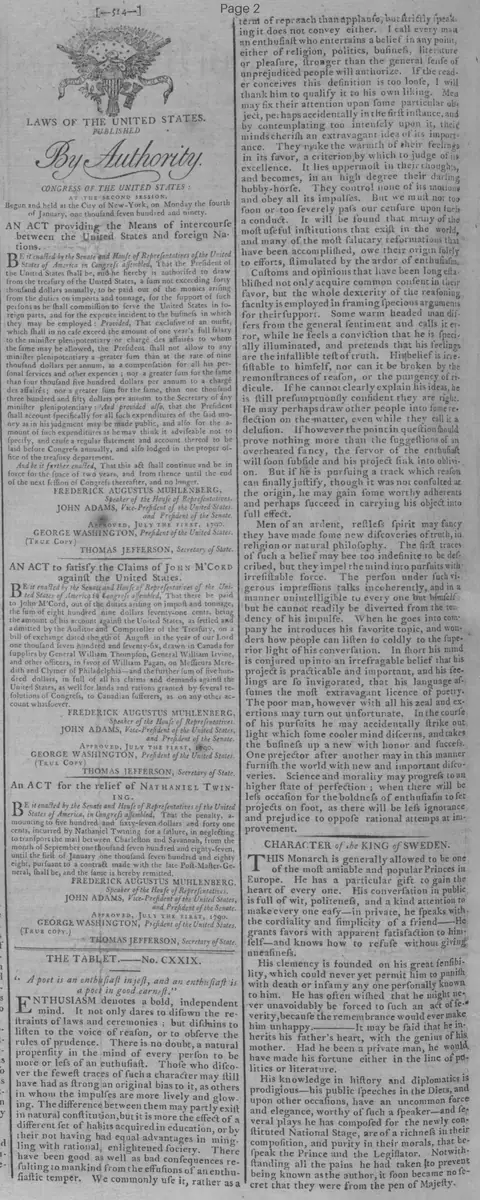
THE TABLET. No. CXXIX.
"A poet is an enthusiast in jest, and an enthusiast is a poet in good earnest."
ENTHUSIASM denotes a bold, independent mind.
It not only dares to disown the restraints of laws and ceremonies; but disdains to listen to the voice of reason, or to observe the rules of prudence.
There is no doubt, a natural propensity in the mind of every person to be more or less of an enthusiast.
Those who discover the fewest traces of such a character may still have had as strong an original bias to it, as others in whom the impulses are more lively and glowing. The difference between them may partly exist in natural constitution, but it is more the effect of a different set of habits acquired in education, or by their not having had equal advantages in mingling with rational, enlightened society.
There have been good as well as bad consequences resulting to mankind from the effusions of an enthusiastic temper. We commonly use it, rather as a term of reproach than applause, but strictly speaking it does not convey either. I call every man an enthusiast who entertains a belief in any point, either of religion, politics, business, literature or pleasure, stronger than the general sense of unprejudiced people will authorize. If the reader conceives this definition is too loose, I will thank him to qualify it to his own liking. Men may fix their attention upon some particular object, perhaps accidentally in the first instance, and by contemplating too intensely upon it, their minds cherish an extravagant idea of its importance. They make the warmth of their feelings in its favor, a criterion by which to judge of its excellence. It lies uppermost in their thoughts, and becomes, in an high degree their darling hobby-horse. They control none of its motions and obey all its impulses. But we must not too soon or too severely pass our censure upon such a conduct. It will be found that many of the most useful institutions that exist in the world, and many of the most salutary reformations that have been accomplished, owe their origin solely to efforts, stimulated by the ardor of enthusiasm.
Customs and opinions that have been long established not only acquire common consent in their favor, but the whole dexterity of the reasoning faculty is employed in framing specious arguments for their support. Some warm headed man differs from the general sentiment and calls it error, while he feels a conviction that he is peculiarly illuminated, and pretends that his feelings are the infallible test of truth. His belief is irresistible to himself, nor can it be broken by the remonstrances of reason, or the pungency of ridicule. If he cannot clearly explain his ideas, he is still presumptuously confident they are right. He may perhaps draw other people into some reflection on the matter, even while they call it a delusion. If however the point in question should prove nothing more than the suggestions of an overheated fancy, the fervor of the enthusiast will soon subside and his project sink into oblivion. But if he is pursuing a track which reason can finally justify, though it was not consulted at the origin, he may gain some worthy adherents and perhaps succeed in carrying his object into full effect.
Men of an ardent, restless spirit may fancy they have made some new discoveries of truth, in religion or natural philosophy. The first traces of such a belief may be too indefinite to be described, but they impel the mind into pursuits with irresistible force. The person under such dangerous impressions talks incoherently, and in a manner unintelligible to every one but himself but he cannot readily be diverted from the tendency of his impulse. When he goes into company he introduces his favorite topic, and wonders how people can listen so coldly to the superior light of his conversation. In short his mind is conjured up into an irrefragable belief that his project is practicable and important, and his feelings are so invigorated, that his language assumes the most extravagant license of poetry.
The poor man, however with all his zeal and exertions may turn out unfortunate. In the course of his pursuits he may accidentally strike out light which some cooler mind discerns, and takes the business up a new with honor and success. One projector after another may in this manner furnish the world with new and important discoveries. Science and morality may progress to a higher state of perfection; when there will be less occasion for the boldness of enthusiasm to set projects on foot, as there will be less ignorance and prejudice to oppose rational attempts at improvement.
"A poet is an enthusiast in jest, and an enthusiast is a poet in good earnest."
ENTHUSIASM denotes a bold, independent mind.
It not only dares to disown the restraints of laws and ceremonies; but disdains to listen to the voice of reason, or to observe the rules of prudence.
There is no doubt, a natural propensity in the mind of every person to be more or less of an enthusiast.
Those who discover the fewest traces of such a character may still have had as strong an original bias to it, as others in whom the impulses are more lively and glowing. The difference between them may partly exist in natural constitution, but it is more the effect of a different set of habits acquired in education, or by their not having had equal advantages in mingling with rational, enlightened society.
There have been good as well as bad consequences resulting to mankind from the effusions of an enthusiastic temper. We commonly use it, rather as a term of reproach than applause, but strictly speaking it does not convey either. I call every man an enthusiast who entertains a belief in any point, either of religion, politics, business, literature or pleasure, stronger than the general sense of unprejudiced people will authorize. If the reader conceives this definition is too loose, I will thank him to qualify it to his own liking. Men may fix their attention upon some particular object, perhaps accidentally in the first instance, and by contemplating too intensely upon it, their minds cherish an extravagant idea of its importance. They make the warmth of their feelings in its favor, a criterion by which to judge of its excellence. It lies uppermost in their thoughts, and becomes, in an high degree their darling hobby-horse. They control none of its motions and obey all its impulses. But we must not too soon or too severely pass our censure upon such a conduct. It will be found that many of the most useful institutions that exist in the world, and many of the most salutary reformations that have been accomplished, owe their origin solely to efforts, stimulated by the ardor of enthusiasm.
Customs and opinions that have been long established not only acquire common consent in their favor, but the whole dexterity of the reasoning faculty is employed in framing specious arguments for their support. Some warm headed man differs from the general sentiment and calls it error, while he feels a conviction that he is peculiarly illuminated, and pretends that his feelings are the infallible test of truth. His belief is irresistible to himself, nor can it be broken by the remonstrances of reason, or the pungency of ridicule. If he cannot clearly explain his ideas, he is still presumptuously confident they are right. He may perhaps draw other people into some reflection on the matter, even while they call it a delusion. If however the point in question should prove nothing more than the suggestions of an overheated fancy, the fervor of the enthusiast will soon subside and his project sink into oblivion. But if he is pursuing a track which reason can finally justify, though it was not consulted at the origin, he may gain some worthy adherents and perhaps succeed in carrying his object into full effect.
Men of an ardent, restless spirit may fancy they have made some new discoveries of truth, in religion or natural philosophy. The first traces of such a belief may be too indefinite to be described, but they impel the mind into pursuits with irresistible force. The person under such dangerous impressions talks incoherently, and in a manner unintelligible to every one but himself but he cannot readily be diverted from the tendency of his impulse. When he goes into company he introduces his favorite topic, and wonders how people can listen so coldly to the superior light of his conversation. In short his mind is conjured up into an irrefragable belief that his project is practicable and important, and his feelings are so invigorated, that his language assumes the most extravagant license of poetry.
The poor man, however with all his zeal and exertions may turn out unfortunate. In the course of his pursuits he may accidentally strike out light which some cooler mind discerns, and takes the business up a new with honor and success. One projector after another may in this manner furnish the world with new and important discoveries. Science and morality may progress to a higher state of perfection; when there will be less occasion for the boldness of enthusiasm to set projects on foot, as there will be less ignorance and prejudice to oppose rational attempts at improvement.
What sub-type of article is it?
Essay
What themes does it cover?
Moral Virtue
Political
Religious
What keywords are associated?
Enthusiasm
Reason
Reformation
Discovery
Delusion
Progress
Literary Details
Title
The Tablet. No. Cxxix.
Subject
On Enthusiasm
Form / Style
Prose Reflection
Key Lines
"A Poet Is An Enthusiast In Jest, And An Enthusiast Is A Poet In Good Earnest."
I Call Every Man An Enthusiast Who Entertains A Belief In Any Point, Either Of Religion, Politics, Business, Literature Or Pleasure, Stronger Than The General Sense Of Unprejudiced People Will Authorize.
It Will Be Found That Many Of The Most Useful Institutions That Exist In The World, And Many Of The Most Salutary Reformations That Have Been Accomplished, Owe Their Origin Solely To Efforts, Stimulated By The Ardor Of Enthusiasm.