Thank you for visiting SNEWPapers!
Sign up free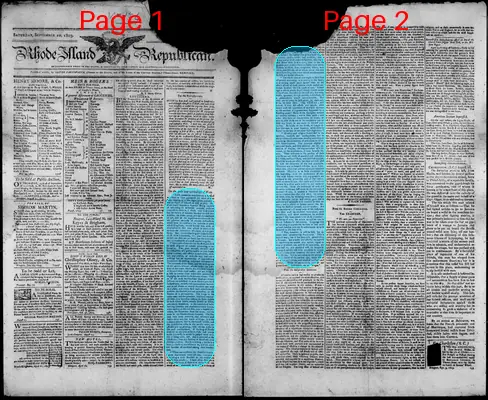
Editorial
September 10, 1803
Rhode Island Republican
Newport, Newport County, Rhode Island
What is this article about?
This editorial condemns the folly and wickedness of war, portraying it as absurd, driven by selfish rulers, and causing immense suffering to the common people, while advocating for morality and religion to prevent it.
Merged-components note: This is a continuation of the editorial on the folly and wickedness of war, split across pages 1 and 2 based on reading order and text flow.
Clippings
1 of 2
OCR Quality
92%
Excellent
Full Text
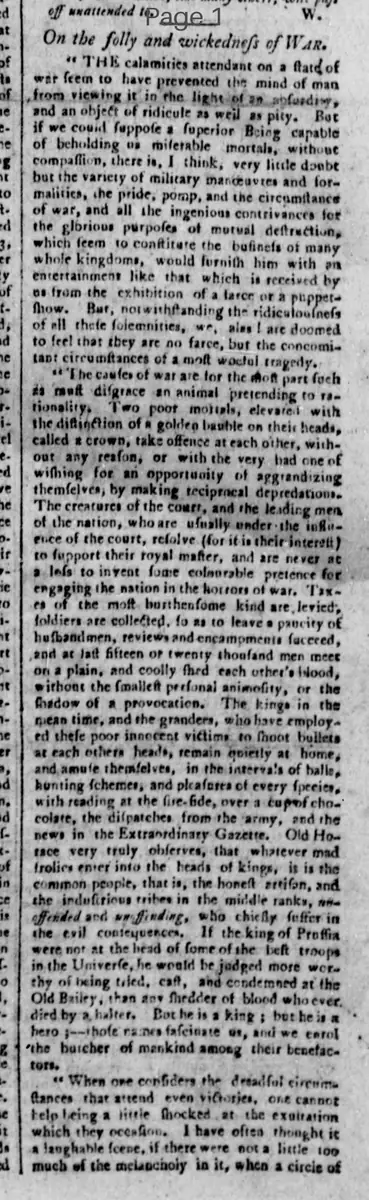
On the folly and wickedness of War.
"THE calamities attendant on a state of
war seem to have prevented the mind of man
from viewing it in the light of an absurdity,
and an object of ridicule as well as pity. But
if we could suppose a superior Being capable
of beholding us miserable mortals, without
compassion, there is, I think, very little doubt
but the variety of military manoeuvres and formalities, the pride, pomp, and the circumstance
of war, and all the ingenious contrivances for
the glorious purpose of mutual destruction,
which seem to constitute the business of many
whole kingdoms, would furnish him with an
entertainment like that which is received by
us from the exhibition of a farce or a puppet-
show. But, notwithstanding the ridiculousness
of all these solemnities, we, alas! are doomed
to feel that they are no farce, but the concomitant circumstances of a most woeful tragedy.
The causes of war are for the most part such
as manifestly disgrace an animal pretending to rationality. Two poor mortals, elevated with
the distinction of a golden bauble on their heads,
called a crown, take offence at each other, without any reason, or with the very bad one of
wishing for an opportunity of aggrandizing
themselves, by making reciprocal depredations.
The creatures of the court, and the leading men
of the nation, who are usually under the influence of the court, resolve (for it is their interest)
to support their royal master, and are never at
a loss to invent some colorable pretence for
engaging the nation in the horrors of war. Taxes of the most burdensome kind are levied;
soldiers are collected, so as to leave a paucity of
husbandmen, reviews and encampments succeed,
and at last fifteen or twenty thousand men meet
on a plain, and coolly shed each other's blood,
with no the smallest personal animosity, or the
shadow of a provocation. The kings in the
mean time, and the grandees, who have employed these poor innocent victims to shoot bullets
at each others heads, remain quietly at home,
and amuse themselves, in the intervals of battle,
with hunting, &c. and pleasures of every species.
with reading at the sea-side, over a cup of chocolate, the dispatches from the army, and the
news in the Extraordinary Gazette. Old Horace very truly, observes, that whatever mad
frolies enter into the heads of kings, it is the
common people, that is, the honest artisan, and
the industrious tribes in the middle ranks, un-
offended and unoffending, who chiefly suffer in
the evil consequences. If the king of Prussia
were not at the head of some of the best troops
in the Universe, he would be judged more worthy of being tried, cast, and condemned at the
Old Bailey, than any shedder of blood whosoever
died by a halter. But he is a king; but he is a
hero;—whose names fascinate us, and we enrol
the butcher of mankind among their benefactors.
When one considers the dreadful circumstances that attend even victories, one cannot
help being a little shocked at the exultation
which they occasion. I have often thought it
a laughable scene, if there were not a little too
much of the melancholy in it, when a circle of
old women or beaux assemble... 'Of the hundred dead of our nation! it was a glorious battle!' But before you give a loose to your raptures, pause a while; and consider, that to every one of these nineteen hundred, life was no less sweet than it is to you; that to the far greater part of them there probably were wives, fathers, mothers, sons, daughters, sisters, brothers, and friends, all of whom are at this moment bewailing that event which occasions your foolish and brutal triumph.
The whole time of war ought to be a time of general mourning. a mourning in the heart, a mourning much more sincere than on the death of one of those princes whose cursed ambition is often the sole cause of war. Indeed that a whole people should tamely submit to the evils of war, because it is the will of a few vain, selfish, ignorant, though exalted, individuals, is a phenomenon almost unaccountable. But they are led away by false glory, by their passions, by their vices. They reflect not; and indeed, if they did reflect, and oppose, what would avail the opposition of unarmed myriads to the mandate of a government supported by a standing army? Many of the European nations are entirely military; war is their trade; and when they have no employment at home, or near it, they blush not to let themselves out to shed any blood, in any cause, for the best paymaster. Ye beasts of the forest, no longer allow that man is your superior, while there is found on the face of the earth such degeneracy!
Morality and religion forbid war in its motives, conduct, and consequences; but to many rulers and potentates morality and religion appear as the inventions of politicians to facilitate subordination. The principal objects of crowned heads, and their minions, are the extension of empire, the augmentation of a revenue, or the annihilation of their subjects liberty. Their restraints in the pursuit of these objects are not those of morality and religion; but solely reasons of state, and political caution. Plausible words are used, but they are only used to hide the deformity of the real principles. Wherever war is deemed desirable in an interested view, a specious pretext never yet remained unfound. Morality is as little considered in the beginning, as in the prosecution of war. The most solemn treaties and engagements are violated by the governing part of the nation, with no more scruple than oaths and bonds are broken by a cheat and a villain in the walks of private life. Does the difference of rank and station make any difference in the atrocity of crimes? If any, it renders a thousand times more criminal than that of a thief, the villany of them, who, by violating every sacred obligation between nation and nation, give rise to miseries and mischiefs most dreadful in their nature; and to which no human power can say. Thus far shall we proceed, and no farther. Are not the natural and moral evils of life sufficient, but they must be rendered more acute, more numerous, and more embittered by artificial means? My heart bleeds over those complicated scenes of woe, for which no epithet can be found sufficiently descriptive. Language fails in laboring to express the horrors of war around private families who are so unfortunate as to be situated on the seat of it.
War, however, it will be said, has always been permitted by Providence. This is indeed true: but it has been only permitted as a scourge. Let a spirit and activity be exerted in regulating the morals of a nation, equal to that with which war, and all its apparatus, are attended to, and mankind will no longer be scourged, neither will it be necessary to evacuate an empire of its members, for none will be superfluous. Let us according to the advice of a pious divine of the present age, think less of our fleets and armies, and more of our faith and practice. While we are warriors, with all our pretensions to civilization, we are savages."
"THE calamities attendant on a state of
war seem to have prevented the mind of man
from viewing it in the light of an absurdity,
and an object of ridicule as well as pity. But
if we could suppose a superior Being capable
of beholding us miserable mortals, without
compassion, there is, I think, very little doubt
but the variety of military manoeuvres and formalities, the pride, pomp, and the circumstance
of war, and all the ingenious contrivances for
the glorious purpose of mutual destruction,
which seem to constitute the business of many
whole kingdoms, would furnish him with an
entertainment like that which is received by
us from the exhibition of a farce or a puppet-
show. But, notwithstanding the ridiculousness
of all these solemnities, we, alas! are doomed
to feel that they are no farce, but the concomitant circumstances of a most woeful tragedy.
The causes of war are for the most part such
as manifestly disgrace an animal pretending to rationality. Two poor mortals, elevated with
the distinction of a golden bauble on their heads,
called a crown, take offence at each other, without any reason, or with the very bad one of
wishing for an opportunity of aggrandizing
themselves, by making reciprocal depredations.
The creatures of the court, and the leading men
of the nation, who are usually under the influence of the court, resolve (for it is their interest)
to support their royal master, and are never at
a loss to invent some colorable pretence for
engaging the nation in the horrors of war. Taxes of the most burdensome kind are levied;
soldiers are collected, so as to leave a paucity of
husbandmen, reviews and encampments succeed,
and at last fifteen or twenty thousand men meet
on a plain, and coolly shed each other's blood,
with no the smallest personal animosity, or the
shadow of a provocation. The kings in the
mean time, and the grandees, who have employed these poor innocent victims to shoot bullets
at each others heads, remain quietly at home,
and amuse themselves, in the intervals of battle,
with hunting, &c. and pleasures of every species.
with reading at the sea-side, over a cup of chocolate, the dispatches from the army, and the
news in the Extraordinary Gazette. Old Horace very truly, observes, that whatever mad
frolies enter into the heads of kings, it is the
common people, that is, the honest artisan, and
the industrious tribes in the middle ranks, un-
offended and unoffending, who chiefly suffer in
the evil consequences. If the king of Prussia
were not at the head of some of the best troops
in the Universe, he would be judged more worthy of being tried, cast, and condemned at the
Old Bailey, than any shedder of blood whosoever
died by a halter. But he is a king; but he is a
hero;—whose names fascinate us, and we enrol
the butcher of mankind among their benefactors.
When one considers the dreadful circumstances that attend even victories, one cannot
help being a little shocked at the exultation
which they occasion. I have often thought it
a laughable scene, if there were not a little too
much of the melancholy in it, when a circle of
old women or beaux assemble... 'Of the hundred dead of our nation! it was a glorious battle!' But before you give a loose to your raptures, pause a while; and consider, that to every one of these nineteen hundred, life was no less sweet than it is to you; that to the far greater part of them there probably were wives, fathers, mothers, sons, daughters, sisters, brothers, and friends, all of whom are at this moment bewailing that event which occasions your foolish and brutal triumph.
The whole time of war ought to be a time of general mourning. a mourning in the heart, a mourning much more sincere than on the death of one of those princes whose cursed ambition is often the sole cause of war. Indeed that a whole people should tamely submit to the evils of war, because it is the will of a few vain, selfish, ignorant, though exalted, individuals, is a phenomenon almost unaccountable. But they are led away by false glory, by their passions, by their vices. They reflect not; and indeed, if they did reflect, and oppose, what would avail the opposition of unarmed myriads to the mandate of a government supported by a standing army? Many of the European nations are entirely military; war is their trade; and when they have no employment at home, or near it, they blush not to let themselves out to shed any blood, in any cause, for the best paymaster. Ye beasts of the forest, no longer allow that man is your superior, while there is found on the face of the earth such degeneracy!
Morality and religion forbid war in its motives, conduct, and consequences; but to many rulers and potentates morality and religion appear as the inventions of politicians to facilitate subordination. The principal objects of crowned heads, and their minions, are the extension of empire, the augmentation of a revenue, or the annihilation of their subjects liberty. Their restraints in the pursuit of these objects are not those of morality and religion; but solely reasons of state, and political caution. Plausible words are used, but they are only used to hide the deformity of the real principles. Wherever war is deemed desirable in an interested view, a specious pretext never yet remained unfound. Morality is as little considered in the beginning, as in the prosecution of war. The most solemn treaties and engagements are violated by the governing part of the nation, with no more scruple than oaths and bonds are broken by a cheat and a villain in the walks of private life. Does the difference of rank and station make any difference in the atrocity of crimes? If any, it renders a thousand times more criminal than that of a thief, the villany of them, who, by violating every sacred obligation between nation and nation, give rise to miseries and mischiefs most dreadful in their nature; and to which no human power can say. Thus far shall we proceed, and no farther. Are not the natural and moral evils of life sufficient, but they must be rendered more acute, more numerous, and more embittered by artificial means? My heart bleeds over those complicated scenes of woe, for which no epithet can be found sufficiently descriptive. Language fails in laboring to express the horrors of war around private families who are so unfortunate as to be situated on the seat of it.
War, however, it will be said, has always been permitted by Providence. This is indeed true: but it has been only permitted as a scourge. Let a spirit and activity be exerted in regulating the morals of a nation, equal to that with which war, and all its apparatus, are attended to, and mankind will no longer be scourged, neither will it be necessary to evacuate an empire of its members, for none will be superfluous. Let us according to the advice of a pious divine of the present age, think less of our fleets and armies, and more of our faith and practice. While we are warriors, with all our pretensions to civilization, we are savages."
What sub-type of article is it?
War Or Peace
Moral Or Religious
What keywords are associated?
Folly Of War
Wickedness Of War
Anti War Critique
Rulers Ambition
Human Suffering
Moral Condemnation
Providence Scourge
What entities or persons were involved?
Kings
Rulers
King Of Prussia
Horace
Editorial Details
Primary Topic
Folly And Wickedness Of War
Stance / Tone
Strongly Anti War Moral Condemnation
Key Figures
Kings
Rulers
King Of Prussia
Horace
Key Arguments
War Is Absurd And Ridiculous Like A Farce
Causes Of War Disgrace Human Rationality
Rulers Provoke Wars For Personal Gain While Common People Suffer
Victories Bring Unnecessary Exultation Amid Human Loss
War Should Be A Time Of Mourning
Morality And Religion Forbid War
Rulers Violate Treaties Without Scruple
War Is A Scourge Permitted By Providence