Thank you for visiting SNEWPapers!
Sign up free
Story
November 3, 1847
The Sumter Banner
Sumter, Sumter County, South Carolina
What is this article about?
In New Orleans, poor dyer Frank Farrell mistakenly buries another man's wife, believing she is his own Mary who died of yellow fever at Charity Hospital. Mary returns alive, revealing the hospital mix-up between two Mrs. Farrells.
Clipping
OCR Quality
95%
Excellent
Full Text
MISCELLANEOUS.
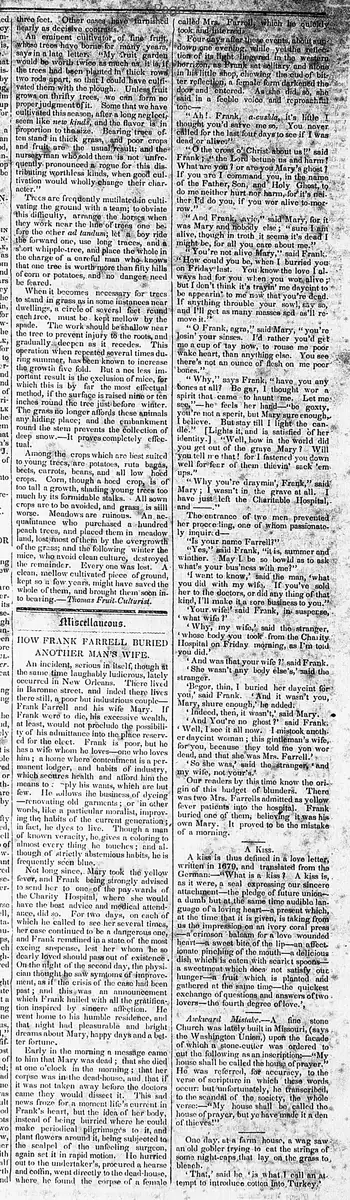
HOW FRANK FARRELL BURIED ANOTHER MAN'S WIFE.
An incident, serious in itself, though at the same time laughably ludicrous, lately occurred in New Orleans. There lived in Baronne street, and indeed there lives there still, a poor but industrious couple—Frank Farrell and his wife Mary. If Frank were to die, his excessive wealth, at least, would not preclude the possibility of his admittance into the place reserved for the elect. Frank is poor, but he has a wife whom he loves—one who loves him; a home where contentment is a permanent lodger, and habits of industry, which secures health and afford him the means to supply his wants, which are but few. He follows the business of dyeing—renovating old garments; or in other words, like a particular moralist, improving the habits of the current generation; in fact, he dyes to live. Though a man of known veracity, he gives a coloring to almost every thing he touches; and although of strictly abstemious habits, he is frequently seen blue.
Not long since, Mary took the yellow fever, and Frank being strongly advised to send her to one of the pay-wards of the Charity Hospital, where she would have the best advice and medical attendance, did so. For two days, on each of which he called to see her several times, her case continued to be a dangerous one, and Frank remained in a state of the most exciting suspense, lest her whom he so dearly loved should pass out of existence. On the night of the second day, the physician thought he saw symptoms of improvement, as if the crisis of the case had been past; and this was an announcement which Frank hailed with all the gratification inspired by sincere affection. He went home to his humble residence, and that night had pleasurable and bright dreams about Mary, happy days and a better fortune.
Early in the morning a message came to him that Mary was dead: that she died at one o'clock in the morning: that her corpse was in the dead-house, and that if it was not taken away before the doctors came they would dissect it. This sad news froze for a moment life's current in Frank's heart, but the idea of her body, instead of being buried where he could make periodical pilgrimages to it, and plant flowers around it, being subjected to the scalpel of the unfeeling surgeon, again set it in rapid motion. He hurried out to the undertaker's, procured a hearse and coffin, went directly to the dead-house, where he found the corpse of a female called Mrs. Farrell, which he quickly took and interred as his own.
Four days after these events, about sun down one evening, while the reflection of its light lingered in the western horizon, as Frank sat solitary and mournful in his little shop, chewing the cud of bitter reflection, a female form darkened the door and entered. As she did so, she said in a feeble voice and reproachful tone—
"Ah! Frank, a-cushla it's little thought you'd sarve me so. You never called for the last four days to see if I was dead or alive."
"O the cross o' Christ about us!" said Frank the Lord betune us and harm! What are you? or are you Mary's ghost? If you are I command you, in the name of the Father, Son, and Holy Ghost, to do me neither hurt nor harm, for it's neither I'd do you, if you wor alive to-morrow."
And Frank, avic, said Mary, for it was Mary and nobody else; "sure I am alive, though in troth it seems it's dead I might be, for all you care about me."
"You're not alive Mary," said Frank. "How could you be, when I buried you on Friday last. You know the love I always had for you when you wor alive; but I don't think it's travlin' me dacint to be appearin' to me now that you're dead. If anything trouble your sowl, say so, and I'll get as many masses sed as'll remove it."
"O Frank, acgra," said Mary, "you're losin' your senses. I'd rather you'd get me a cup of tay now, to rouse me poor wake heart, than anything else. You see, there's not an ounce of flesh on me poor bones."
"Why," says Frank, "have you any bones at all? Be gar, I thought wor a spirit that came to haunt me. Let me see,"—he feels her hand "be goxty, you're not a sperit, but Mary sure enough,—I believe. But stay till I light the candle." [Lights it, and is satisfied of her identity.] "Well, how in the world did you get out of the grave Mary? Will you tell me that! or I fastened you down well for fear of them thievin' sack em ups."
"Why you're dreamin', Frank," said Mary; I wasn't in the grave at all. I have just left the Charitable Hospital, and
The entrance of two men prevented her proceeding, one of whom passionately inquired—
"Is your name Farrell?"
"Yes," said Frank, "it is, summer and winter. May I be so bowld as to ask what's your bus'ness with me?"
"I want to know," said the man, what you did with my wife. If you've sold her to the doctors, or did any thing of that kind, I'll make it a sore business to you."
"Your wife!" said Frank, in suspense, "what wife?"
"Why, my wife," said the stranger, "whose body you took from the Charity Hospital on Friday morning, as I'm told, you did."
"And was that your wife?" said Frank.
"She wasn't any body else's," said the stranger.
"Begor, thin, I buried her dacint for you," said Frank. And it wasn't you, Mary, shure enough, he added.
"Indeed, then, it wasn't," said Mary.
"And you're no ghost?" said Frank.
"Well. I see it all now. I mistook another dacint woman; this gintleman's wife, for you, because they told me you wor dead, and that she was Mrs. Farrell."
"So she was," said the stranger "and my wife, not yours."
Our readers by this time know the origin of this budget of blunders. There was two Mrs. Farrells admitted as yellow fever patients into the hospital. Frank buried one of them; believing it was his own Mary. It proved to be the mistake of a morning.
HOW FRANK FARRELL BURIED ANOTHER MAN'S WIFE.
An incident, serious in itself, though at the same time laughably ludicrous, lately occurred in New Orleans. There lived in Baronne street, and indeed there lives there still, a poor but industrious couple—Frank Farrell and his wife Mary. If Frank were to die, his excessive wealth, at least, would not preclude the possibility of his admittance into the place reserved for the elect. Frank is poor, but he has a wife whom he loves—one who loves him; a home where contentment is a permanent lodger, and habits of industry, which secures health and afford him the means to supply his wants, which are but few. He follows the business of dyeing—renovating old garments; or in other words, like a particular moralist, improving the habits of the current generation; in fact, he dyes to live. Though a man of known veracity, he gives a coloring to almost every thing he touches; and although of strictly abstemious habits, he is frequently seen blue.
Not long since, Mary took the yellow fever, and Frank being strongly advised to send her to one of the pay-wards of the Charity Hospital, where she would have the best advice and medical attendance, did so. For two days, on each of which he called to see her several times, her case continued to be a dangerous one, and Frank remained in a state of the most exciting suspense, lest her whom he so dearly loved should pass out of existence. On the night of the second day, the physician thought he saw symptoms of improvement, as if the crisis of the case had been past; and this was an announcement which Frank hailed with all the gratification inspired by sincere affection. He went home to his humble residence, and that night had pleasurable and bright dreams about Mary, happy days and a better fortune.
Early in the morning a message came to him that Mary was dead: that she died at one o'clock in the morning: that her corpse was in the dead-house, and that if it was not taken away before the doctors came they would dissect it. This sad news froze for a moment life's current in Frank's heart, but the idea of her body, instead of being buried where he could make periodical pilgrimages to it, and plant flowers around it, being subjected to the scalpel of the unfeeling surgeon, again set it in rapid motion. He hurried out to the undertaker's, procured a hearse and coffin, went directly to the dead-house, where he found the corpse of a female called Mrs. Farrell, which he quickly took and interred as his own.
Four days after these events, about sun down one evening, while the reflection of its light lingered in the western horizon, as Frank sat solitary and mournful in his little shop, chewing the cud of bitter reflection, a female form darkened the door and entered. As she did so, she said in a feeble voice and reproachful tone—
"Ah! Frank, a-cushla it's little thought you'd sarve me so. You never called for the last four days to see if I was dead or alive."
"O the cross o' Christ about us!" said Frank the Lord betune us and harm! What are you? or are you Mary's ghost? If you are I command you, in the name of the Father, Son, and Holy Ghost, to do me neither hurt nor harm, for it's neither I'd do you, if you wor alive to-morrow."
And Frank, avic, said Mary, for it was Mary and nobody else; "sure I am alive, though in troth it seems it's dead I might be, for all you care about me."
"You're not alive Mary," said Frank. "How could you be, when I buried you on Friday last. You know the love I always had for you when you wor alive; but I don't think it's travlin' me dacint to be appearin' to me now that you're dead. If anything trouble your sowl, say so, and I'll get as many masses sed as'll remove it."
"O Frank, acgra," said Mary, "you're losin' your senses. I'd rather you'd get me a cup of tay now, to rouse me poor wake heart, than anything else. You see, there's not an ounce of flesh on me poor bones."
"Why," says Frank, "have you any bones at all? Be gar, I thought wor a spirit that came to haunt me. Let me see,"—he feels her hand "be goxty, you're not a sperit, but Mary sure enough,—I believe. But stay till I light the candle." [Lights it, and is satisfied of her identity.] "Well, how in the world did you get out of the grave Mary? Will you tell me that! or I fastened you down well for fear of them thievin' sack em ups."
"Why you're dreamin', Frank," said Mary; I wasn't in the grave at all. I have just left the Charitable Hospital, and
The entrance of two men prevented her proceeding, one of whom passionately inquired—
"Is your name Farrell?"
"Yes," said Frank, "it is, summer and winter. May I be so bowld as to ask what's your bus'ness with me?"
"I want to know," said the man, what you did with my wife. If you've sold her to the doctors, or did any thing of that kind, I'll make it a sore business to you."
"Your wife!" said Frank, in suspense, "what wife?"
"Why, my wife," said the stranger, "whose body you took from the Charity Hospital on Friday morning, as I'm told, you did."
"And was that your wife?" said Frank.
"She wasn't any body else's," said the stranger.
"Begor, thin, I buried her dacint for you," said Frank. And it wasn't you, Mary, shure enough, he added.
"Indeed, then, it wasn't," said Mary.
"And you're no ghost?" said Frank.
"Well. I see it all now. I mistook another dacint woman; this gintleman's wife, for you, because they told me you wor dead, and that she was Mrs. Farrell."
"So she was," said the stranger "and my wife, not yours."
Our readers by this time know the origin of this budget of blunders. There was two Mrs. Farrells admitted as yellow fever patients into the hospital. Frank buried one of them; believing it was his own Mary. It proved to be the mistake of a morning.
What sub-type of article is it?
Curiosity
Extraordinary Event
What themes does it cover?
Misfortune
Family
What keywords are associated?
Mistaken Burial
Yellow Fever
New Orleans
Charity Hospital
Frank Farrell
Hospital Mix Up
What entities or persons were involved?
Frank Farrell
Mary Farrell
Stranger (Husband Of Deceased Mrs. Farrell)
Where did it happen?
New Orleans, Baronne Street, Charity Hospital
Story Details
Key Persons
Frank Farrell
Mary Farrell
Stranger (Husband Of Deceased Mrs. Farrell)
Location
New Orleans, Baronne Street, Charity Hospital
Story Details
Frank Farrell, a poor dyer in New Orleans, sends his wife Mary to Charity Hospital for yellow fever. Believing her dead, he buries another Mrs. Farrell's body from the hospital. Mary returns alive, and the other husband confronts Frank, revealing the mix-up between two patients with the same name.