Thank you for visiting SNEWPapers!
Sign up free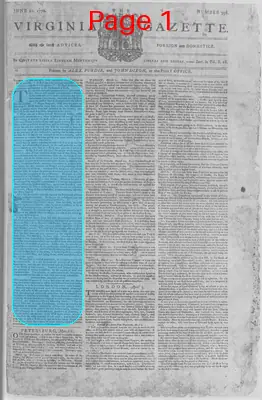
Literary
June 21, 1770
The Virginia Gazette
Richmond, Williamsburg, Richmond County, Virginia
What is this article about?
Translation of extracts from a Paris pamphlet by Mon. de Beaumont reflecting on England's political state, advocating moderation in power, contrasting absolute vs. free governance, and defending colonists' rights to self-taxation while affirming contributions to the empire.
Clipping
OCR Quality
98%
Excellent
Full Text
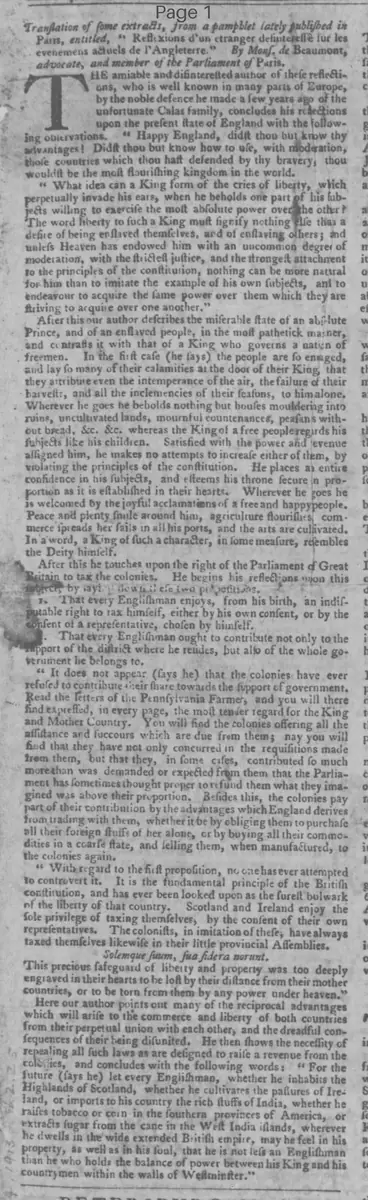
Translation of some extracts, from a pamphlet lately published in Paris, entitled, "Reflexions d'un etranger desinteressé sur les evenemens actuels de l'Angleterre." By Mon. de Beaumont, advocate, and member of the Parliament of Paris.
The amiable and disinterested author of these reflections, who is well known in many parts of Europe, by the noble defence he made a few years ago of the unfortunate Calas family, concludes his reflections upon the present state of England with the following observations. "Happy England, didst thou but know thy advantages! Didst thou but know how to use, with moderation, those countries which thou hast defended by thy bravery, thou wouldst be the most flourishing kingdom in the world.
"What idea can a King form of the cries of liberty, which perpetually invade his ears, when he beholds one part of his subjects willing to exercise the most absolute power over the other? The word liberty to such a King must signify nothing else than a desire of being enslaved themselves, and of enslaving others; and unless Heaven has endowed him with an uncommon degree of moderation, with the strictest justice, and the strongest attachment to the principles of the constitution, nothing can be more natural for him than to imitate the example of his own subjects, and to endeavour to acquire the same power over them which they are striving to acquire over one another."
After this our author describes the miserable state of an absolute Prince, and of an enslaved people, in the most pathetic manner, and contrasts it with that of a King who governs a nation of freemen. In the first case (he says) the people are so enraged, and lay so many of their calamities at the door of their King, that they attribute even the intemperance of the air, the failure of their harvests, and all the inclemencies of their seasons, to him alone. Wherever he goes he beholds nothing but houses mouldering into ruins, uncultivated lands, mournful countenances, peasants without bread, &c. &c. whereas the King of a free people regards his subjects like his children. Satisfied with the power and revenue assigned him, he makes no attempts to increase either of them, by violating the principles of the constitution. He places an entire confidence in his subjects, and esteems his throne secure in proportion as it is established in their hearts. Wherever he goes he is welcomed by the joyful acclamations of a free and happy people. Peace and plenty rule around him, agriculture flourishes commerce spreads her sails in all his ports, and the arts are cultivated. In a word, a King of such a character, in some measure, resembles the Deity himself.
After this he touches upon the right of the Parliament of Great Britain to tax the colonies. He begins his reflections upon this subject, by laying down these two positions.
1. That every Englishman enjoys, from his birth, an indisputable right to tax himself, either by his own consent, or by the consent of a representative, chosen by himself.
That every Englishman ought to contribute not only to the support of the district where he resides, but also of the whole government he belongs to.
"It does not appear (Says he) that the colonies have ever refused to contribute their share towards the support of government. Read the letters of the Pennsylvania Farmer, and you will there find expressed, in every page, the most tender regard for the King and Mother Country. You will find the colonies offering all the assistance and succours which are due from them; nay you will find that they have not only concurred in the requisitions made from them, but that they, in some cases, contributed so much more than was demanded or expected from them that the Parliament has sometimes thought proper to refund them what they imagined was above their proportion. Besides this, the colonies pay part of their contribution by the advantages which England derives from trading with them, whether it be by obliging them to purchase all their foreign stuffs of her alone, or by buying all their commodities in a raw state, and selling them, when manufactured, to the colonies again.
"With regard to the first proposition, no one has ever attempted to controvert it. It is the fundamental principle of the British constitution, and has ever been looked upon as the surest bulwark of the liberty of that country. Scotland and Ireland enjoy the sole privilege of taxing themselves, by the consent of their own representatives. The colonies, in imitation of these, have always taxed themselves likewise in their little provincial Assemblies.
Solemque suum, sua sidera norunt.
This precious safeguard of liberty and property was too deeply engraved in their hearts to be lost by their distance from their mother countries, or to be torn from them by any power under heaven."
Here our author points out many of the reciprocal advantages which will arise to the commerce and liberty of both countries from their perpetual union with each other, and the dreadful consequences of their being disunited. He then shows the necessity of repealing all such laws as are designed to raise a revenue from the colonies, and concludes with the following words: "For the future (Says he) let every Englishman, whether he inhabits the Highlands of Scotland, whether he cultivates the pastures of Ireland, or imports to his country the rich stuffs of India, whether he raises tobacco or cotton in the southern provinces of America, or extracts sugar from the cane in the West India islands, wherever he dwells in the wide extended British empire, may he feel in his property, as well as in his soul, that he is not less an Englishman than he who holds the balance of power between his King and his countrymen within the walls of Westminster."
The amiable and disinterested author of these reflections, who is well known in many parts of Europe, by the noble defence he made a few years ago of the unfortunate Calas family, concludes his reflections upon the present state of England with the following observations. "Happy England, didst thou but know thy advantages! Didst thou but know how to use, with moderation, those countries which thou hast defended by thy bravery, thou wouldst be the most flourishing kingdom in the world.
"What idea can a King form of the cries of liberty, which perpetually invade his ears, when he beholds one part of his subjects willing to exercise the most absolute power over the other? The word liberty to such a King must signify nothing else than a desire of being enslaved themselves, and of enslaving others; and unless Heaven has endowed him with an uncommon degree of moderation, with the strictest justice, and the strongest attachment to the principles of the constitution, nothing can be more natural for him than to imitate the example of his own subjects, and to endeavour to acquire the same power over them which they are striving to acquire over one another."
After this our author describes the miserable state of an absolute Prince, and of an enslaved people, in the most pathetic manner, and contrasts it with that of a King who governs a nation of freemen. In the first case (he says) the people are so enraged, and lay so many of their calamities at the door of their King, that they attribute even the intemperance of the air, the failure of their harvests, and all the inclemencies of their seasons, to him alone. Wherever he goes he beholds nothing but houses mouldering into ruins, uncultivated lands, mournful countenances, peasants without bread, &c. &c. whereas the King of a free people regards his subjects like his children. Satisfied with the power and revenue assigned him, he makes no attempts to increase either of them, by violating the principles of the constitution. He places an entire confidence in his subjects, and esteems his throne secure in proportion as it is established in their hearts. Wherever he goes he is welcomed by the joyful acclamations of a free and happy people. Peace and plenty rule around him, agriculture flourishes commerce spreads her sails in all his ports, and the arts are cultivated. In a word, a King of such a character, in some measure, resembles the Deity himself.
After this he touches upon the right of the Parliament of Great Britain to tax the colonies. He begins his reflections upon this subject, by laying down these two positions.
1. That every Englishman enjoys, from his birth, an indisputable right to tax himself, either by his own consent, or by the consent of a representative, chosen by himself.
That every Englishman ought to contribute not only to the support of the district where he resides, but also of the whole government he belongs to.
"It does not appear (Says he) that the colonies have ever refused to contribute their share towards the support of government. Read the letters of the Pennsylvania Farmer, and you will there find expressed, in every page, the most tender regard for the King and Mother Country. You will find the colonies offering all the assistance and succours which are due from them; nay you will find that they have not only concurred in the requisitions made from them, but that they, in some cases, contributed so much more than was demanded or expected from them that the Parliament has sometimes thought proper to refund them what they imagined was above their proportion. Besides this, the colonies pay part of their contribution by the advantages which England derives from trading with them, whether it be by obliging them to purchase all their foreign stuffs of her alone, or by buying all their commodities in a raw state, and selling them, when manufactured, to the colonies again.
"With regard to the first proposition, no one has ever attempted to controvert it. It is the fundamental principle of the British constitution, and has ever been looked upon as the surest bulwark of the liberty of that country. Scotland and Ireland enjoy the sole privilege of taxing themselves, by the consent of their own representatives. The colonies, in imitation of these, have always taxed themselves likewise in their little provincial Assemblies.
Solemque suum, sua sidera norunt.
This precious safeguard of liberty and property was too deeply engraved in their hearts to be lost by their distance from their mother countries, or to be torn from them by any power under heaven."
Here our author points out many of the reciprocal advantages which will arise to the commerce and liberty of both countries from their perpetual union with each other, and the dreadful consequences of their being disunited. He then shows the necessity of repealing all such laws as are designed to raise a revenue from the colonies, and concludes with the following words: "For the future (Says he) let every Englishman, whether he inhabits the Highlands of Scotland, whether he cultivates the pastures of Ireland, or imports to his country the rich stuffs of India, whether he raises tobacco or cotton in the southern provinces of America, or extracts sugar from the cane in the West India islands, wherever he dwells in the wide extended British empire, may he feel in his property, as well as in his soul, that he is not less an Englishman than he who holds the balance of power between his King and his countrymen within the walls of Westminster."
What sub-type of article is it?
Essay
What themes does it cover?
Political
Liberty Freedom
Taxation Oppression
What keywords are associated?
Political Reflections
English Liberty
Colonial Rights
Taxation Debate
Beaumont Pamphlet
What entities or persons were involved?
By Mon. De Beaumont, Advocate, And Member Of The Parliament Of Paris
Literary Details
Title
Reflexions D'un Etranger Desinteressé Sur Les Evenemens Actuels De L'angleterre
Author
By Mon. De Beaumont, Advocate, And Member Of The Parliament Of Paris
Subject
Reflections On The Present State Of England, Liberty, And The Right Of Parliament To Tax The Colonies
Key Lines
Happy England, Didst Thou But Know Thy Advantages! Didst Thou But Know How To Use, With Moderation, Those Countries Which Thou Hast Defended By Thy Bravery, Thou Wouldst Be The Most Flourishing Kingdom In The World.
What Idea Can A King Form Of The Cries Of Liberty, Which Perpetually Invade His Ears, When He Beholds One Part Of His Subjects Willing To Exercise The Most Absolute Power Over The Other?
That Every Englishman Enjoys, From His Birth, An Indisputable Right To Tax Himself, Either By His Own Consent, Or By The Consent Of A Representative, Chosen By Himself.
It Does Not Appear That The Colonies Have Ever Refused To Contribute Their Share Towards The Support Of Government.
For The Future Let Every Englishman, Whether He Inhabits The Highlands Of Scotland, Whether He Cultivates The Pastures Of Ireland, Or Imports To His Country The Rich Stuffs Of India, Whether He Raises Tobacco Or Cotton In The Southern Provinces Of America, Or Extracts Sugar From The Cane In The West India Islands, Wherever He Dwells In The Wide Extended British Empire, May He Feel In His Property, As Well As In His Soul, That He Is Not Less An Englishman Than He Who Holds The Balance Of Power Between His King And His Countrymen Within The Walls Of Westminster.