Thank you for visiting SNEWPapers!
Sign up free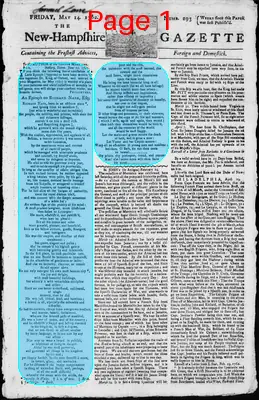
Letter to Editor
May 14, 1762
The New Hampshire Gazette
Portsmouth, Rockingham County, New Hampshire
What is this article about?
A letter from Philalethes in Sidbury, Devon, dated June 22, 1761, submits a literal English translation of a Latin epitaph on Richard Nash, Esq., the renowned Master of Ceremonies of Bath, attributed to Dr. King of Oxford, for possible publication in the London Magazine.
Clipping
OCR Quality
98%
Excellent
Full Text
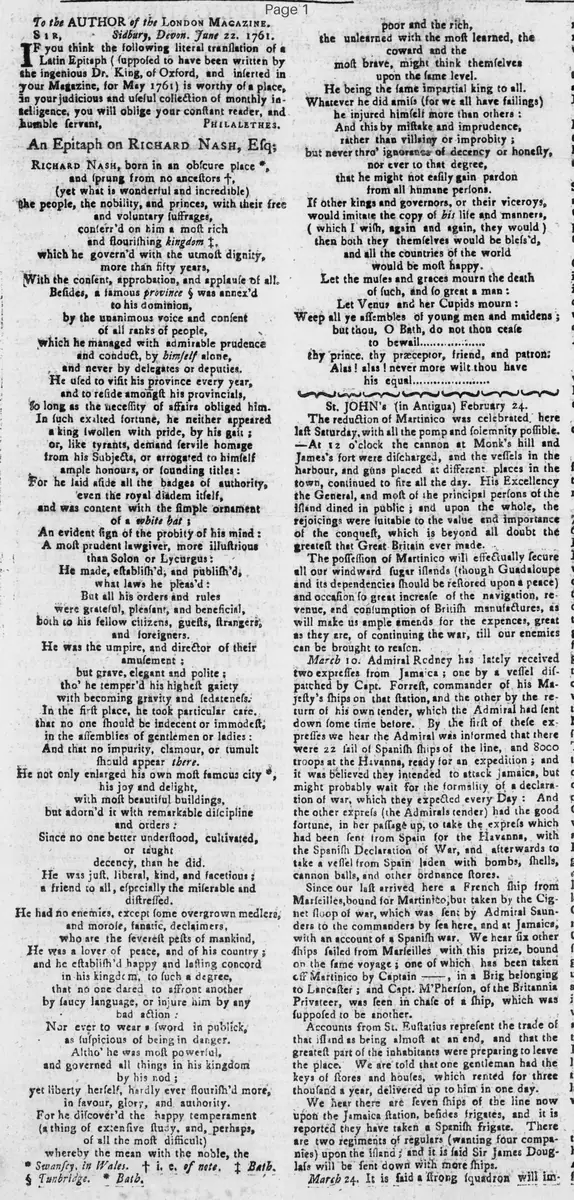
To the Author of the London Magazine.
SIR,
Sidbury, Devon, June 22, 1761.
If you think the following literal translation of a Latin Epitaph (supposed to have been written by the ingenious Dr. King, of Oxford, and inserted in your Magazine, for May 1761) is worthy of a place in your judicious and useful collection of monthly intelligence, you will oblige your constant reader, and humble servant,
PHILALETHES.
An Epitaph on Richard Nash, Esq;
Richard Nash, born in an obscure place *,
and sprung from no ancestors.
(yet what is wonderful and incredible)
the people, the nobility, and princes, with their free
and voluntary suffrages,
conferred on him a most rich
and flourishing kingdom †.
which he governed with the utmost dignity,
more than fifty years,
With the consent, approbation, and applause of all.
Besides, a famous province § was annexed
to his dominion,
by the unanimous voice and consent
of all ranks of people,
which he managed with admirable prudence
and conduct, by himself alone,
and never by delegates or deputies.
He used to visit his province every year,
and to reside amongst his provincials,
So long as the necessity of affairs obliged him.
In such exalted fortune, he neither appeared
a king swollen with pride, by his gait;
or, like tyrants, demand servile homage
from his Subjects, or arrogated to himself
ample honours, or sounding titles:
For he laid aside all the badges of authority,
even the royal diadem itself.
and was content with the simple ornament
of a white hat;
An evident sign of the probity of his mind:
A most prudent lawgiver, more illustrious
than Solon or Lycurgus:
He made, established, and published,
what laws he pleased:
But all his orders and rules
were grateful, pleasant, and beneficial,
both to his fellow citizens, guests, strangers,
and foreigners.
He was the umpire, and director of their
amusement;
but grave, elegant and polite:
though he tempered his highest gaiety
with becoming gravity and sedateness.
In the first place, he took particular care,
that no one should be indecent or immodest;
in the assemblies of gentlemen or ladies:
And that no impurity, clamour, or tumult
should appear there.
He not only enlarged his own most famous city
his joy and delight,
with most beautiful buildings,
but adorned it with remarkable discipline
and orders:
Since no one better understood, cultivated,
or taught
decency, than he did.
He was just, liberal, kind, and facetious;
a friend to all, especially the miserable and
distressed.
He had no enemies, except some overgrown meddlers,
and morose, fanatic, declaimers.
who are the ever pets of mankind,
He was a lover of peace, and of his country;
and he established happy and lasting concord
in his kingdom, to such a degree,
that no one dared to affront another
by saucy language, or injure him by any
bad action:
Nor ever to wear a sword in publick,
as suspicious of being in danger.
Altho' he was most powerful,
and governed all things in his kingdom
by his nod;
yet liberty herself, hardly ever flourished more,
in favour, glory, and authority.
For he discovered the happy temperament
(a thing of extensive study, and, perhaps,
of all the most difficult)
whereby the mean with the noble, the
poor and the rich.
the unlearned with the most learned, the
coward and the
most brave, might think themselves
upon the same level.
He being the same impartial king to all.
Whatever he did amiss (for we all have failings)
he injured himself more than others:
And this by mistake and imprudence,
rather than villainy or improbity;
but never through ignorance of decency or honesty.
nor ever to such degree.
that he might not easily gain pardon
from all humane persons.
If other kings and governors, or their viceroys.
would imitate the copy of his life and manners,
(which I wish, again and again, they would)
then both they themselves would be blessed,
and all the countries of the world
would be most happy.
Let the Muses and Graces mourn the death
of such, and so great a man:
Let Venus and her Cupids mourn:
Weep all ye assemblies of young men and maidens;
but thou, O Bath, do not thou cease
to bewail.
thy prince, thy preceptor, friend, and patron:
Alas! alas! never more wilt thou have
his equal.
* Swansea, in Wales. † i.e. of state. ‡ Bath.
§ Tunbridge. * Bath.
SIR,
Sidbury, Devon, June 22, 1761.
If you think the following literal translation of a Latin Epitaph (supposed to have been written by the ingenious Dr. King, of Oxford, and inserted in your Magazine, for May 1761) is worthy of a place in your judicious and useful collection of monthly intelligence, you will oblige your constant reader, and humble servant,
PHILALETHES.
An Epitaph on Richard Nash, Esq;
Richard Nash, born in an obscure place *,
and sprung from no ancestors.
(yet what is wonderful and incredible)
the people, the nobility, and princes, with their free
and voluntary suffrages,
conferred on him a most rich
and flourishing kingdom †.
which he governed with the utmost dignity,
more than fifty years,
With the consent, approbation, and applause of all.
Besides, a famous province § was annexed
to his dominion,
by the unanimous voice and consent
of all ranks of people,
which he managed with admirable prudence
and conduct, by himself alone,
and never by delegates or deputies.
He used to visit his province every year,
and to reside amongst his provincials,
So long as the necessity of affairs obliged him.
In such exalted fortune, he neither appeared
a king swollen with pride, by his gait;
or, like tyrants, demand servile homage
from his Subjects, or arrogated to himself
ample honours, or sounding titles:
For he laid aside all the badges of authority,
even the royal diadem itself.
and was content with the simple ornament
of a white hat;
An evident sign of the probity of his mind:
A most prudent lawgiver, more illustrious
than Solon or Lycurgus:
He made, established, and published,
what laws he pleased:
But all his orders and rules
were grateful, pleasant, and beneficial,
both to his fellow citizens, guests, strangers,
and foreigners.
He was the umpire, and director of their
amusement;
but grave, elegant and polite:
though he tempered his highest gaiety
with becoming gravity and sedateness.
In the first place, he took particular care,
that no one should be indecent or immodest;
in the assemblies of gentlemen or ladies:
And that no impurity, clamour, or tumult
should appear there.
He not only enlarged his own most famous city
his joy and delight,
with most beautiful buildings,
but adorned it with remarkable discipline
and orders:
Since no one better understood, cultivated,
or taught
decency, than he did.
He was just, liberal, kind, and facetious;
a friend to all, especially the miserable and
distressed.
He had no enemies, except some overgrown meddlers,
and morose, fanatic, declaimers.
who are the ever pets of mankind,
He was a lover of peace, and of his country;
and he established happy and lasting concord
in his kingdom, to such a degree,
that no one dared to affront another
by saucy language, or injure him by any
bad action:
Nor ever to wear a sword in publick,
as suspicious of being in danger.
Altho' he was most powerful,
and governed all things in his kingdom
by his nod;
yet liberty herself, hardly ever flourished more,
in favour, glory, and authority.
For he discovered the happy temperament
(a thing of extensive study, and, perhaps,
of all the most difficult)
whereby the mean with the noble, the
poor and the rich.
the unlearned with the most learned, the
coward and the
most brave, might think themselves
upon the same level.
He being the same impartial king to all.
Whatever he did amiss (for we all have failings)
he injured himself more than others:
And this by mistake and imprudence,
rather than villainy or improbity;
but never through ignorance of decency or honesty.
nor ever to such degree.
that he might not easily gain pardon
from all humane persons.
If other kings and governors, or their viceroys.
would imitate the copy of his life and manners,
(which I wish, again and again, they would)
then both they themselves would be blessed,
and all the countries of the world
would be most happy.
Let the Muses and Graces mourn the death
of such, and so great a man:
Let Venus and her Cupids mourn:
Weep all ye assemblies of young men and maidens;
but thou, O Bath, do not thou cease
to bewail.
thy prince, thy preceptor, friend, and patron:
Alas! alas! never more wilt thou have
his equal.
* Swansea, in Wales. † i.e. of state. ‡ Bath.
§ Tunbridge. * Bath.
What sub-type of article is it?
Informative
Historical
Reflective
What themes does it cover?
Social Issues
Morality
What keywords are associated?
Richard Nash
Epitaph
Bath
Tunbridge
Translation
Dr King
Master Of Ceremonies
Social Harmony
What entities or persons were involved?
Philalethes
Author Of The London Magazine
Letter to Editor Details
Author
Philalethes
Recipient
Author Of The London Magazine
Main Argument
offers a literal translation of a latin epitaph on richard nash, esq., for publication, praising his dignified governance of bath society over fifty years.
Notable Details
Attributed To Dr. King Of Oxford
Footnotes: * Swansea In Wales; † I.E. Of State; ‡ Bath; § Tunbridge; * Bath
Compares Nash To Solon And Lycurgus
Emphasizes His Role In Promoting Decency, Liberty, And Concord