Thank you for visiting SNEWPapers!
Sign up free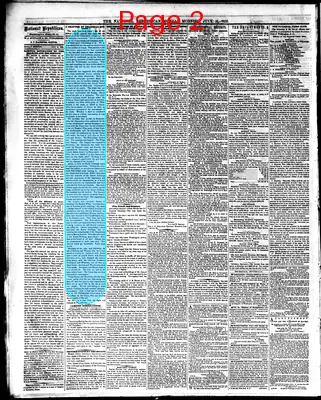
Story
July 16, 1866
The National Republican
Washington, District Of Columbia
What is this article about?
An editorial uses the Jonah and whale metaphor and historical examples from Massachusetts politics in 1851 and 1854 to argue against fears that the Union party will be swallowed by Democrats at the Philadelphia convention, asserting that progressive coalitions lead to triumph and truth prevailing.
Clipping

OCR Quality
95%
Excellent
Full Text
The tenderness with which some of our radical friends express their fears that the members of the Union party, who go into the Philadelphia convention, "will be swallowed up by the Copperheads and Southern rebels," is at times quite overcoming to us. We almost shudder at the idea and our mind reverts to the sad fate of Jonah. Then we turn to the Democratic papers and we find consolation in the fact that some of them express the same fear about their brethren, namely, that they will be swallowed up by the National Union party, members of which initiated and called the Philadelphia convention. With fear and trembling we have looked about to ascertain who will be the whale and who the Jonah.
Somebody has suggested that, although the whale swallowed Jonah, nobody ever heard of the whale afterwards. There are no reliable newspaper accounts about the whale story, but we recollect reading somewhere in biblical history that Jonah kicked so that it made the whale sick. Jonah acted as a sort of an emetic. The whale was not sea-sick nor dog-sick, but he was man-sick. We have experienced the feeling. Jonah played the part of a cathartic. We don't think a cathartic would damage either the Union or Democratic party just at this time. It matters very little which party at Philadelphia is the whale or which is Jonah. After the secession of Jonah we have no journalistic accounts of the movements of the whale. Whether it died or swallowed another man or a whole convention, or was sick swallowed, is not stated.
We recollect that in 1851, in Massachusetts, the Free-soilers were cautioned by the intense Abolitionists against forming a coalition with the Democrats for the overthrow of the old Hunker Whig party of that State. The Abolitionists told the Free-soilers that they would be swallowed up by the Democrats under the lead of such men as Bourwell and Banks. The Free-soilers heeded not. The coalition was formed. The Whigs were beaten. The bargain was completed. Bourwell, the Democrat, was made Governor by Free-soil votes, and Sumner, the conscientious Free-soiler, was sent to the United States Senate by Democratic votes! Who has ever heard of a live Democratic party in that State since? Nothing is left but a corporal's guard over the spot where rest the remains of the departed.
Again, in 1854, the Know Nothings began to organize in that State. Twenty-two thousand free soilers, or anti-slavery coalitionists, stood with folded arms looking on. One of two things had to be done. Either they must enter the councils of the Know Nothings and take possession of the machinery and anti-slaveryize the organization, or it would become a pro-slavery organization and elect a pro-slavery State government. The abolitionists again warned the free soilers against being swallowed up by the Know Nothings. The warning was not heeded. The free-soilers went in to the number of about twenty-two thousand in one week! The organization became anti-slaveryized. The bargain was executed. Henry J. Gardner, the Hunker Whig, "a temperance man of fourteen years' standing," was made to pledge himself to the radical doctrines of anti-slavery, and was elected Governor by Free-Soil votes, and Henry Wilson, the Free-soiler, was elected to the United States Senate by Hunker votes. This done, the work was accomplished. The Free-soilers then went to work and organized, within the Know Nothing councils, an anti-slavery organization called the "Know Somethings," which destroyed the Know Nothings and resulted in the organization of the Republican party in Massachusetts. Who has ever heard of the Know Nothing party since? Now, what is the lesson of all this? Simply that the progressives in each case won. Revolutions never go backward. Truth must prevail.
Standing by the side, and following the lead of Sumner and Wilson, who never bargained or traded, we coalesced with Democrats in 1851-52, joined forces with Banks, Bourwell, & Co., and whipped the ancient Whig party, with the Choates, Everetts, Winthrops, and Websters out of their political boots. Sumner and Wilson won most of the spoils. Boutwell and Banks came in for a second cut. The four are now in the same radical boat. The Union has not been destroyed in consequence.
When Banks and Boutwell left the Democratic party, they did not take along with them all that was pure in that organization. There are as good fish in the sea as were ever caught. We are now willing to make another coalition for high national purposes, if necessary. And to that end we welcome men to the Philadelphia Convention from every State in the Union, who can endorse the principles of the call. As there is a just God, the right will triumph at Philadelphia.
Somebody has suggested that, although the whale swallowed Jonah, nobody ever heard of the whale afterwards. There are no reliable newspaper accounts about the whale story, but we recollect reading somewhere in biblical history that Jonah kicked so that it made the whale sick. Jonah acted as a sort of an emetic. The whale was not sea-sick nor dog-sick, but he was man-sick. We have experienced the feeling. Jonah played the part of a cathartic. We don't think a cathartic would damage either the Union or Democratic party just at this time. It matters very little which party at Philadelphia is the whale or which is Jonah. After the secession of Jonah we have no journalistic accounts of the movements of the whale. Whether it died or swallowed another man or a whole convention, or was sick swallowed, is not stated.
We recollect that in 1851, in Massachusetts, the Free-soilers were cautioned by the intense Abolitionists against forming a coalition with the Democrats for the overthrow of the old Hunker Whig party of that State. The Abolitionists told the Free-soilers that they would be swallowed up by the Democrats under the lead of such men as Bourwell and Banks. The Free-soilers heeded not. The coalition was formed. The Whigs were beaten. The bargain was completed. Bourwell, the Democrat, was made Governor by Free-soil votes, and Sumner, the conscientious Free-soiler, was sent to the United States Senate by Democratic votes! Who has ever heard of a live Democratic party in that State since? Nothing is left but a corporal's guard over the spot where rest the remains of the departed.
Again, in 1854, the Know Nothings began to organize in that State. Twenty-two thousand free soilers, or anti-slavery coalitionists, stood with folded arms looking on. One of two things had to be done. Either they must enter the councils of the Know Nothings and take possession of the machinery and anti-slaveryize the organization, or it would become a pro-slavery organization and elect a pro-slavery State government. The abolitionists again warned the free soilers against being swallowed up by the Know Nothings. The warning was not heeded. The free-soilers went in to the number of about twenty-two thousand in one week! The organization became anti-slaveryized. The bargain was executed. Henry J. Gardner, the Hunker Whig, "a temperance man of fourteen years' standing," was made to pledge himself to the radical doctrines of anti-slavery, and was elected Governor by Free-Soil votes, and Henry Wilson, the Free-soiler, was elected to the United States Senate by Hunker votes. This done, the work was accomplished. The Free-soilers then went to work and organized, within the Know Nothing councils, an anti-slavery organization called the "Know Somethings," which destroyed the Know Nothings and resulted in the organization of the Republican party in Massachusetts. Who has ever heard of the Know Nothing party since? Now, what is the lesson of all this? Simply that the progressives in each case won. Revolutions never go backward. Truth must prevail.
Standing by the side, and following the lead of Sumner and Wilson, who never bargained or traded, we coalesced with Democrats in 1851-52, joined forces with Banks, Bourwell, & Co., and whipped the ancient Whig party, with the Choates, Everetts, Winthrops, and Websters out of their political boots. Sumner and Wilson won most of the spoils. Boutwell and Banks came in for a second cut. The four are now in the same radical boat. The Union has not been destroyed in consequence.
When Banks and Boutwell left the Democratic party, they did not take along with them all that was pure in that organization. There are as good fish in the sea as were ever caught. We are now willing to make another coalition for high national purposes, if necessary. And to that end we welcome men to the Philadelphia Convention from every State in the Union, who can endorse the principles of the call. As there is a just God, the right will triumph at Philadelphia.
What sub-type of article is it?
Historical Event
What themes does it cover?
Triumph
Moral Virtue
What keywords are associated?
Political Coalition
Philadelphia Convention
Massachusetts Politics
Union Party
Democratic Party
Anti Slavery
Free Soilers
Know Nothings
What entities or persons were involved?
Jonah
Bourwell
Banks
Sumner
Henry J. Gardner
Henry Wilson
Choates
Everetts
Winthrops
Websters
Where did it happen?
Philadelphia, Massachusetts
Story Details
Key Persons
Jonah
Bourwell
Banks
Sumner
Henry J. Gardner
Henry Wilson
Choates
Everetts
Winthrops
Websters
Location
Philadelphia, Massachusetts
Event Date
1851, 1854
Story Details
Editorial argues using Jonah-whale metaphor and Massachusetts coalitions in 1851-1854 that Union-Democratic alliance at Philadelphia convention will lead to progressive victory without one party swallowing the other, as truth prevails in political revolutions.