Thank you for visiting SNEWPapers!
Sign up free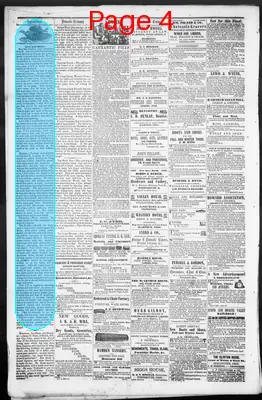
Story
January 14, 1858
M'arthur Democrat
Mcarthur, Vinton County, Ohio
What is this article about?
A correspondent shares 16 years of experience on caring for cows around calving, feeding with roots and corn meal, proper milking and churning techniques, and making high-quality butter for market success, averaging $60 per cow this season.
Clipping

OCR Quality
95%
Excellent
Full Text
AGRICULTURAL.
Cows and Butter,
In a late number, your correspondent, B., asks for a detailed statement as to the feeding of cows, and making butter in autumn and winter. Now, if B. can gather anything of value to himself from my statement of the mode we have been practising for some sixteen years, I shall be repaid for my trouble in offering it.
I will begin with the care of cows about calving time. For several days before this period, I feed ruta bagas or turnips, if I have them; if not a little corn meal will answer, to keep the cow in about the same condition she would be on grass. After calving, I give warm slop for drink for the first three days: this is made by scalding a little wheat bran; after that I let her have cold water to drink: I don't give much strong food for a week or two, for fear the udder will swell; in that case, I milk all I can get, first, and let the calf suck afterward. In cold weather, I stable the cows at night, and most of the day: I let them out to water at noon, and they have free access to salt, and are curried every morning.
As to feed, I consider there is nothing better than sweet corn meal and good hay; but I would here say, that I am a firm believer in raising roots for cows; if fed judiciously, cows will milk quite as well, and the cost will be much less, and the quantity of the butter not be injured. In feeding roots to milch cows a little corn meal should be fed with them, and they should be fed directly after milking, as the smell of the roots is then destroyed.
MILKING.--Perhaps more depends on this than B. is aware of; the time should be equally divided; the udder and teats, if dirty, should be washed with warm water, and wiped dry. I never allow anybody to go to milk without first washing the hands. We milk fast, and permit no talking while at it: I don't allow the fingers to be put into the milk to moisten the teats: it is an unclean practice. We strain through a fine wire strainer, and put about five quarts in a pan; these are tin, and they are kept bright and scalded frequently. The temperature of the room where the milk is kept should be from 55 to 65 deg. Fahrenheit; there should be no cooking done where milk is kept; there should not be left more than three milkings stand at one time, as the cream gets bitter. Should the cream not rise fast enough, about a gill of sour milk to each pan, when strained, will help it. The cream should be stirred every day, and the oldest should not be over a week.
CHURNING,--When churned, the cream should be of the temperature of sixty-two degrees.
The Butter.--Should the butter need a higher color, or more grass-like flavor, a few yellow carrots, pared, grated, and boiled in new milk, strained, and the liquor put in the churn, with the cream, will do it. The churn butter-worker, scale, &c., should be kept bright and clean and scalded before and after using, and should be thoroughly dried before being put away for future use. Every particle of butter-milk should be taken from the butter before the salt is added: the best quality of salt should be used, and this should be thoroughly worked in, or the butter will be streaked. After the butter is put into pounds and printed, the cloths should be put on: they should be of fine white muslin and kept white, and should be put in salt and water, and wrung dry before using; the butter may then be put in the tub, which should be clean and sweet.
Now, if B. is regular in attending market, and will follow the above directions, he will soon find customers for his butter at tip-top market price. I would here add that B. should see to the milking of the cows himself and his wife should take charge of it after it is strained; for herein lies the secret of success--and not trust to careless hired help, as this branch of farming will pay if rightly attended to. I find, by reference to my accounts, that my cows have averaged a little over sixty dollars each, thus far, the present season, and the season has yet four months to run.--Correspondent, Germantown Telegraph.
Cows and Butter,
In a late number, your correspondent, B., asks for a detailed statement as to the feeding of cows, and making butter in autumn and winter. Now, if B. can gather anything of value to himself from my statement of the mode we have been practising for some sixteen years, I shall be repaid for my trouble in offering it.
I will begin with the care of cows about calving time. For several days before this period, I feed ruta bagas or turnips, if I have them; if not a little corn meal will answer, to keep the cow in about the same condition she would be on grass. After calving, I give warm slop for drink for the first three days: this is made by scalding a little wheat bran; after that I let her have cold water to drink: I don't give much strong food for a week or two, for fear the udder will swell; in that case, I milk all I can get, first, and let the calf suck afterward. In cold weather, I stable the cows at night, and most of the day: I let them out to water at noon, and they have free access to salt, and are curried every morning.
As to feed, I consider there is nothing better than sweet corn meal and good hay; but I would here say, that I am a firm believer in raising roots for cows; if fed judiciously, cows will milk quite as well, and the cost will be much less, and the quantity of the butter not be injured. In feeding roots to milch cows a little corn meal should be fed with them, and they should be fed directly after milking, as the smell of the roots is then destroyed.
MILKING.--Perhaps more depends on this than B. is aware of; the time should be equally divided; the udder and teats, if dirty, should be washed with warm water, and wiped dry. I never allow anybody to go to milk without first washing the hands. We milk fast, and permit no talking while at it: I don't allow the fingers to be put into the milk to moisten the teats: it is an unclean practice. We strain through a fine wire strainer, and put about five quarts in a pan; these are tin, and they are kept bright and scalded frequently. The temperature of the room where the milk is kept should be from 55 to 65 deg. Fahrenheit; there should be no cooking done where milk is kept; there should not be left more than three milkings stand at one time, as the cream gets bitter. Should the cream not rise fast enough, about a gill of sour milk to each pan, when strained, will help it. The cream should be stirred every day, and the oldest should not be over a week.
CHURNING,--When churned, the cream should be of the temperature of sixty-two degrees.
The Butter.--Should the butter need a higher color, or more grass-like flavor, a few yellow carrots, pared, grated, and boiled in new milk, strained, and the liquor put in the churn, with the cream, will do it. The churn butter-worker, scale, &c., should be kept bright and clean and scalded before and after using, and should be thoroughly dried before being put away for future use. Every particle of butter-milk should be taken from the butter before the salt is added: the best quality of salt should be used, and this should be thoroughly worked in, or the butter will be streaked. After the butter is put into pounds and printed, the cloths should be put on: they should be of fine white muslin and kept white, and should be put in salt and water, and wrung dry before using; the butter may then be put in the tub, which should be clean and sweet.
Now, if B. is regular in attending market, and will follow the above directions, he will soon find customers for his butter at tip-top market price. I would here add that B. should see to the milking of the cows himself and his wife should take charge of it after it is strained; for herein lies the secret of success--and not trust to careless hired help, as this branch of farming will pay if rightly attended to. I find, by reference to my accounts, that my cows have averaged a little over sixty dollars each, thus far, the present season, and the season has yet four months to run.--Correspondent, Germantown Telegraph.
What sub-type of article is it?
Agricultural Guide
Practical Advice
What keywords are associated?
Cow Feeding
Butter Making
Milking Techniques
Churning Process
Dairy Farming
What entities or persons were involved?
B.
Where did it happen?
Germantown
Story Details
Key Persons
B.
Location
Germantown
Event Date
Present Season
Story Details
Correspondent details 16 years of practices for cow care around calving, feeding with roots, corn meal, hay; milking hygiene and techniques; cream management; churning at 62 degrees; butter coloring with carrots, salting, and packaging for market, emphasizing personal oversight for success averaging over $60 per cow.