Thank you for visiting SNEWPapers!
Sign up free
The Richmond Palladium And Sun Telegram
Richmond, Wayne County, Indiana
What is this article about?
In New York on Nov. 15, striking garment workers began picketing 3,000 shops. Union claims 100% suspension; manufacturers say over 40% efficient workers stayed. Some negotiations started; association predicts 60% normal operations soon, defending piece work and 49-hour week for lower prices.
Clipping
OCR Quality
Full Text
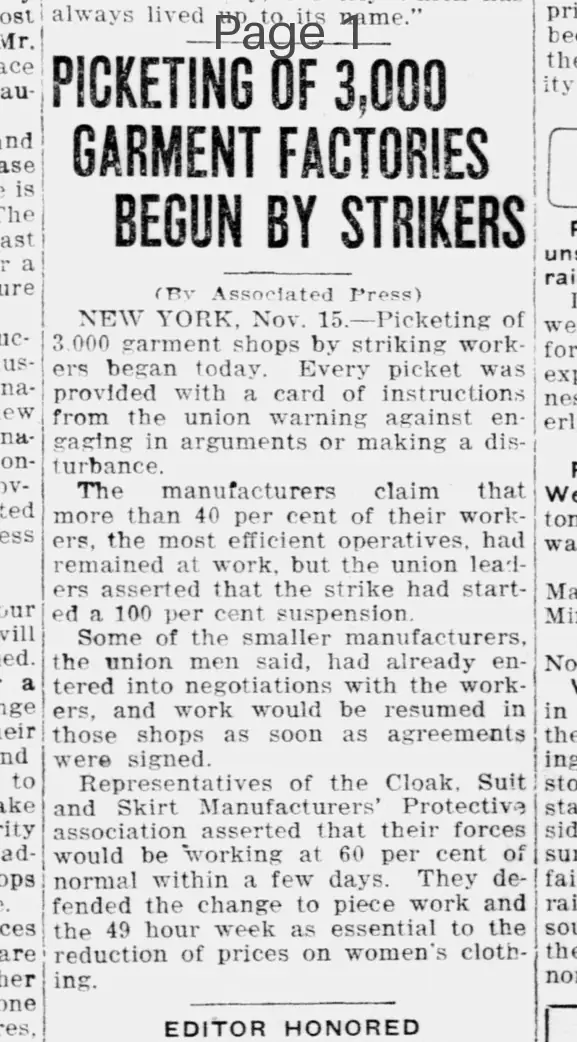
GARMENT FACTORIES
BEGUN BY STRIKERS
(By Associated Press)
NEW YORK, Nov. 15—Picketing of 3,000 garment shops by striking workers began today. Every picket was provided with a card of instructions from the union warning against engaging in arguments or making a disturbance.
The manufacturers claim that more than 40 per cent of their workers, the most efficient operatives, had remained at work, but the union leaders asserted that the strike had started a 100 per cent suspension.
Some of the smaller manufacturers, the union men said, had already entered into negotiations with the workers, and work would be resumed in those shops as soon as agreements were signed.
Representatives of the Cloak, Suit and Skirt Manufacturers' Protective association asserted that their forces would be working at 60 per cent of normal within a few days. They defended the change to piece work and the 49 hour week as essential to the reduction of prices on women's clothing.
What sub-type of article is it?
What keywords are associated?
Where did it happen?
Domestic News Details
Primary Location
New York
Event Date
Nov. 15
Outcome
some smaller manufacturers entered into negotiations with workers, and work would resume in those shops as soon as agreements were signed. representatives of the cloak, suit and skirt manufacturers' protective association asserted that their forces would be working at 60 per cent of normal within a few days.
Event Details
Picketing of 3,000 garment shops by striking workers began today. Every picket was provided with a card of instructions from the union warning against engaging in arguments or making a disturbance. The manufacturers claim that more than 40 per cent of their workers, the most efficient operatives, had remained at work, but the union leaders asserted that the strike had started a 100 per cent suspension. They defended the change to piece work and the 49 hour week as essential to the reduction of prices on women's clothing.