Thank you for visiting SNEWPapers!
Sign up free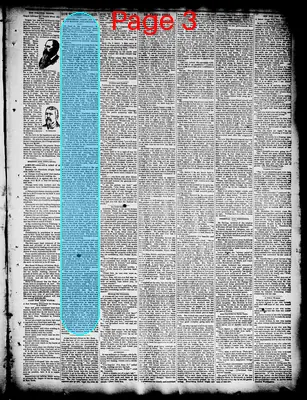
Story
July 17, 1890
The Wahpeton Times
Wahpeton, Richland County, North Dakota
What is this article about?
Edwin Checkley, a Brooklyn physical education teacher, argues that teaching children proper posture and costal breathing from early age prevents spinal issues and promotes lifelong health, criticizing ineffective calisthenics and advocating mindful body carriage over strenuous exercises.
Clipping

OCR Quality
98%
Excellent
Full Text
HOW TO TRAIN CHILDREN
BY BREATHING RIGHT HE CAN HAVE HEALTH AND STRENGTH
Little Good in the Gymnasiums - To Breathe Correctly Means an Erect Body and Graceful Carriage - Every Boy May Reach a Green Old Age.
Edwin Checkley, a teacher of physical education in Brooklyn, N. Y., has some new ideas which he has given to the public in regard to the physical training of children.
"The present system is wrong from beginning to end," he said to a reporter. "Pick up a 6 months' old infant," he added, "hold him in an unstrained upright position, and you will find that his back is broad and flat and that his spine is perfectly straight. As soon as the child begins to walk the spine begins to curve. Why? The weight of his abdomen causes the lower part of his back - the 'hollow of his back,' so called - to sink forward and sag down. There is error number one. Subsequent physical training takes no notice of it.
"You will find, too, that an infant in arms has the power, while sitting bolt upright, of putting his foot, or at least a part of it, in his mouth. This is because his hip joint is perfectly free and flexible. He loses this flexibility almost from the moment he begins to walk. The ordinary system of athletic or calisthenic training takes no notice of this loss.
"Now, I claim that above all else a child should be taught how to stand and how to breathe. Next he should be instructed as to the proper way of using every muscle and joint. Teach him those things and he will be a graceful healthy strong man. Neglect them and while he may become temporarily strong his power is neither lasting nor conducive to long life and vigor.
"Nothing is more important than to teach children the general principles of right development. It is a mere make-shift to bring forward calisthenics. Only a small minority of the children in classes for physical training give any vigor or meaning to the few insignificant movements of the arms. Most of the boys and almost all of the girls make merely superficial movements, with no sense of the meaning and no feeling of exhilaration. If anything has been said to the children about breathing no effect is visible. If anything has been said about the carriage of the body the instruction has been confined to an injunction to 'keep back the shoulders.'
"In a nervous effort to obey the latter injunction children are often found with hollowed backs and shoulder blades driven in against the spine. When the shoulders are violently and persistently thrown back the shoulder blades almost meet. They press on the spine and jam the upper part of it forward. This effect is simply unavoidable.
"If a child is sent to school at the age of 5 or 6 the teacher should watch him at his desk to make sure that he maintains an erect position. It will be found that if the head is kept properly held erect the chin is bound to draw up the breast bone. By holding the body erect and straight the child will find it easy to breathe in the costal way - that is, with the upper part of the chest. This, I claim, is the proper way to breathe. Of course it is not easy to learn all this at once, but a careful teacher, by taking pains, could soon bring her class into such a condition that they would find it easier to stand, walk, and sit right than wrong.
"It is not necessary to spend any special half hour a day in teaching these things. The instructor who is with children all the time is the one to keep them standing or sitting properly. 'Folding the arms,' the present attitude of respectful attention, is one that cramps the chest and the breathing apparatus. It should never be practiced. Let the teacher instruct her children to keep the upper point of the forehead and the most prominent part of the chest always uplifted, as if trying to push up through the ceiling. A word now and again will soon inculcate the right sort of carriage. Let all bending forward be done from the hip joint - not from the waist. The backbone need not and should not be bent in stooping to pick up anything.
"Instead of wasting time over rods and wands, teachers should make the children learn how to hold their bodies and how to move the shoulders, hips, and other joints properly in the ordinary business of life. Children can get little good from what they learn mechanically. The youngster's interest must be aroused. Teach him that dumbbells, but the knowledge he acquires in the carriage and deportment of his body, will make him agile and strong, and then his physical education will amount to something. Physical education is properly accomplished only through the mind.
"The mere acquirement of muscular tissue is not of so much importance as a good sheath of sound healthy agile bone covering. By that I mean elastic supple tendons and muscles working in harmony, directed by a well regulated mind. This is what children need. The shoulders should not be strained back of the hip joint. These two joints should be on the same perpendicular line. The chest must have prominence on its own account, and the shoulders when held back far enough to give the chest free development find a natural and comfortable center. I am no believer in the theory of extensive destruction in tissues and hurried rebuilding of them to secure health. Such training is abnormal. The cat, the horse, dog, tiger, and other lower animals keep their strength for the most part with light exercise. The tendency of hard exercise is hard muscles, and hard muscles are bad. It is in the conservation of energy, and not in the prodigal dissipation of energy, that the greatest strength and endurance of the body will always lie. Our bodies should remain firm but pliant, and in most parts soft. There is no reason why any of us should become inactive before our 80th birthday.
BY BREATHING RIGHT HE CAN HAVE HEALTH AND STRENGTH
Little Good in the Gymnasiums - To Breathe Correctly Means an Erect Body and Graceful Carriage - Every Boy May Reach a Green Old Age.
Edwin Checkley, a teacher of physical education in Brooklyn, N. Y., has some new ideas which he has given to the public in regard to the physical training of children.
"The present system is wrong from beginning to end," he said to a reporter. "Pick up a 6 months' old infant," he added, "hold him in an unstrained upright position, and you will find that his back is broad and flat and that his spine is perfectly straight. As soon as the child begins to walk the spine begins to curve. Why? The weight of his abdomen causes the lower part of his back - the 'hollow of his back,' so called - to sink forward and sag down. There is error number one. Subsequent physical training takes no notice of it.
"You will find, too, that an infant in arms has the power, while sitting bolt upright, of putting his foot, or at least a part of it, in his mouth. This is because his hip joint is perfectly free and flexible. He loses this flexibility almost from the moment he begins to walk. The ordinary system of athletic or calisthenic training takes no notice of this loss.
"Now, I claim that above all else a child should be taught how to stand and how to breathe. Next he should be instructed as to the proper way of using every muscle and joint. Teach him those things and he will be a graceful healthy strong man. Neglect them and while he may become temporarily strong his power is neither lasting nor conducive to long life and vigor.
"Nothing is more important than to teach children the general principles of right development. It is a mere make-shift to bring forward calisthenics. Only a small minority of the children in classes for physical training give any vigor or meaning to the few insignificant movements of the arms. Most of the boys and almost all of the girls make merely superficial movements, with no sense of the meaning and no feeling of exhilaration. If anything has been said to the children about breathing no effect is visible. If anything has been said about the carriage of the body the instruction has been confined to an injunction to 'keep back the shoulders.'
"In a nervous effort to obey the latter injunction children are often found with hollowed backs and shoulder blades driven in against the spine. When the shoulders are violently and persistently thrown back the shoulder blades almost meet. They press on the spine and jam the upper part of it forward. This effect is simply unavoidable.
"If a child is sent to school at the age of 5 or 6 the teacher should watch him at his desk to make sure that he maintains an erect position. It will be found that if the head is kept properly held erect the chin is bound to draw up the breast bone. By holding the body erect and straight the child will find it easy to breathe in the costal way - that is, with the upper part of the chest. This, I claim, is the proper way to breathe. Of course it is not easy to learn all this at once, but a careful teacher, by taking pains, could soon bring her class into such a condition that they would find it easier to stand, walk, and sit right than wrong.
"It is not necessary to spend any special half hour a day in teaching these things. The instructor who is with children all the time is the one to keep them standing or sitting properly. 'Folding the arms,' the present attitude of respectful attention, is one that cramps the chest and the breathing apparatus. It should never be practiced. Let the teacher instruct her children to keep the upper point of the forehead and the most prominent part of the chest always uplifted, as if trying to push up through the ceiling. A word now and again will soon inculcate the right sort of carriage. Let all bending forward be done from the hip joint - not from the waist. The backbone need not and should not be bent in stooping to pick up anything.
"Instead of wasting time over rods and wands, teachers should make the children learn how to hold their bodies and how to move the shoulders, hips, and other joints properly in the ordinary business of life. Children can get little good from what they learn mechanically. The youngster's interest must be aroused. Teach him that dumbbells, but the knowledge he acquires in the carriage and deportment of his body, will make him agile and strong, and then his physical education will amount to something. Physical education is properly accomplished only through the mind.
"The mere acquirement of muscular tissue is not of so much importance as a good sheath of sound healthy agile bone covering. By that I mean elastic supple tendons and muscles working in harmony, directed by a well regulated mind. This is what children need. The shoulders should not be strained back of the hip joint. These two joints should be on the same perpendicular line. The chest must have prominence on its own account, and the shoulders when held back far enough to give the chest free development find a natural and comfortable center. I am no believer in the theory of extensive destruction in tissues and hurried rebuilding of them to secure health. Such training is abnormal. The cat, the horse, dog, tiger, and other lower animals keep their strength for the most part with light exercise. The tendency of hard exercise is hard muscles, and hard muscles are bad. It is in the conservation of energy, and not in the prodigal dissipation of energy, that the greatest strength and endurance of the body will always lie. Our bodies should remain firm but pliant, and in most parts soft. There is no reason why any of us should become inactive before our 80th birthday.
What sub-type of article is it?
Curiosity
What themes does it cover?
Moral Virtue
What keywords are associated?
Child Training
Physical Education
Breathing
Posture
Health
Strength
What entities or persons were involved?
Edwin Checkley
Where did it happen?
Brooklyn, N. Y.
Story Details
Key Persons
Edwin Checkley
Location
Brooklyn, N. Y.
Story Details
Edwin Checkley criticizes current physical training systems for children, emphasizing teaching proper standing, breathing, and muscle use from infancy to prevent spinal curvature and loss of flexibility, promoting lifelong health over mechanical exercises.