Thank you for visiting SNEWPapers!
Sign up free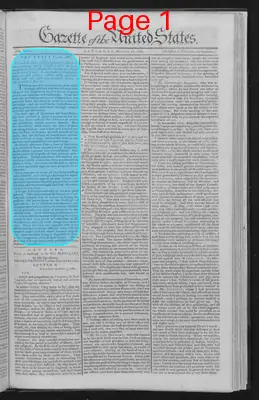
Literary
October 17, 1789
Gazette Of The United States
New York, New York County, New York
What is this article about?
Philosophical essay exploring how human focus on avoiding evil shapes perceptions of religion and government, contrasting savage and civilized views of the Deity as stern versus benevolent, and how advancing society elevates reason over superstition.
Clipping
OCR Quality
98%
Excellent
Full Text
[No. LIV.]
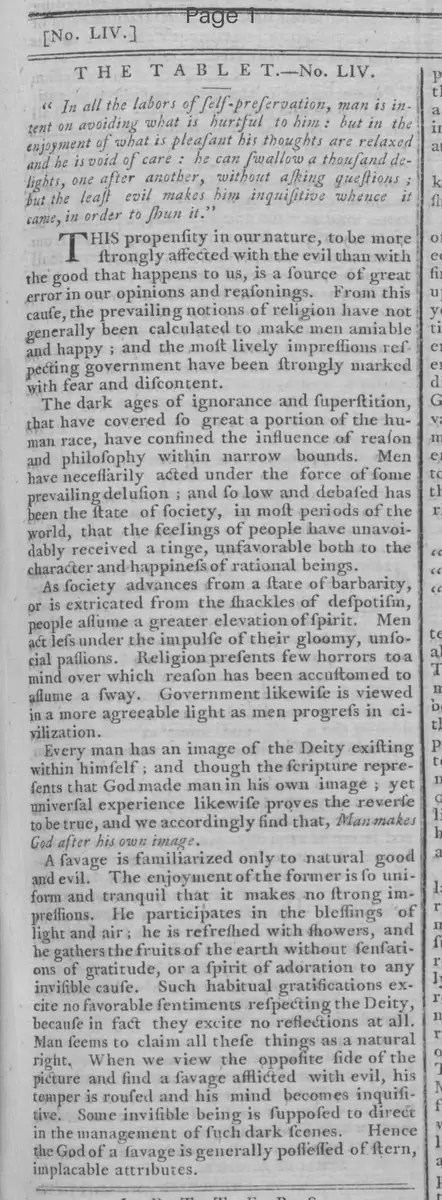
THE TABLET.-No. LIV.
"In all the labors of self-preservation, man is intent on avoiding what is hurtful to him: but in the enjoyment of what is pleasant his thoughts are relaxed and he is void of care: he can swallow a thousand delights, one after another, without asking questions; but the least evil makes him inquisitive whence it came, in order to shun it."
This point in human nature, more than with the good that happens to us, is a source of great error in our opinions and reasonings. From this cause, the prevailing notions of religion have not generally been calculated to make men amiable and happy; and the most lively impressions respecting government have been strongly marked with fear and discontent.
The dark ages of ignorance and superstition, that have covered so great a portion of the human race, have confined the influence of reason and philosophy within narrow bounds. Men have necessarily acted under the force of some prevailing delusion; and so low and debased has been the state of society, in most periods of the world, that the feelings of people have unavoidably received a tinge, unfavorable both to the character and happiness of rational beings.
As society advances from a state of barbarity, or is extricated from the shackles of despotism, people assume a greater elevation of spirit. Men act less under the impulse of their gloomy, unsocial passions. Religion presents few horrors to a mind over which reason has been accustomed to assume a sway. Government likewise is viewed in a more agreeable light as men progress in civilization.
Every man has an image of the Deity existing within himself; and though the scripture represents that God made man in his own image; yet universal experience likewise proves the reverse to be true, and we accordingly find that, Man makes God after his own image.
A savage is familiarized only to natural good and evil. The enjoyment of the former is so uniform and tranquil that it makes no strong impressions. He participates in the blessings of light and air; he is refreshed with showers, and he gathers the fruits of the earth without sensations of gratitude, or a spirit of adoration to any invisible cause. Such habitual gratifications excite no favorable sentiments respecting the Deity, because in fact they excite no reflections at all. Man seems to claim all these things as a natural right.
When we view the opposite side of the picture and find a savage afflicted with evil, his temper is roused and his mind becomes inquisitive. Some invisible being is supposed to direct in the management of such dark scenes. Hence the God of a savage is generally possessed of stern, implacable attributes.
THE TABLET.-No. LIV.
"In all the labors of self-preservation, man is intent on avoiding what is hurtful to him: but in the enjoyment of what is pleasant his thoughts are relaxed and he is void of care: he can swallow a thousand delights, one after another, without asking questions; but the least evil makes him inquisitive whence it came, in order to shun it."
This point in human nature, more than with the good that happens to us, is a source of great error in our opinions and reasonings. From this cause, the prevailing notions of religion have not generally been calculated to make men amiable and happy; and the most lively impressions respecting government have been strongly marked with fear and discontent.
The dark ages of ignorance and superstition, that have covered so great a portion of the human race, have confined the influence of reason and philosophy within narrow bounds. Men have necessarily acted under the force of some prevailing delusion; and so low and debased has been the state of society, in most periods of the world, that the feelings of people have unavoidably received a tinge, unfavorable both to the character and happiness of rational beings.
As society advances from a state of barbarity, or is extricated from the shackles of despotism, people assume a greater elevation of spirit. Men act less under the impulse of their gloomy, unsocial passions. Religion presents few horrors to a mind over which reason has been accustomed to assume a sway. Government likewise is viewed in a more agreeable light as men progress in civilization.
Every man has an image of the Deity existing within himself; and though the scripture represents that God made man in his own image; yet universal experience likewise proves the reverse to be true, and we accordingly find that, Man makes God after his own image.
A savage is familiarized only to natural good and evil. The enjoyment of the former is so uniform and tranquil that it makes no strong impressions. He participates in the blessings of light and air; he is refreshed with showers, and he gathers the fruits of the earth without sensations of gratitude, or a spirit of adoration to any invisible cause. Such habitual gratifications excite no favorable sentiments respecting the Deity, because in fact they excite no reflections at all. Man seems to claim all these things as a natural right.
When we view the opposite side of the picture and find a savage afflicted with evil, his temper is roused and his mind becomes inquisitive. Some invisible being is supposed to direct in the management of such dark scenes. Hence the God of a savage is generally possessed of stern, implacable attributes.
What sub-type of article is it?
Essay
What themes does it cover?
Religious
Political
Moral Virtue
What keywords are associated?
Human Nature
Religion
Government
Savage
Civilization
Deity
Superstition
Reason
Literary Details
Title
The Tablet. No. Liv.
Key Lines
"In All The Labors Of Self Preservation, Man Is Intent On Avoiding What Is Hurtful To Him: But In The Enjoyment Of What Is Pleasant His Thoughts Are Relaxed And He Is Void Of Care: He Can Swallow A Thousand Delights, One After Another, Without Asking Questions; But The Least Evil Makes Him Inquisitive Whence It Came, In Order To Shun It."
Every Man Has An Image Of The Deity Existing Within Himself; And Though The Scripture Represents That God Made Man In His Own Image; Yet Universal Experience Likewise Proves The Reverse To Be True, And We Accordingly Find That, Man Makes God After His Own Image.
Hence The God Of A Savage Is Generally Possessed Of Stern, Implacable Attributes.