Thank you for visiting SNEWPapers!
Sign up free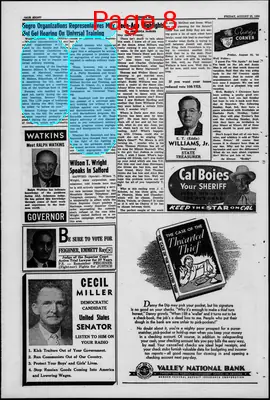
Arizona Sun
Phoenix, Maricopa County, Arizona
What is this article about?
Senate committee doubts hearing colored organizations on universal training bill, continuing 1948 hearings. Past witnesses like Randolph and Reynolds pushed anti-segregation clauses and civil disobedience threats; positions may have evolved with Korean War and desegregation efforts.
Clipping
OCR Quality
Full Text
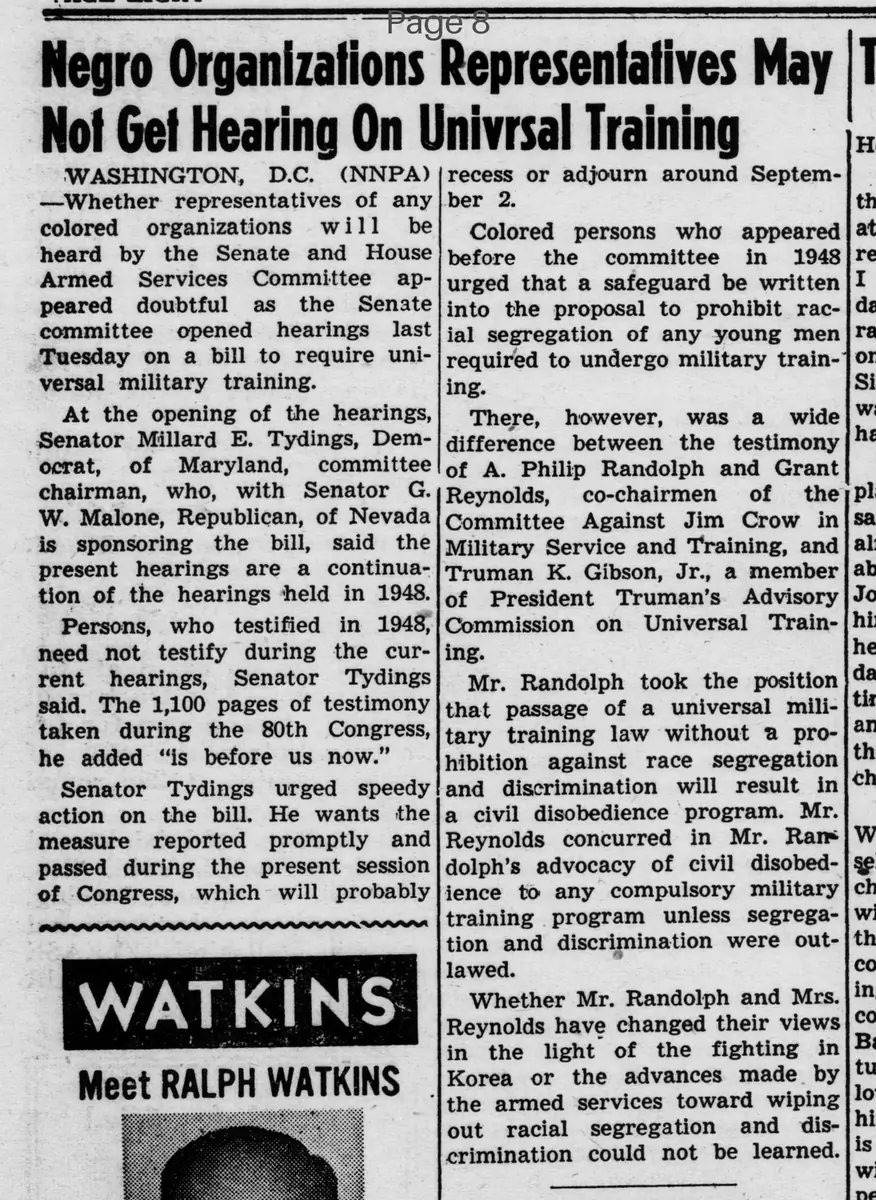
WASHINGTON, D.C. (NNPA)
Whether representatives of any colored organizations will be heard by the Senate and House Armed Services Committee appeared doubtful as the Senate committee opened hearings last Tuesday on a bill to require universal military training.
At the opening of the hearings, Senator Millard E. Tydings, Democrat, of Maryland, committee chairman, who, with Senator G. W. Malone, Republican, of Nevada is sponsoring the bill, said the present hearings are a continuation of the hearings held in 1948. Persons who testified in 1948 need not testify during the current hearings, Senator Tydings said. The 1,100 pages of testimony taken during the 80th Congress, he added "is before us now."
Senator Tydings urged speedy action on the bill. He wants the measure reported promptly and passed during the present session of Congress, which will probably recess or adjourn around September 2.
Colored persons who appeared before the committee in 1948 urged that a safeguard be written into the proposal to prohibit racial segregation of any young men required to undergo military training.
There, however, was a wide difference between the testimony of A. Philip Randolph and Grant Reynolds, co-chairmen of the Committee Against Jim Crow in Military Service and Training, and Truman K. Gibson, Jr., a member of President Truman's Advisory Commission on Universal Training.
Mr. Randolph took the position that passage of a universal military training law without a prohibition against race segregation and discrimination will result in a civil disobedience program. Mr. Reynolds concurred in Mr. Randolph's advocacy of civil disobedience to any compulsory military training program unless segregation and discrimination were outlawed.
Whether Mr. Randolph and Mr. Reynolds have changed their views in the light of the fighting in Korea or the advances made by the armed services toward wiping out racial segregation and discrimination could not be learned.
What sub-type of article is it?
What themes does it cover?
What keywords are associated?
What entities or persons were involved?
Where did it happen?
Story Details
Key Persons
Location
Washington, D.C.
Event Date
Last Tuesday; 1948; Present Session Around September 2
Story Details
Senate Armed Services Committee opens hearings on universal military training bill without plans to hear new representatives from colored organizations. Past testimony from 1948 includes calls for anti-segregation safeguards. Randolph and Reynolds advocated civil disobedience against segregation in training; Gibson's views differed. Current positions unclear amid Korean fighting and military desegregation progress.