Thank you for visiting SNEWPapers!
Sign up free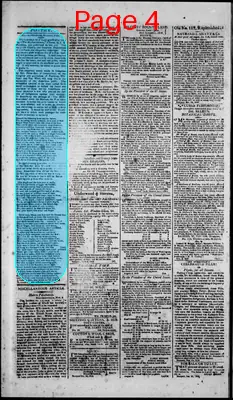
Literary
December 9, 1818
The Rhode Island Republican
Newport, Newport County, Rhode Island
What is this article about?
Review in Philadelphia Democratic Press praises J.K. Paulding's poem 'The Backwoodsman' for its American story, scenery, and patriotic sentiments. Quotes stanzas defending Paulding, Williams, Van Wart against Col. Tallmadge's accusations and denouncing shirkers in the War of 1812.
Clipping
OCR Quality
95%
Excellent
Full Text
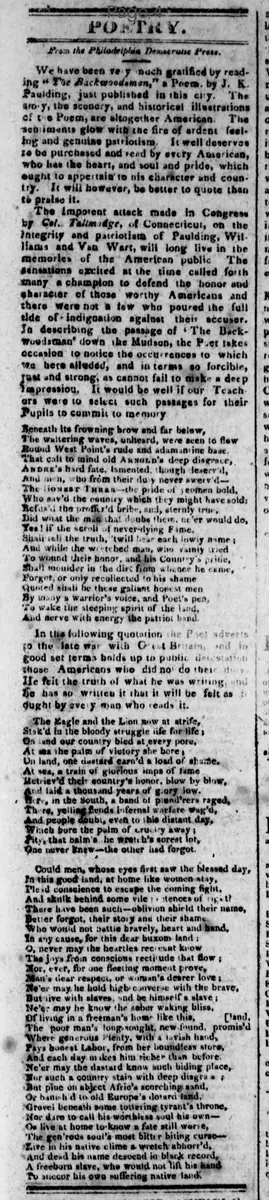
POETRY.
From the Philadelphia Democratic Press.
We have been very much gratified by reading "The Backwoodsman," a Poem, by J. K. Paulding, just published in this city. The story, the scenery, and historical illustrations of the Poem, are altogether American. The sentiments glow with one fire of ardent feeling and genuine patriotism. It well deserves to be purchased and read by every American, who has the heart, and soul and pride, which ought to appertain to his character and country. It will however, be better to quote than to praise it.
The important attack made in Congress by Col. Tallmadge, of Connecticut, on the integrity and patriotism of Paulding, Williams and Van Wart, will long live in the memories of the American public. The sensations excited at the time called forth many a champion to defend the honor and character of those worthy Americans and there were not a few who poured the full tide of indignation against their accuser.
In describing the passage of The Backwoodsman down the Hudson, the Poet takes occasion to notice the occurrences to which we here alluded, and in terms so forcible, flat and strong, as cannot fail to make a deep impression. It would be well if our Teachers were to select such passages for their Pupils to commit to memory.
Beneath its lowering brow and far below,
The wintry waves, unheard, were seen to flow
Round West Point's rude and adamantine base,
That call to mind old Arnold's deep disgrace,
Andre's hard fate, lamented, though deserved,
And men, who from their duty never swerved--
The honest Truman--the pride of seamen bold,
Who saved the country which they might have sold;
Refused the proffered bribe, and, sternly true,
Did what the man that doubts them ne'er would do.
Yes! if the scroll of never-dying Fame,
Shall tell the truth, 'twill bear each lowly name;
And while the wretched mad, who vainly tried
To wound their honor, and his Country's pride,
Shall moulder in the dirt from whence he came,
Forgot, or only recollected to his shame.
Quoted shall be these gallant honest men
By many a warrior's voice, and Poet's pen,
To wake the sleeping spirit of the land,
And nerve with energy the patriot band.
In the following quotation (the Poet adverts to the late war with Great Britain, and in good set terms holds up to public detestation those Americans who did not do their duty. He felt the truth of what he was writing, and he has so written it that it will be felt as it ought by every man who reads it.
The Eagle and the Lion now at strife,
Staked in the bloody struggle life for life;
On land our country bled at every pore,
At sea the palm of victory she bore,
On land, one dastard earned a load of shame.
At sea, a train of glorious imps of fame
Retrieved their country's honor, blow by blow,
And laid a thousand years of glory low.
Here, in the South, a band of plunderers raged,
There, yelling fiends infernal warfare waged,
And people doubt, even to the distant day,
Which bore the palm of victory away;
Pity, that balm's the wretch's sorest lot,
One never knew--the other had forgot.
Could men, whose eyes first saw the blessed day,
In this good land, at home like women stay,
Plead conscience to escape the coming fight,
And skulk behind some vile pretences of right?
There have been such--oblivion shield their name,
Better forgot, their story and their shame.
Who would not battle bravely, heart and hand,
In any cause, for this dear native land:
O, never may the heartless recreant know
The joys from conscious rectitude that flow;
Nor, ever, for one fleeting moment prove,
Man's clear respect, or woman's dearer love;
Ne'er may he hold high converse with the brave,
But live with slaves, and be himself a slave;
Ne'er may he know the sober waking bliss,
Of living in a freeman's home like this,
A land,
The poor man's long sought, new-found, promised
Where generous Plenty, with a lavish hand,
Pays honest Labor, from her boundless store,
And each day makes him richer than before.
Ne'er may the dastard know such blest abode,
Or such a country stain with deep disgrace;
But pine on abject Africa's scorching sand,
Or banished to old Europe's dotard land,
Grovel beneath some tottering tyrant's throne,
Nor dare to call his worthless soul his own--
Or live at home to know a fate still worse,
The generous soul's most bitter biting curse--
Live in his native clime a wretch abhorred,
And see his name descend in black record
A freeborn slave, who would not lift his hand
To succor his own suffering native land.
From the Philadelphia Democratic Press.
We have been very much gratified by reading "The Backwoodsman," a Poem, by J. K. Paulding, just published in this city. The story, the scenery, and historical illustrations of the Poem, are altogether American. The sentiments glow with one fire of ardent feeling and genuine patriotism. It well deserves to be purchased and read by every American, who has the heart, and soul and pride, which ought to appertain to his character and country. It will however, be better to quote than to praise it.
The important attack made in Congress by Col. Tallmadge, of Connecticut, on the integrity and patriotism of Paulding, Williams and Van Wart, will long live in the memories of the American public. The sensations excited at the time called forth many a champion to defend the honor and character of those worthy Americans and there were not a few who poured the full tide of indignation against their accuser.
In describing the passage of The Backwoodsman down the Hudson, the Poet takes occasion to notice the occurrences to which we here alluded, and in terms so forcible, flat and strong, as cannot fail to make a deep impression. It would be well if our Teachers were to select such passages for their Pupils to commit to memory.
Beneath its lowering brow and far below,
The wintry waves, unheard, were seen to flow
Round West Point's rude and adamantine base,
That call to mind old Arnold's deep disgrace,
Andre's hard fate, lamented, though deserved,
And men, who from their duty never swerved--
The honest Truman--the pride of seamen bold,
Who saved the country which they might have sold;
Refused the proffered bribe, and, sternly true,
Did what the man that doubts them ne'er would do.
Yes! if the scroll of never-dying Fame,
Shall tell the truth, 'twill bear each lowly name;
And while the wretched mad, who vainly tried
To wound their honor, and his Country's pride,
Shall moulder in the dirt from whence he came,
Forgot, or only recollected to his shame.
Quoted shall be these gallant honest men
By many a warrior's voice, and Poet's pen,
To wake the sleeping spirit of the land,
And nerve with energy the patriot band.
In the following quotation (the Poet adverts to the late war with Great Britain, and in good set terms holds up to public detestation those Americans who did not do their duty. He felt the truth of what he was writing, and he has so written it that it will be felt as it ought by every man who reads it.
The Eagle and the Lion now at strife,
Staked in the bloody struggle life for life;
On land our country bled at every pore,
At sea the palm of victory she bore,
On land, one dastard earned a load of shame.
At sea, a train of glorious imps of fame
Retrieved their country's honor, blow by blow,
And laid a thousand years of glory low.
Here, in the South, a band of plunderers raged,
There, yelling fiends infernal warfare waged,
And people doubt, even to the distant day,
Which bore the palm of victory away;
Pity, that balm's the wretch's sorest lot,
One never knew--the other had forgot.
Could men, whose eyes first saw the blessed day,
In this good land, at home like women stay,
Plead conscience to escape the coming fight,
And skulk behind some vile pretences of right?
There have been such--oblivion shield their name,
Better forgot, their story and their shame.
Who would not battle bravely, heart and hand,
In any cause, for this dear native land:
O, never may the heartless recreant know
The joys from conscious rectitude that flow;
Nor, ever, for one fleeting moment prove,
Man's clear respect, or woman's dearer love;
Ne'er may he hold high converse with the brave,
But live with slaves, and be himself a slave;
Ne'er may he know the sober waking bliss,
Of living in a freeman's home like this,
A land,
The poor man's long sought, new-found, promised
Where generous Plenty, with a lavish hand,
Pays honest Labor, from her boundless store,
And each day makes him richer than before.
Ne'er may the dastard know such blest abode,
Or such a country stain with deep disgrace;
But pine on abject Africa's scorching sand,
Or banished to old Europe's dotard land,
Grovel beneath some tottering tyrant's throne,
Nor dare to call his worthless soul his own--
Or live at home to know a fate still worse,
The generous soul's most bitter biting curse--
Live in his native clime a wretch abhorred,
And see his name descend in black record
A freeborn slave, who would not lift his hand
To succor his own suffering native land.
What sub-type of article is it?
Poem
Satire
What themes does it cover?
Patriotism
War Peace
Political
What keywords are associated?
Backwoodsman
Paulding
Patriotism
Arnold
Andre
Tallmadge
War Of 1812
American Heroes
Cowards
Hudson River
What entities or persons were involved?
J. K. Paulding
Literary Details
Title
The Backwoodsman
Author
J. K. Paulding
Subject
Defense Of American Patriots And Condemnation Of Cowards In The War Of 1812
Form / Style
Narrative Verse With Historical Allusions
Key Lines
Beneath Its Lowering Brow And Far Below,
The Wintry Waves, Unheard, Were Seen To Flow
Round West Point's Rude And Adamantine Base,
That Call To Mind Old Arnold's Deep Disgrace,
Andre's Hard Fate, Lamented, Though Deserved,
And Men, Who From Their Duty Never Swerved
The Honest Truman The Pride Of Seamen Bold,
Who Saved The Country Which They Might Have Sold;
Refused The Proffered Bribe, And, Sternly True,
Did What The Man That Doubts Them Ne'er Would Do.
Yes! If The Scroll Of Never Dying Fame,
Shall Tell The Truth, 'Twill Bear Each Lowly Name;
And While The Wretched Mad, Who Vainly Tried
To Wound Their Honor, And His Country's Pride,
Shall Moulder In The Dirt From Whence He Came,
Forgot, Or Only Recollected To His Shame.
Quoted Shall Be These Gallant Honest Men
By Many A Warrior's Voice, And Poet's Pen,
To Wake The Sleeping Spirit Of The Land,
And Nerve With Energy The Patriot Band.
The Eagle And The Lion Now At Strife,
Staked In The Bloody Struggle Life For Life;
On Land Our Country Bled At Every Pore,
At Sea The Palm Of Victory She Bore,
On Land, One Dastard Earned A Load Of Shame.
At Sea, A Train Of Glorious Imps Of Fame
Retrieved Their Country's Honor, Blow By Blow,
And Laid A Thousand Years Of Glory Low.
Here, In The South, A Band Of Plunderers Raged,
There, Yelling Fiends Infernal Warfare Waged,
And People Doubt, Even To The Distant Day,
Which Bore The Palm Of Victory Away;
Pity, That Balm's The Wretch's Sorest Lot,
One Never Knew The Other Had Forgot.
Could Men, Whose Eyes First Saw The Blessed Day,
In This Good Land, At Home Like Women Stay,
Plead Conscience To Escape The Coming Fight,
And Skulk Behind Some Vile Pretences Of Right?
There Have Been Such Oblivion Shield Their Name,
Better Forgot, Their Story And Their Shame.
Who Would Not Battle Bravely, Heart And Hand,
In Any Cause, For This Dear Native Land:
O, Never May The Heartless Recreant Know
The Joys From Conscious Rectitude That Flow;
Nor, Ever, For One Fleeting Moment Prove,
Man's Clear Respect, Or Woman's Dearer Love;
Ne'er May He Hold High Converse With The Brave,
But Live With Slaves, And Be Himself A Slave;
Ne'er May He Know The Sober Waking Bliss,
Of Living In A Freeman's Home Like This,
A Land,
The Poor Man's Long Sought, New Found, Promised
Where Generous Plenty, With A Lavish Hand,
Pays Honest Labor, From Her Boundless Store,
And Each Day Makes Him Richer Than Before.
Ne'er May The Dastard Know Such Blest Abode,
Or Such A Country Stain With Deep Disgrace;
But Pine On Abject Africa's Scorching Sand,
Or Banished To Old Europe's Dotard Land,
Grovel Beneath Some Tottering Tyrant's Throne,
Nor Dare To Call His Worthless Soul His Own
Or Live At Home To Know A Fate Still Worse,
The Generous Soul's Most Bitter Biting Curse
Live In His Native Clime A Wretch Abhorred,
And See His Name Descend In Black Record
A Freeborn Slave, Who Would Not Lift His Hand
To Succor His Own Suffering Native Land.