Thank you for visiting SNEWPapers!
Sign up free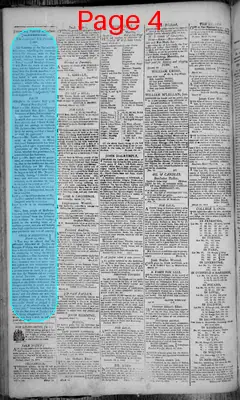
Editorial
March 31, 1810
Portland Gazette, And Maine Advertiser
Portland, Cumberland County, Maine
What is this article about?
An editorial discredits the National Intelligencer's claim that British Foreign Secretary Wellesley admitted U.S. envoy Jackson was wrong in a diplomatic dispute. It presents 'facts' from a private letter to show the story is an electioneering fabrication, dated March 10, 1810, from Washington.
Clipping

OCR Quality
95%
Excellent
Full Text
Interesting Political Miscellany.
The Falsehood! The Private Letter.
The statement of the National Intelligencer, respecting the conversation of Mr. Pinkney, with the Marquis of Wellesley, we have all along asserted, was not founded in truth. Time, says last Monday's Gazette, will prove the truth of our inference, and the falsehood of the assertion, that the British minister "admitted Mr. Jackson to be in the wrong."
Our belief is now corroborated, which the following Facts, will determine; which facts, the editor of the Baltimore Federal Republican has solemnly pledged himself to the public, have the "best authority" for their support:--
FACTS
Addressed to the Common Sense of the People of New-England.
FACT I.--The National Intelligencer has declared that Robert Smith, Secretary of State, has received "a private letter" from Mr. Pinkney, in which that gentleman is said to have asserted, that "Lord Wellesley did not attempt to vindicate Mr. Jackson; but, admitted him to be in the wrong, and that a successor must be appointed."
FACT 2.--Mr. Smith, after the receipt of the letter, to which this forced interpretation has been given, called upon a particular acquaintance of Mr. Jackson, to know, whether that gentleman had contradicted this statement.
FACT 3.--Mr. Smith told the gentleman, of whom he made the enquiry, that in the conference between Lord Wellesley and Mr. Pinkney, the former stopped the latter when he began to talk of Mr. Jackson's conduct, saying, "I DESIRE YOU WILL SAY NOTHING UPON THAT SUBJECT, AS IT BELONGS TO THE KING ONLY TO JUDGE OF IT!"
FACT 4.--Mr. Smith said, we conclude he (Mr. J.) is disapproved, because he is recalled.
FACT 5.--The disapprobation of Mr. Jackson's conduct is like his insult, imagined only by implication.
FACT 6.--It is an electioneering story.
Hear, then, people of Massachusetts, and, in the words of the prophet, "learn wisdom" from the failure of your brethren in New-Hampshire. Listen to the warning voice of a southern patriot, and you will behold what high expectations are formed of your patriotism and love of country.
FROM WASHINGTON, March 10, 1810.
"You may be assured that the pretended disavowal of Jackson by Marquis Wellesley, was nothing more than a severe reprimand to Pinkney, for attempting to bring the subject into discussion.--The Secretary told Pinkney that must not be--for "the KING HIMSELF WAS THE ONLY PROPER JUDGE OF HIS MINISTERS CONDUCT"--and from this paragraph in a private letter to Smith, it is given out that the Marquis did not attempt to defend Jackson. Again when Pinkney attempted to introduce the subject of the Orders in Council, the Marquis told him he could not then enter upon the subject, but that he should "bring to it an unbiased judgment," and this phrase our wise men have construed into a declaration, that Wellesley told Pinkney "he did not consider himself as pledged to the measures of the administration he had entered into;" from such trifles have arisen the fine story of Jackson's conduct being disapproved!!! The whole has been a trick to influence your elections."
The Falsehood! The Private Letter.
The statement of the National Intelligencer, respecting the conversation of Mr. Pinkney, with the Marquis of Wellesley, we have all along asserted, was not founded in truth. Time, says last Monday's Gazette, will prove the truth of our inference, and the falsehood of the assertion, that the British minister "admitted Mr. Jackson to be in the wrong."
Our belief is now corroborated, which the following Facts, will determine; which facts, the editor of the Baltimore Federal Republican has solemnly pledged himself to the public, have the "best authority" for their support:--
FACTS
Addressed to the Common Sense of the People of New-England.
FACT I.--The National Intelligencer has declared that Robert Smith, Secretary of State, has received "a private letter" from Mr. Pinkney, in which that gentleman is said to have asserted, that "Lord Wellesley did not attempt to vindicate Mr. Jackson; but, admitted him to be in the wrong, and that a successor must be appointed."
FACT 2.--Mr. Smith, after the receipt of the letter, to which this forced interpretation has been given, called upon a particular acquaintance of Mr. Jackson, to know, whether that gentleman had contradicted this statement.
FACT 3.--Mr. Smith told the gentleman, of whom he made the enquiry, that in the conference between Lord Wellesley and Mr. Pinkney, the former stopped the latter when he began to talk of Mr. Jackson's conduct, saying, "I DESIRE YOU WILL SAY NOTHING UPON THAT SUBJECT, AS IT BELONGS TO THE KING ONLY TO JUDGE OF IT!"
FACT 4.--Mr. Smith said, we conclude he (Mr. J.) is disapproved, because he is recalled.
FACT 5.--The disapprobation of Mr. Jackson's conduct is like his insult, imagined only by implication.
FACT 6.--It is an electioneering story.
Hear, then, people of Massachusetts, and, in the words of the prophet, "learn wisdom" from the failure of your brethren in New-Hampshire. Listen to the warning voice of a southern patriot, and you will behold what high expectations are formed of your patriotism and love of country.
FROM WASHINGTON, March 10, 1810.
"You may be assured that the pretended disavowal of Jackson by Marquis Wellesley, was nothing more than a severe reprimand to Pinkney, for attempting to bring the subject into discussion.--The Secretary told Pinkney that must not be--for "the KING HIMSELF WAS THE ONLY PROPER JUDGE OF HIS MINISTERS CONDUCT"--and from this paragraph in a private letter to Smith, it is given out that the Marquis did not attempt to defend Jackson. Again when Pinkney attempted to introduce the subject of the Orders in Council, the Marquis told him he could not then enter upon the subject, but that he should "bring to it an unbiased judgment," and this phrase our wise men have construed into a declaration, that Wellesley told Pinkney "he did not consider himself as pledged to the measures of the administration he had entered into;" from such trifles have arisen the fine story of Jackson's conduct being disapproved!!! The whole has been a trick to influence your elections."
What sub-type of article is it?
Partisan Politics
Foreign Affairs
What keywords are associated?
Political Falsehood
Mr Jackson
Diplomatic Letter
Electioneering Trick
Washington Politics
British Minister
What entities or persons were involved?
National Intelligencer
Mr. Pinkney
Marquis Of Wellesley
Mr. Jackson
Robert Smith
Baltimore Federal Republican
Editorial Details
Primary Topic
Discrediting False Claims About British Disapproval Of Mr. Jackson
Stance / Tone
Partisan Attack On Electioneering Falsehood
Key Figures
National Intelligencer
Mr. Pinkney
Marquis Of Wellesley
Mr. Jackson
Robert Smith
Baltimore Federal Republican
Key Arguments
The National Intelligencer's Claim Is False And Not Based On Truth.
Wellesley Refused To Discuss Jackson's Conduct, Stating It Belongs To The King.
Disapproval Of Jackson Is Only Implied, Not Explicit.
The Story Is An Electioneering Trick To Influence Votes.
Private Letter Misinterpreted To Fabricate Disavowal.
Wellesley's Comments On Orders In Council Twisted To Support The False Narrative.