Thank you for visiting SNEWPapers!
Sign up free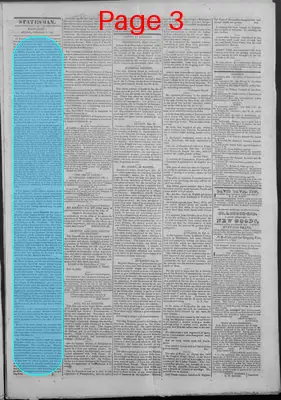
Editorial
February 7, 1825
New Hampshire Statesman
Concord, Merrimack County, New Hampshire
What is this article about?
This editorial discusses the February 9, 1825, counting of presidential votes among Adams, Jackson, and Crawford, expressing hope for Adams' election. It defends Senator John Pattee's actions in a state senate election controversy, critiques a communication in the New-Hampshire Gazette attacking Governor Morril and others, and satirically mocks rival newspapers and politicians like Hill, Woodbury, and Clagget.
Clipping

OCR Quality
98%
Excellent
Full Text
On Wednesday next, (February 9th) the returns of votes for President and Vice-President will be counted, and if no choice be made by the people, the House of Representatives will immediately proceed to elect those officers. It is well known, although not officially declared, that a Vice-President has been chosen by a large majority; and that no one has been elected President by the People. The three candidates, from which a choice is to be made, are Messrs. Adams, Jackson and Crawford; and which of these will be the successful one, cannot be predicted with any degree of certainty. The accounts from Washington are very contradictory; not much information, therefore, can be gained from them. The contest, however, seems now to be, between Mr. Adams and General Jackson—of the success of the former, we have strong hopes. If the delegations from Virginia and Kentucky support Mr. Adams, as it is reported they will, his election is almost certain. A few days will disclose all.
The Hon. John Pattee, Senator from District No. 3, has written a long letter, which was published in the last Patriot, in vindication of the part he acted in the election of a Senator in Congress. We extract that part of it which relates to the "Certificates."
Mr. Pattee gives a very different account of the affair, from that of the veracious editor of the Patriot. He gives a flat denial to the assertions of Mr. Hill that those Senators who voted for Mr. Mason, were either intimidated or flattered to vote or certify as they did; for he says, "I received no threats or flatteries from either side, or gave any pledges."
"But before I close, I must ask the indulgence of stating something about the certificate affair. On the last day of the session, (which was the day after the last vote had been taken in the Senate for concurring with the House in the choice of a Senator to Congress) in conversation with some gentlemen of the House, it appeared that there must have been a mistake in counting the votes in the Senate, or some one of that body was playing a double game, and would have it thought he voted differently from what he had, as it was said seven had stated they had voted to concur with the House, and six only had been declared in favor. It was therefore apparent, provided this was the fact, that some one in the Senate wished to gain popularity by claiming what he did not do, or there was some error in counting the votes. The former was considered the most likely to be the case, and it was my wish, and the wish of others, to detect the imposition, if any did exist; and I felt the more anxious to do this, as I had been suspected, from some intimations which was said to have come from some one of the Senate. To get at the truth of the matter, it was thought no course more sure and effectual, than for each one to certify the manner of his voting, and then go into an investigation of the subject. I accordingly signed a certificate, and others did the same, and I do not feel disposed to deny the fact, nor do I regret so doing, as it has, in my opinion, resulted in a satisfactory detection of the imposition."
A very singular communication appeared in the last New-Hampshire Gazette, written undoubtedly by a man who has modestly proposed himself as a suitable candidate for Representative to Congress, and who compliments himself as being "a writer upon political and public affairs," equal to any in the State. From this bulletin extraordinary, we make the following extract:--
"The people were disposed last year to express their disapprobation of the conduct of Governor Woodbury, and Mr. Morril being the person nominated, they voted for him in preference to Mr. Woodbury. Mr. Morril could not have been elected at any other time, and it is doubtful whether he can be again elected. If the people are inclined to choose Representatives and Senators for the ensuing Legislature, whose political integrity cannot be doubted, I presume they will be equally so to elect such a Governor; and if those republican Representatives and Senators, who combined with federalists in the election of a Senator to Congress, are not worthy of the confidence of the republicans, Governor Morril is much less worthy, as he was a strong advocate of Mr. Mason's election."
The N. H. Patriot denounced Mr. Speaker Peirce, Mr. March of Eaton, and Mr. Dee of Somersworth, as Federalists; the N. H. Gazette follows suit, and denounces Governor Morril. Upon the whole, we are much gratified to find the Patriot and Gazette taking the same course. They are worthy of each other, and ought never to be separated. The republican cause must now triumph. "Federalists," "mongrels," and "half-bloods," cannot be elected to office. People of New-Hampshire! give yourselves no further trouble about the political affairs of the State, or of the United States, if Mr. Clagget should happen to be elected a Member of Congress. Messrs. Hill and Clagget will take care of your rights. They will guide the Ship of State safely through the tempestuous ocean, into which she is shortly to be launched. While one is at the helm, and the other keeps a good look-out ahead, the voyage must indeed be prosperous.
The writer of this communication, however, labors under a small mistake, Governor Morril was not "a strong advocate for Mr. Mason's election;" or of any other man. This mistake, we presume, will be promptly corrected by the editor of the Gazette.
Quere.—If Governor Morril, an unpopular man, was elected, when opposed to Judge Woodbury, and "could not have been elected at any other time," how many degrees below zero must the popularity of Judge Woodbury be?
The New-Hampshire Gazette, under the auspices of its new editors, has become the subject of Mr. Hill's panegyric. This is all very proper. His Majesty should speak well of his most dutiful and loyal subjects, when they send in their adhesion, and make proper and suitable submission; and return to their old allegiance: At one time they were considered subjects so refractory, that he was compelled to pour out upon them the vials of his wrath; but now the Royal clemency is extended towards them; and they are restored to grace and favor. Hereafter we may expect to find Messrs. Hill, Woodbury and Clagget as loving a triphthong as ever was seen in the spelling-book.
The Hon. John Pattee, Senator from District No. 3, has written a long letter, which was published in the last Patriot, in vindication of the part he acted in the election of a Senator in Congress. We extract that part of it which relates to the "Certificates."
Mr. Pattee gives a very different account of the affair, from that of the veracious editor of the Patriot. He gives a flat denial to the assertions of Mr. Hill that those Senators who voted for Mr. Mason, were either intimidated or flattered to vote or certify as they did; for he says, "I received no threats or flatteries from either side, or gave any pledges."
"But before I close, I must ask the indulgence of stating something about the certificate affair. On the last day of the session, (which was the day after the last vote had been taken in the Senate for concurring with the House in the choice of a Senator to Congress) in conversation with some gentlemen of the House, it appeared that there must have been a mistake in counting the votes in the Senate, or some one of that body was playing a double game, and would have it thought he voted differently from what he had, as it was said seven had stated they had voted to concur with the House, and six only had been declared in favor. It was therefore apparent, provided this was the fact, that some one in the Senate wished to gain popularity by claiming what he did not do, or there was some error in counting the votes. The former was considered the most likely to be the case, and it was my wish, and the wish of others, to detect the imposition, if any did exist; and I felt the more anxious to do this, as I had been suspected, from some intimations which was said to have come from some one of the Senate. To get at the truth of the matter, it was thought no course more sure and effectual, than for each one to certify the manner of his voting, and then go into an investigation of the subject. I accordingly signed a certificate, and others did the same, and I do not feel disposed to deny the fact, nor do I regret so doing, as it has, in my opinion, resulted in a satisfactory detection of the imposition."
A very singular communication appeared in the last New-Hampshire Gazette, written undoubtedly by a man who has modestly proposed himself as a suitable candidate for Representative to Congress, and who compliments himself as being "a writer upon political and public affairs," equal to any in the State. From this bulletin extraordinary, we make the following extract:--
"The people were disposed last year to express their disapprobation of the conduct of Governor Woodbury, and Mr. Morril being the person nominated, they voted for him in preference to Mr. Woodbury. Mr. Morril could not have been elected at any other time, and it is doubtful whether he can be again elected. If the people are inclined to choose Representatives and Senators for the ensuing Legislature, whose political integrity cannot be doubted, I presume they will be equally so to elect such a Governor; and if those republican Representatives and Senators, who combined with federalists in the election of a Senator to Congress, are not worthy of the confidence of the republicans, Governor Morril is much less worthy, as he was a strong advocate of Mr. Mason's election."
The N. H. Patriot denounced Mr. Speaker Peirce, Mr. March of Eaton, and Mr. Dee of Somersworth, as Federalists; the N. H. Gazette follows suit, and denounces Governor Morril. Upon the whole, we are much gratified to find the Patriot and Gazette taking the same course. They are worthy of each other, and ought never to be separated. The republican cause must now triumph. "Federalists," "mongrels," and "half-bloods," cannot be elected to office. People of New-Hampshire! give yourselves no further trouble about the political affairs of the State, or of the United States, if Mr. Clagget should happen to be elected a Member of Congress. Messrs. Hill and Clagget will take care of your rights. They will guide the Ship of State safely through the tempestuous ocean, into which she is shortly to be launched. While one is at the helm, and the other keeps a good look-out ahead, the voyage must indeed be prosperous.
The writer of this communication, however, labors under a small mistake, Governor Morril was not "a strong advocate for Mr. Mason's election;" or of any other man. This mistake, we presume, will be promptly corrected by the editor of the Gazette.
Quere.—If Governor Morril, an unpopular man, was elected, when opposed to Judge Woodbury, and "could not have been elected at any other time," how many degrees below zero must the popularity of Judge Woodbury be?
The New-Hampshire Gazette, under the auspices of its new editors, has become the subject of Mr. Hill's panegyric. This is all very proper. His Majesty should speak well of his most dutiful and loyal subjects, when they send in their adhesion, and make proper and suitable submission; and return to their old allegiance: At one time they were considered subjects so refractory, that he was compelled to pour out upon them the vials of his wrath; but now the Royal clemency is extended towards them; and they are restored to grace and favor. Hereafter we may expect to find Messrs. Hill, Woodbury and Clagget as loving a triphthong as ever was seen in the spelling-book.
What sub-type of article is it?
Partisan Politics
Satire
What keywords are associated?
Presidential Election
Adams Jackson Contest
New Hampshire Politics
Senator Election
Voting Certificates
Partisan Rivalry
Governor Morril
Isaac Hill
New Hampshire Gazette
What entities or persons were involved?
John Quincy Adams
Andrew Jackson
William H. Crawford
John Pattee
Isaac Hill
Governor Morril
Judge Woodbury
Mr. Clagget
Mr. Mason
N. H. Patriot
New Hampshire Gazette
Editorial Details
Primary Topic
1825 Presidential Election And New Hampshire Political Controversies
Stance / Tone
Supportive Of John Quincy Adams, Satirical Criticism Of Rival Politicians And Newspapers
Key Figures
John Quincy Adams
Andrew Jackson
William H. Crawford
John Pattee
Isaac Hill
Governor Morril
Judge Woodbury
Mr. Clagget
Mr. Mason
N. H. Patriot
New Hampshire Gazette
Key Arguments
Vice President Elected By Majority, But No President By Popular Vote; Choice Among Adams, Jackson, Crawford
Contest Between Adams And Jackson; Hopes For Adams' Success With Virginia And Kentucky Support
Pattee Denies Intimidation In Voting For Mason And Explains Certificate To Detect Voting Discrepancies
Critique Of Gazette Communication Attacking Morril And Woodbury's Popularity
Satirical Praise For Rival Papers' Alignment Against Federalists And Mongrels
Correction: Morril Not Advocate For Mason
Query On Woodbury's Unpopularity Compared To Morril
Mockery Of Hill's Panegyric For Gazette As Royal Favor