Thank you for visiting SNEWPapers!
Sign up free
The Massachusetts Spy, And Worcester County Advertiser
Worcester, Worcester County, Massachusetts
What is this article about?
Description of the Chinese Tsing-ming festival in April, where families across the empire worship ancestors at tombs with offerings, prayers, and feasts. Includes practices among the poor, in colonies like Java, and bone removals for unlucky sites or developments like in Macao.
Clipping
OCR Quality
Full Text
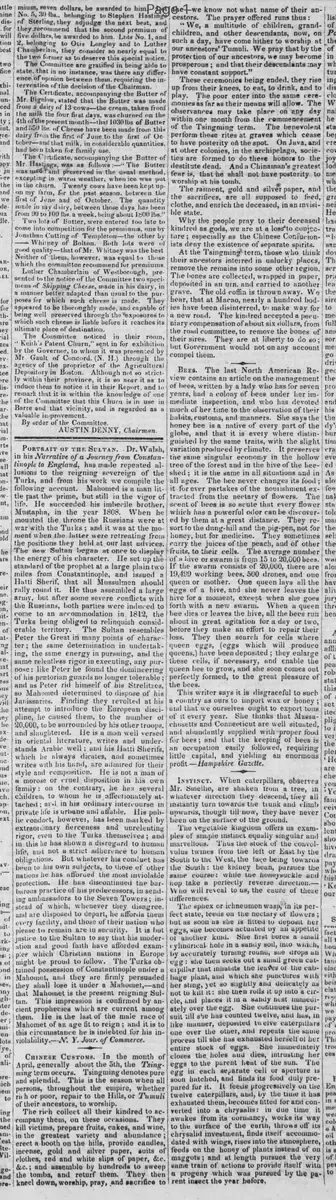
"We, a multitude of children, grand-children, and other descendants, now, on such a day, have come hither to worship at our ancestors' Tumuli. We pray that by the protection of our ancestors, we may become prosperous; and that their descendants may have constant support."
These ceremonies being ended, they rise up from their knees, to eat, to drink, and to play. The poor enter into the same ceremonies as far as their means will allow. The observances may take place on any day within one month from the commencement of the Tsingming term. The benevolent perform these rites at graves which cease to have posterity on the spot. On Java, and at other colonies, in the archipelago, societies are formed to do these honors to the destitute dead. And a Chinaman's greatest fear is, that he shall not have posterity to worship at his tomb. The raiment, gold and silver paper, and the sacrifices, are all supposed to feed, clothe, and enrich the deceased, in an invisible state.
Why the people pray to their deceased kindred as gods, we are at a loss to conjecture; especially as the Chinese Confucians deny the existence of separate spirits.
At the Tsingming term, those who think their ancestors interred in unlucky places, remove the remains into some other region. The bones are collected, wrapped in paper, deposited in an urn, and carried to another grave. The old coffin is thrown away. We hear, that at Macao, nearly a hundred bodies have been disinterred, to make way for a new road. The kindred accepted a pecuniary compensation of about six dollars, from the road committee, to remove the bones of their sires. They are at liberty to do so; but Government would not on any account compel them.
What sub-type of article is it?
What keywords are associated?
Where did it happen?
Foreign News Details
Primary Location
China
Event Date
Month Of April, Generally About The 5th, The Tsing Ming Term
Outcome
at macao, nearly a hundred bodies disinterred for new road, kindred received about six dollars compensation
Event Details
During Tsing-ming term, all persons throughout the empire worship ancestors at tombs: rich prepare offerings, erect booths, sweep and returf tombs, pray for prosperity; poor participate as means allow. Ceremonies within one month of term start. Benevolent honor destitute graves. In colonies like Java, societies perform rites. Belief that offerings enrich deceased in invisible state. Some remove remains from unlucky sites to new graves. At Macao, bodies removed voluntarily for road with compensation; government does not compel.